Encyclopedia

Human innovations and tourism (interactive timeline)

Homo sapiens or homo touristicus? For a huge part of our history, we were travelers. For leisure, work or survival.

 
There are many perspectives we can take on invented innovations of all kinds and their adoption in tourism. In the “History of Innovation” section of the AIRTH encyclopedia, we want to show as many perspectives as possible. Here is the first one: “AIRTH Human innovations and tourism” Histropedia timeline. It is the initial tourism related innovations selection we will be updating regularly with more historical spots related to tourism phenomenon.
 
INSTRUCTIONS:
  • zoom :: use mouse roller or app slider
  • description :: double-click the innovation title
  • more :: see attached picture at the bottom for additional instructions
You are kindly invited to contribute. Contact us or add your suggestions via email or LinkedIn


Author

Dejan Krizaj, University of Primorska

HOW TO CITE:

Krizaj, D. (2017). Human innovations and tourism. In AIRTH Encyclopedia of Innovation in Tourism and Hospitality. Retrieved: , from http://www.airth.global

Human innovations and tourism (interactive timeline) Read More »

Table of disruptive technologies & innovation (in tourism)

Richard Watson, an author, lecturer, and futurist, has developed a table consisting of 100 potentially disruptive technologies, capable of significant social, economic or political change.
 
The vertical axis in Richard’s insightful “periodic table” estimates disruption potential from high to low. The horizontal axis is ranking them from sooner to later. 
 
While you can find the original here, in the table below you can see all 100 technologies arranged in 4 counter-clockwise timeframe cells (1-4). In each cell, technologies are further grouped in time sub-lists. Technologies in every sub-list (very soon, soon, …) are sorted from less to more disruptive ones – according to Richard’s assumptions.
 
In our AIRTH addition, technologies that deserve special attention in tourism are bolded, and XYZ letters are added. The letters represent the major tourism innovation coordinate system axes (for more info see this paper [28]):
  • X – product/customer/front-office perspective
  • Y – process/business/back-office perspective, and
  • Z – marketing/business-to-customer (B2C) perspective.
 
## 1. Happening now ##
 
>> VERY SOON <<
Smart nappies
Cryptocurrencies (Y)
Robotic care companions (XY)
Distributed ledgers (Y)
 
>> SOON <<
Deep ocean wind farms
Concentrated solar power
Smart controls and appliances (XY)
Precision agriculture (Y)
 
>> A BIT LATER <<
Vertical agriculture (Y)
Predictive policing (Y)
Cultured meat (XY)
Autonomous vehicles (XY)
 
>> LATER <<
Wireless energy transfer (XY)
Micro-scale ambient energy harvesting (Y)
Delivery robots & passenger drones (XY)
Intention decoding algorithms (XYZ)
## 4. Fringe science & technology ##
Defined as highly improbable, 
but not actually impossible. 
 
>> MUCH LATER <<
Digital footprint eraser (XY)
Personal digital shields (XY)
Human head transplants
Human cloning & de-extinction
 
>> MUCH MUCH LATER <<
Distributed autonomous corporations (Y)
Space solar power (Y)
Space elevators (XY)
Fully immersive virtual reality (XYZ)
 
>> MUCH MUCH MUCH LATER <<
Artificial consciousness
Asteroid mining
Force fields
Beam-powered proposing
Zero-point energy
Self-reconfiguring modular robots
Space-shifting matter
Whole Earth virtualization
Reactionless drive
Telepathy
We can’t talk about this one
 
## 2. Near future (10-20 years) ##
 
>> SOONER 10-20 <<
Medical tricorders
Smart flooring & carpets (XY)
Mega-scale desalination
Self-writing software (Y)
Predictive gene-based health care (XY)
Automated knowledge discovery (XYZ)
 
>> A BIT LATER 10-20 <<
Diagnostic toilets (XY)
Smart energy grids (Y)
Public mood monitoring (XYZ)
Programmable bacteria
Autonomous robotic surgery
Emotionally aware machines (XYZ)
 
>> LATER 10-20 <<
Balloon-powered internet (XYZ)
Powered exoskeletons (XY)
Airborne wind turbines
Avatar companions (XYZ)
Autonomous ships & submarines (XY)
Resource gamification (Y)
Drone freight delivery (XYZ)
Autonomous passenger aircraft (XY)
Algal biofuels
Human-organ printing
Peer-to-peer energy trading & transmission (Y)
Lifelong personal avatar assistants (XYZ)
Humanoid sex robots (XYZ)
Human bio-hacking
 
>> MUCH LATER 10-20 <<
Computerized shoes & clothing (XYZ)
Metallic hydrogen energy storage
Water harvesting from air
3D-printing of food & farmaceuticals (XY)
Artificial human blood substitute
Smart dust (XYZ)
Internet of DNA (XYZ)
## 3. Distant future (20 years+) ##
 
>> SOONER 20+ <<
Planetary-scale spectroscopy
Implantable phones (XY)
e-tagging of humans (XYZ)
Conversational machine interfaces (XYZ)
Life-expectancy algorithms (XYZ)
Stratospheric aerosols
 
>> A BIT LATER 20+ <<
Male pregnancy & artificial wombs
DNA data storage (XY)
Genomic vaccines
Quantum safe cryptography (XY)
AI advisors & decision-making machines (XYZ)
AI board members & politicians (Y)
Invisibility shields (XY)
 
>> LATER 20+ <<
Vacuum-tube transport (XY)
Smart glasses & contact lenses (XY)
Broadcasting of electricity (Y)
Swarm robotics (Y)
New materials (Y)
Low-cost space travel (XY)
Thought control – machine interfaces (XYZ)
Cognitive prosthetics (X)
Factory photosynthesis
 
>> MUCH LATER 20+ <<
Scramjets (XY)
Pollution-eating buildings (Y)
Bio-plastics (Y)
4-dimensional materials (XYZ)
Fusion power (Y)
Planet colonialization (XY)
Dream reading & recording (X)
Data uploading to the brain (XYZ)
Transhuman technologies (XYZ)


TABLE built upon Richard Watson‘s Table of disruptive technologies & innovation.


Author

Dejan Krizaj, University of Primorska

HOW TO CITE:

Krizaj, D. (2018). Table of disruptive technologies & innovation (in tourism). In AIRTH Encyclopedia of Innovation in Tourism and Hospitality. Retrieved: <insert-date>, from http://www.airth.global


Table of disruptive technologies & innovation (in tourism) Read More »

Holistic revitalization of rural towns

A Non-Profit Lender with a Vision

Introduction

Revitalization of rural towns takes more than just money. It requires a vision and a holistic approach that galvanizes stakeholders around an opportunity to leverage its assets, such as outdoor recreation, as a basis for economic development.

The Progress Fund is a nonprofit Community Development Financial Institution that started in 1997 to lend to small businesses serving tourists in rural areas. Often, these small businesses are overlooked, or even worse, dismissed by traditional lenders and banks. The Progress Fund serves small businesses in Pennsylvania, West Virginia and Maryland, often in towns along bike trails or gateways to natural resources. From the beginning, the Fund also provided financial coaching and supported research on the economic impact of tourism, local agriculture and bike trails. Recognizing that an adequate source of small business funding alone is not sufficient for a community to capture tourism as a new economic opportunity, the Fund expanded its services over the years to provide far-reaching support for regional economic development strategies. To that end, they developed the Trail Town Program® and a Real Estate Development Initiative to encourage economic growth in rural towns. The recreational asset at their doorstep is the Great Allegheny Passage, a nationally and internationally recognized bike trail.

Overview of The Progress Fund with President & CEO, David A. Kahley:

Description of the destination

West Newton, Pennsylvania serves as a good example to demonstrate the impact of The Progress Fund’s comprehensive support for regional economic development through tourism.  West Newton is a town with some 2,500 residents in Westmoreland County. Today, this charming destination is worth a stop or an overnight stay along the Great Allegheny Passage, a 150 mile long, non-motorized trail from Pittsburgh, Pennsylvania to Cumberland, Maryland; built mostly on abandoned rail beds. The town always had a sense of place and great people; however, when manufacturing of paper, radiators and boilers seized or left town, commercial real estate started to deteriorate. Hence, while West Newton is ideally located 34 miles or about a one day bike ride from Pittsburgh, it lacked accommodations, dining and shopping opportunities to make it a desirable overnight destination for long distance riders or as a trailhead for day trippers. The Progress Fund worked with local stakeholders such as Downtown West Newton Inc. to redevelop not only the western part of town where the bike trail runs along the Youghiogheny River and past a residential area, but also the eastern side of the river connected to the trail by a historic highway bridge. The Fund helped to create a welcoming public space at the bridge, which is the entrance to the core of the small commercial district.

Recognition that change was necessary

First, rural travel and tourism entrepreneurs often have a hard time obtaining funding from traditional lenders for their restaurant, bed & breakfast or outdoor sports ventures. This lack of access to funding created a considerable risk of not only hurting economic opportunities for that one business, but also of limiting the overall economic development of the town. Too often, traditional lenders do not understand the collective and concerted efforts needed by many stakeholders to create a desirable destination experience.

Second, the development of several bike trails in Pennsylvania, West Virginia and Maryland provided an opportunity for rural towns; however, it also created the challenge of incorporating stakeholders beyond traditional travel and tourism businesses. Oftentimes, there was resistance in towns unaccustomed to tourists, especially young and active outdoor enthusiasts. At first, some stakeholders were unwilling to collaborate due to concerns that bicyclists would bring crime to town. In other words, non-tourism businesses and lenders lacked an understanding of the value of tourism and the need to collaborate to provide guests with sought after experiences.

Third, despite investments along the bike trails running through town, some towns faced the challenge that parts of town, such as their main streets, were not directly next to the trails or not appealing to bicyclists. This was often the consequence of abandoned and desolate structures at the town’s entrance that had bicyclists turn around prematurely. As such, there was a need to redevelop real estate, especially abandoned properties in key locations.

Implementation

The Progress Fund was created in 1997 to provide rural small businesses in the travel and tourism sector with access to funding. Providing loans to this underserved group of small travel and tourism businesses was the primary activity for many years. To better support entrepreneurs and to instill long-term success, The Progress Fund provided business coaching along with their loans, which are typically between $50,000 and $350,000.

In 2007, to support bike trail driven revitalization efforts in rural towns, The Progress Fund launched the Trail Town Program®. This program takes a regional approach to not only connect towns to the trail, but also to encourage and support collaboration among neighboring trail towns to develop the region collectively for broader impact.

Then, in 2010 the Real Estate Development Initiative was launched to take the lead in revitalizing and developing rural towns. With this initiative, The Progress Fund purchases and rehabilitates key properties to provide entrepreneurs with new homes for their businesses and to show the public what investment and revitalization can do for their community.

Combined, these three activities enable The Progress Fund not only to support often underserved tourism businesses in rural areas, but also to develop and implement a regional economic development strategy built around outdoor tourism. Specifically, The Progress Fund works with stakeholders in rural towns to help them cater to modern bicyclists that expect more than just room and board when staying in or passing through trail towns.

Success story

As of March 31, 2018, The Progress Fund provided 512 loans totaling $67.4 million to 310 small businesses which created or retained 3,861 jobs. The Progress Fund’s primary mission of providing loans for underserved businesses is clearly fulfilled, as 75% of its borrowers reported that their success would not have been possible without The Progress Fund’s help. Additionally, the Fund’s loans enabled its borrowers to purchase and redevelop 193 properties to support broader community goals. The Progress Fund hopes to inspire communities in other areas to learn from its experiences and build their own sustainable outdoor tourism communities.

Case in point, West Newton today is a thriving small rural town and a popular trailhead along the Great Allegheny Passage bike trail. The Progress Fund has made ten investments in town, from bed & breakfast properties to a town square and kayak retailers.

For its work, The Progress Fund received several awards and recognitions spanning from historic preservation and urban development to tourism and entrepreneurship, which were all well deserved.

Urban Land Institute – Jury Award – Flyover of West Newton, PA. Video credit: Pittsburgh Propeller Heads. 


ULI press release http://www.progressfund.org/wp-content/uploads/2015/10/PRESS-RELEASE-81281605.pdf

Company info

David Kahley, President & CEO

The Progress Fund

425 W Pittsburgh St.,

Greensburg, PA 15601-2211

United States

References

The Progress Fund website: https://www.progressfund.org

Detailed success story of West Newton, Pennsylvania: https://www.progressfund.org/about-us/the-west-newton-story/

Real Estate Development Initiative: https://www.progressfund.org/category/real-estate-development/

Trail Town Program® https://www.trailtowns.org/

Holistic revitalization of rural towns Read More »

Bringing Automation to Specialty Coffee

Jory Coffee Co.

Introduction

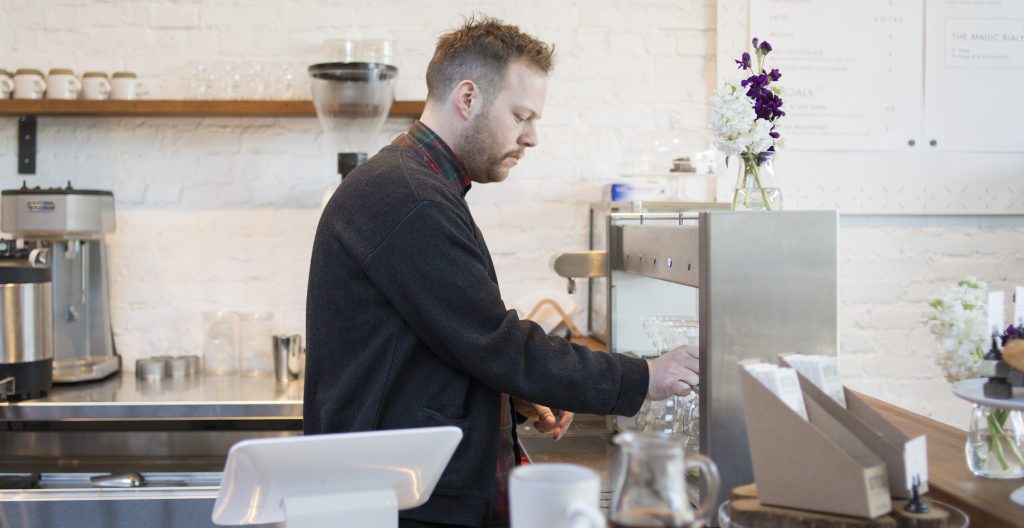
Located in Portland, Oregon we are the first and only pour over specific coffee concept offering a rotating menu of local roasts that are curated by our staff. We have set out to offer a premium lineup of coffees whereby each is brewed in the traditional pour over method to its individual needs as each coffee has its own recipe to maximize sweetness and complexity of flavor.

Description of the original product

Portland, Oregon is a very latte-centric city, despite having one of the highest density of premium coffee roasters in the nation. While analogous cities (for example Seattle, Washington or San Francisco, California) have a wide variety of premium brewed-coffee available, Portland has very little to offer in this space. I have always enjoyed pour over coffee much more than espresso and have been a long time home brewer of coffee. I have been frustrated when trying to find a great cup of coffee in Portland, as typically the only options available are espresso drinks and batch-brewed coffee which tends to only have one impactful flavor. I realized there was an opportunity in Portland to sell coffee that highlights the depth and complexity that a quality roasted coffee has to offer. In other words, I saw a market niche that has yet not been filled in Portland.

To best cater to customers that seek high-quality coffee roasts and dedication to nuanced flavor I decided to serve coffee only using the pour over technique. It is ideal to extract subtle flavors, which leads to a complex cup of coffee, showcasing what the fruit has to offer.

Process that led recognition that change was necessary

Pour over is a labor-intensive brew style. Each coffee requires several individual pours of hot water, with time in between for the water to fully saturate and drip through. The purpose of this is to evenly wet the grounds, providing an even extraction of oils/flavor compounds. Additionally, it is best to utilize a rotating pouring motion in order to disturb the bed of coffee grounds consistently. This avoids ‘channeling’ of water, which would not evenly wet the grounds and result in a very uneven extraction. This dedicated process takes, on average, 3.5 to 4 minutes and must stay within predetermined limits.

As labor cost is the highest cost factor in profit & loss (P&L) statements of coffee shops I realized that automation is the only option to offer this labor-intensive product in a way to sustain continued business success. I was specifically concerned about the high minimum wage set for Portland; that is $11.25/h since July 1, 2017; $12/h starting July 1, 2018. Having baristas tend to each cup while not being available to cater to the needs of other customers would not allow for a profitable business model of only pour over coffee servings.

Solution and Implementation

Our solution is a machine called the Poursteady which is produced by a couple of engineers in Brooklyn who handmake each machine in their shop (www.poursteady.com). The machine is app-controlled, allowing to set water temperature, flow rate, and nozzle pattern to ensure the precision and repeatability required for the best flavor development of each roast we serve.

The machine allows one barista to accurately brew up five drinks at once, which would simply be impossible if done manually. The machine, thus, frees up baristas from tending to five cups sequentially to catering to customers and offering and selling pastries, coffee beans and other products. As such, while the high machine costs are high, they are quickly recouped given the savings in labor cost. This is particularly the case for Portland, Oregon which has a high minimum wage.

Success story

We have our work cut out for us, as many Portlanders are unfamiliar with the pour-over method, assuming that it is “just black coffee” no different than a batch brew, which can be found nearly everywhere at a lower price point. This means that staff has to “sell” every customer on the pour-over method by informing them of the superior quality of the product. By now word of the pour-over method has spread and several new customers are already familiar with the process and advantage of pour over coffee and are thrilled to finally have an option in Portland.

I believe that the shop opened in time to capture an underserved market. The machine itself is an attraction as well that fascinates some of our customers.

Company and contact info

Jory Coffee Co.

Jorian Merrill, Owner

3845 N Mississippi Ave, Portland, OR 97227, USA

480-369-4712

support@jorycoffee.com 

Bringing Automation to Specialty Coffee Read More »

Indoor ski resort and snow park

Introduction

Ski Dubai is the first indoor ski resort in the Middle East. It was opened in 2005, and it is known for its family-friendly character. Although not the oldest indoor skiing experience in the world, Ski Dubai has accomplished many “firsts” that have set it apart from the others, including its creation of the Ski Dubai Snow Park. Of Ski Dubai’s five slopes of varying difficulty, one is a black run, the first indoor slope of its kind. The facility also houses the first indoor zipline at sub-zero temperatures and incorporates additional recreational offerings, including bobsleds, a tubing run, snow bumpers, a climbing wall, a snow plough playground, an ice cave, a zorbing option, and a Gentoo and King penguin colony with which guest can interact, depending on their package of choice. This diversification of options is unprecedented in the indoor ski world and has earned Ski Dubai a spot as one of the United Arab Emirates’ top visitor attractions.

Description of the destination or original product

The facility includes slopes as well as the Ski Dubai Snow Park, a 4,500-meter square complex that provides activities for people of all ages. Visitors have the opportunity to choose from packages that include selected activities within the snow park (or even a package that combines the snow park with an iFly Dubai indoor skydiving experience). The park provides jackets and trousers, snow boots, a disposable pair of socks, helmets, fleece gloves, a standard locker and ski/snowboarding clothing (for those who select the Discovery Lesson option). Ski Dubai hosts an in-house ski school as well as Snow Pro, a retail outlet where visitors can purchase the newest equipment on the market. Ski Dubai is home to an 85-meter-high indoor mountain, and its longest ski run has a length of 400 meters. The facility is located in the Mall of the Emirates, which is one of the leading shopping centers in the Middle East as well as Europe.

Process that led to and facilitated change

According to Ski Dubai CEO Phil Taylor, one of the driving factors that led to the creation of the first indoor ski resort in the Middle East is that many people who live in the United Arab Emirates have never experienced snow before. As a destination that attracts tourists with innovations and architectural feats, such as the Burj Khalifa and Palm Islands, Ski Dubai aptly fits the destination profile.

Ski Dubai was developed by the Majid Al Futtaim Group, which strives to innovate and enhance experiences in the field of leisure and entertainment. Thinkwell Design and Production was responsible for the development of the Snow Park portion of Ski Dubai. Having accomplished a vision never before realized, the organization has become the world’s leading expert in the field of indoor interactive snow play.

Implementation and success story

Ski Dubai has been named the world’s best indoor ski resort for 2016-2017 by the World Ski Awards, and it continues to be highly regarded in the indoor ski industry. Although a ski resort in the middle of the desert, Ski Dubai has worked toward creating a destination with a high level of sustainability. The facility needs to maintain a sub-freezing temperature, which is made possible by Ski Dubai’s efficient design; acting as a giant refrigerator, it consumes as little energy as a hotel of average size. With the implementation of intelligent technology, including voltage stabilizers, overall energy consumption is reduced. Additionally, all old and used snow is recycled and re-purposed to assist the air conditioning system in keeping the facility cold. To make the environment as healthy as possible, the snow and penguin filtration systems contain no chemicals whatsoever. Lastly, all of the over one million socks handed out annually to guest are donated to those in need through Oxfam International.

Company info

Ski Dubai          

Sheikh Zayed Rd

Dubai

United Arab Emirates

Website: https://www.skidxb.com

Phone+971 800 386

References

https://www.skidxb.com/

https://thinkwellgroup.com/2016/12/15/ski-dubai-named-the-worlds-best-indoor-ski-resort/

https://www.malloftheemirates.com

https://web.archive.org/web/20120511112427/http://www.teaconnect.org/sites/default/files/9_2007_skidubai.

Indoor ski resort and snow park Read More »

Hotel for children

The Land of Legends, Kingdom Hotel

Gül Beril Kımıllı, AIRTH intern

Introduction

The Land of Legends, the biggest leisure and entertainment park, and the first theme hotel designed for children in Turkey opened in Belek, Antalya, in July 2016. Mr. Çetin Pehlivan, the hotel manager is describing the hotel as ‘The Kingdom Hotel inspires adults to release the children who are inside them and for children to hold on to their childhood magic.’

Description of the destination or original product

The Land of Legends is not just a hotel or an amusement park. It’s like an experimental example of a new generation of entertainment offering… There are many diverse sections in it, such as water parks, theme parks, shopping units, a replica of Venice’s canals, rivers where boats in the form of musical instruments will float. The facility employs more than 700 employees, offering various adrenaline entertainment options such as a 5D cinema, crazy river, wave pool, sleigh water slide. The hotel part consists of 410 rooms. Kingdom Hotel offers a unique experience with its fantasy-fuelled decoration, 401 fairy-tale rooms designed for children. The Land of Legends Kingdom Hotel allows everyone to feel like a child again. Rooms are kitted out with child-friendly features such as 3D TVs, games, and cartoon wall art. The rooms combine modern elements in their unique cartoon design and promise a comfortable experience for families with children. Children can also enjoy 100% wool carpet with its projector and wall screen to play the Playstation 4. Moreover, to facilitate reaching the target segment of families, all children under the age of 12 are accommodated free of charge.

The hotel is designed by Franco Dragone Productions, the genius of the entertainment world known for being the mind behind the success of Cirque du Soleil, the world’s most famous circus. Dragone has introduced a concept that combines impressive architecture with never-ending entertainment options and this concept is the first of its kind in Turkey

The process that led to the recognition that change was necessary

Although local people say “Antalya, is now full of the hotels”, what people needed was something different. There is no doubt that the sector needed innovation. As long as entrepreneurs can combine the leisurely nature of the region with projects that are interesting, it will be possible to attract the attention of both domestic and foreign tourists. Antalya needed and still needs such innovative initiatives to revive the industry.

Cem Tuna, who oversees both the aqua and dry parks, brings a wealth of theme park experience to The Land of Legends. Cem Tuna came to Turkey in 2013 to open Vialand Park in Istanbul and operated it for five years before leaving to start Land of Legends. Before that, he matured his experience for 25 years in Australia, at Dreamworld theme park, and Voyages Resort Hotel. Tuna says: “Land of Legends is a location and a vision. It is very special.” The idea behind the imaginatively themed park, is that a meteor fell to earth, spawning a variety of worlds, each rooted in a different legend. The Dragone Gate, dividing the Kingdom Hotel – Turkey’s first hotel specially designed for children – from the park, is a portal to those worlds. Today, The Land of Legends, Kingdom Hotel combines a five-star hotel, waterpark, and theme park within one location.

Implementation

First of all, in 2016, the plan was initially to achieve 60% occupancy mark of the surrounding hotels in the first year, and then to expand the business further. The management of the Land of Legends knew that it will take work, and marketing to make this place a destination park all year round. Moreover, although the city of Antalya has much to offer, tourism is still very seasonal and almost stops for five months over the winter. 

Success/failure story

Nowadays, the majority of the Land of Legends’ visitors are Russian, the rest made up of European tourists. In 2016, Cem Tuna said: “Phase 1 is aqua, phase 2 is the dry theme park, and then we have a phase 3; which will be an extension of the dry park. Then, in 2021, we will have phase 4. The dry park is going to be humongous. That’s the plan.”

Today, in 2020, they implemented until phase 3 as they planned. The Land of Legends has an aquapark, theme park, and an extension of the dry park. Each year, it keeps attracting more tourists from all over the world with its new features. The Land of Legend’s current vision is to make a facility like the one of Disney World in Orlando so that it could attract people all year round; enjoying the dry park and the hotels in the wintertime as well.

Company info

Kadriye Mahallesi No:1, D:No 515, 07525 Serik, Antalya TURKEY

Phone:+90 212 336 57 00

References

https://thelandoflegendsthemepark.com/en/

https://all.accor.com/hotel/B1J9/index.tr.shtml

https://blooloop.com/features/the-land-of-legends-turkey-cem-tuna/

https://www.etstur.com/The-Land-Of-Legends-Kingdom-Otel

Photo credits:

https://www.etstur.com/the-land-of-legends-theme-park/kesfedin

https://www.etstur.com/The-Land-Of-Legends-Kingdom-Otel

Hotel for children Read More »

Ice hotel

Introduction

Founded in 1989, Icehotel is a hotel and art exhibit that is (re)made of ice and snow each year. Located in Jukkasjärvi, a Swedish village 200 kilometers north of the Arctic Circle, the hotel utilizes natural ice from the Torne River to create a high-quality experience for visitors.

Description of the destination or original product

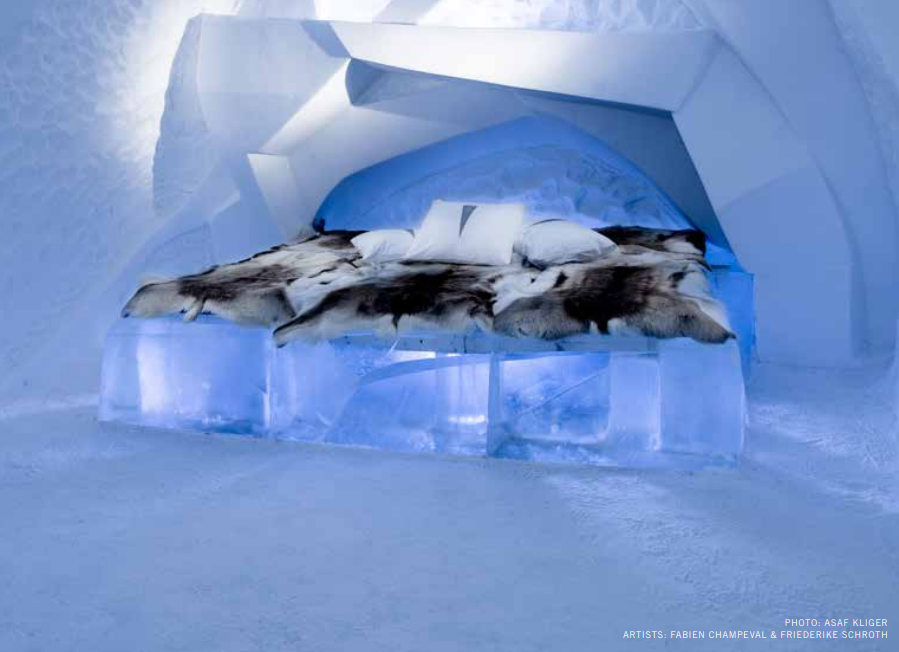
Icehotel contains approximately 300 beds each year (150 warm and 150 cold). For cold rooms (rooms made of ice), visitors are provided with expedition-style sleeping bags that withstand extreme conditions. From 10 am to 6 pm, Icehotel is open to the public, and day visitors as well as guests are able to access all rooms (aside from Deluxe Suites). Guests can access their cold room starting at 6 pm, but the Riverside Lobby (the heated service building where bathrooms, showers, and a sauna are located and visitors’ belongings are stored) is open on a 24-hour basis. Cold room beds are comprised of bedframes made of ice, a slatted bed base with a mattress, reindeer skins, and pillows.

Each room has its own design, giving visitor a unique experience. Also located on the premises are an ice church, ice bar, ice sculpting studio and pillar hall as well as two heated restaurants, a lounge, four meeting rooms and two wilderness camps. The Main Hall includes chandelier installations made from 1,000 hand-cut ice crystals.

Approximately 40 artists are selected each year to participate in the creation of Icehotel. Throughout the years, Icehotel has worked with a total of 546 artists.

Due to the insulating abilities of snow, the average interior temperature of Icehotel is -5 C (21 F), whereas outside temperatures can get as cold as -40 C (-40 F) in January. Icehotel is constructed in sections, meaning that parts of the hotel are opened before the entire structure has been completed.

Process that led recognition that change was necessary

Jukkasjärvi had been a popular destination for summer tourists who wanted to experience the midnight sun or participate in outdoor activities such as river rafting, but the long, cold winters made it undesirable for year-round tourism. This led Yngve Bergqvist to consider innovative options that might attract visitors during the area’s off-season.

Process that facilitated change

Bergqvist, who founded Icehotel, was inspired by the art of Japanese ice sculpting, and in 1989 he invited artists to attend a workshop that resulted in the creation of the first ice structure the following year. The first structure was a 60-meter-square igloo that was named ARTic Hall, and it served as an art gallery. Subsequently, the vision for ARTic Hall expanded; it became larger and housed a bar, and other events such as church services and film showcases began taking place there. It was not until a group of visitors spontaneously asked to spend the night in ARTic Hall that reindeer skins and sleeping bags were provided and the concept of Icehotel was born.

Implementation

Icehotel is constructed from two-ton blocks of ice that are harvested from the Torne River during the winter prior to their use. Plans are drawn up in May, and at the end of November, artists arrive in Jukkasjärvi to implement their vision. The process involves creation of a cast of a building through the use of 35,000 cubic meters of “snice,” a mixture of snow and ice from river water that is sprayed into molds and removed when the structure is ready. All rooms in Icehotel are made of ice and self-supporting, and once the building is completed, artists create their works inside the hotel.

Success/failure story

Following the success of Icehotel in Jukkasjärvi, the ice hotel idea has been replicated elsewhere, including in Canada, Romania, Norway and Finland. Icehotel’s great success over the year has also led to product diversification and expansion that has been experienced throughout the world. Since, 2017, Icehotel has offered a cold sleeping option year-round. ICEHOTEL 365 houses an ice bar, ice gallery, and luxury suites with private bathrooms, and the facility is kept cool by energy from solar panels during the summer.

Since the first permanent ice bar was created by Icehotel in 1994, the concept has become popular. In addition to the original ICEBAR in Jukkasjärv, a location has opened in Stockholm.

The ice bar concept has also been replicated worldwide in places such as Boston, Hong Kong, and Las Vegas.

ICEHOTEL Creative Experience is a business venture that offers ice products for events throughout the world. Orders, whether large instillations such as sculptures and catwalks or small items such as ice glasses and dishes, are tailored to the needs of the clients. These products are made with the same Arctic ice used for the hotel.

Company info

Icehotel, Marknadsvägen 63, 981 91 Jukkasjärvi, Sweden

Phone: +46 980 66800

E-mail: info@icehotel.com

References

https://www.icehotel.com/about-icehotel/

https://www.icehotel.com/hotel/food-drink/icebar/

https://www.cntraveler.com/galleries/2014-12-09/coolest-ice-hotels-in-the-world

Ice hotel Read More »

World’s first underwater wine cellar

Bodega Crusoe Treasure (Spain)

Introduction

Located in the Plentzia Bay on the Bilbao-Basque Coast of Spain, the makers of Crusoe Treasure Underwater Winery have taken the art of winemaking to new depths by perfecting the science of aging wine underwater. The wine is aged in the first underwater cellar and artificial reef in the world. Matured in small batches and monitored based on ocean temperature, currents, light intensity and marine influence, every care is taken to create a limited edition wine of exceptional quality. Sustainability is the cornerstone of the Crusoe Treasure business model, dedicated not only to creating a rare limited edition wine but also educating others about marine life and protecting our ocean treasure.

Description of the product

Throughout the year Crusoe Treasure holds wine tastings with the possibility of meeting the daily work at Underwater Winery. Discover the underwater cellar on board “Crusoe Treasure’s” boat, followed by wine tasting of underwater wines paired with basque pintxos, in a unique experience always guided by a founding member team.

Implementation

The visit of several national and international journalists and the presentation and guided tour that the people in charge of the company made with them was the beginning of creating a new type of cellar visit so different to a common cellar tour. Crusoe Treasure Winery team started to offer this new type of experience to tour operators and travel agents with a very good reception and firsts clients came to do it ending with very good opinions.

Success story

Year by year the experiences offered by the underwater winery has been improved and the visits are increasing as well and underwater wine production and references to wine – from its widespread acceptance at the project’s first successful introduction at the ASUTIL conference in Panama in 2015, and all the way up to Michelin-starred restaurants including us in their exclusive wine lists. Operators and retailers in travel retail are talking more and more about us, giving us the chance to leave our footprint in travel retail. 

For more information about the project’s history, see the interview Ten Easy Pieces: Meet the underwater wine woman, Irina Wiedemann.

Company and contact info

Bodega Crusoe Treasure

www.underwaterwine.com

Areatza s/n E-48620
Plentzia – Bizkaia
Basque Country. Spain

Tel : +34 94 401 50 40

E-mail: visit@crusoetreasure.com

World’s first underwater wine cellar Read More »

Underwater museum

‘Museo Atlántico’ – Atlantic Museum

Introduction

The Atlantic Museum project aspires to create a strong visual dialogue between art and nature. Designed with a conservationist approach, it is made up of 300 environmental friendly cement sculptures which form a huge artificial reef that helps marine biomass flourish and facilitates species reproduction off the coast of Lanzarote, Spain.

CACT, a local public entity experienced in combining art and nature, has conceived this Europe-unique underwater museum with Brittish eco-sculptor Jason deCaires Taylor. The sculptures, distributed in ten facilities at a 12 meters depth, reflect contemporaneity and intends to make us reflect on the use of natural resources.

Since the first pieces were deployed in January 2016, marine biomass at the area is 50 times greater and other ecological rates, such as richness and species abundance, have seen an increase in more than a 200% by providing shelter and food to a complete reef ecosystem.

The admission prices to the museum perform a crucial role, generating profits for a network of diving centers and adjacent businesses and creating alternative employment around a sustainable activity. So far, 33 out of 37 diving centers on the island have been certified to offer this diving experience by including quality procedures in their management, what has supposed a positive impact in the diving sector.

In addition, 2% of the deposits generated by the museum are given over to research and to raise awareness regarding the richness of species and seabed on the island, with the aim of putting value in the Lanzarote underwater platform.

Description of the destination or original product

CACT (Centres of Art, Culture and Tourism) is the main tourist benchmark in Lanzarote, a network of museums created to protect the natural environment and experience the beauty of its unique landscape. This entity is the main economic engine of the island and it is based on the idea of promoting sustainable development in Lanzarote, based on the conservation and preservation area declared a Reserve of the Biosphere by UNESCO.

The harmony between art and nature constitutes the pillar of the CACT philosophy, who was born with the opening of ‘Jameos del Agua’, a partially collapse of a volcanic tube which turned into an Art, Culture and Tourism Centre thanks to the intervention of famous local artist César Manrique in 1966. In his fifty years of history, CACT has learnt not only to apply this philosophy to its others museums but also to transmit it to local population, who is very sensitive to this binomial.

Process that led recognition that change was necessary

The ultraperiferic context of the Canary Islands in the European Union is a determining factor in the development of large scale projects. The main economic activity in the region lays on the third sector, especially on tourism, for this reason the islands need to foster sustainable tourism projects to adapt their economy to the fight against Global Warming and Climate Change.

Despite being in an isolated region, CACT has been able to run the first underwater art museum in Europe, creating an innovative product which benefits the island in a social, economic and environmental point of view, cornerstone of any sustainable project.

Process that facilitated change

Since 2001 CACT celebrates an Art Biennial to keep alive this idea born years ago, where artists from all around the world, as Jason deCaires Taylor, are invited to show their works. The biennial celebrated in 2013 was the starting point of this project, when we first met the artist and his underwater works and considered he could work in a new underwater museum.

The project became real on January 2016, when the first 60 sculptures were installed on the sea bed. After authorising the first diving centres and guides, the museum opened its doors the 2nd of March of 2016. From that moment until January 2017 ‘Museo Atlántico’ worked in a pre-exploitation period. Today the museum is totally completed and its 300 pieces can be enjoyed.

Implementation

Museo Atlántico is 100% public capital project. An 85% comes from the benefits generated by CACT while the other 15% are European Funds destinated for the region.

The approach from the very first moment was that the already existing diving centres in the island were in charge of managing the visit. The role of CACT has consisted on creating an operators ecosystem with a double objective; to standarise the visit and to improve the quality of centres by auditing them.

Passing the audits is a minimum standard. In adition, diving operators also need to comply with the rules established by the museum in order to respect marine life in the area and to guarantee the best and safest experience to divers.

CACT charges for the entry fee (from 8,00 to 12,00€) but the rest of services, such as diving equipment, transport, guide and training (when needed) depend on the diving operators, that use an online reservation system to book visits to the museum.

At the moment the museum is working to monitor the area with scientific equipments which on a next stage will make data accesible to researchers from all around the world. Components of this technological set are yet to be defined, but according to experts the region lacks in this sort of stations which could provide useful data to fight Climate Change.

Success/failure story

According to a report made by the agency Porter Novelli in April 2017, more of 975 features in press, radio, television and the internet have been published at a national and international level since the first deployment in January 2016 took place. These publications have reached an audience of more than 1063 million of people and it is estimated that its cost in publicity would have been over 71 million of euros.

The impact has also been noticed in the growing diving industry, which has seen an increase of a 48% of divers in a year period (last data from 2016). Since the creation of Museo Atlántico, 5 new diving centres have opened its doors in Lanzarote, which already gathers one third of all diving centres in the Canary Islands. In regards to diving instructors, the museum has helped to improve their conditions as a working contract is a must to work as a guide.

Although the museum opened in a trial phase during its first 10 months, more than 14,300 divers have enjoyed this activity so far. Many recording teams have also shown interest in using the museum as a location for professional audiovisual projects, which has led to the development of ten diferent artistic creations on site.

The first environmental project, which consists on a seegrass (Cymodocea nodosa) repopulation at the museum site has given its first steps. Experts from the University of Las Palmas de Gran Canaria will start soon to grow this important see-grass in their labs. Seagrass meadows have high biological productivity and are rich, biodiverse habitats.

Company info

Name of institution: E.P.E.L – C.A.C.T

Location: Lanzarote Island, Canary Islands, Spain.

Official homepage:  www.cactlanzarote.com

Telephone:  0034 901 200 300

E-mail:  info@centrosturisticos.com

Underwater museum Read More »

Doing-good hotel brand

Good Hotel Group

Introduction

Good Hotel Group is a profit for non-profit organization that combines doing good with doing business and premium experiences. They re-invest all profits in business and education, and as a result, stimulate local entrepreneurship and development.

Description of the destination or original product

Good Hotels are located in destinations where touristic demand meets the opportunity for development. They offer travelers to do good, connect and contribute to their travel destination, which enables a whole new level of immersion in the premium travel industry. Good Hotel wants to redefine the model of how business is done – combining doing business with doing good – with a best in class guest experience at the core. Good Hotel Group was founded by Good Group, a non–dividend company built on entrepreneurial spirit, and the belief that one day, all business should be sustainable and give back to the communities they are in.

Process that led recognition that change was necessary

Marten Dresen, founder and CEO of Good Hotel, was traveling in Guatemala, when he befriended a little girl with no shoes. The pair of shoes he gave her led to the founding of Niños de Guatemala in 2006, which focused on providing education for those living in extreme poverty. Later on, he realized that education alone doesn’t change that much if there is no opportunity for employment. They needed jobs; business should be connected to development in those poor communities. That’s when he decided to found Good Hotel Group.

Process that facilitated change

In each destination Good Hotel is located in, they are addressing a specific problem. During their pop-up year in Amsterdam, they trained long-term unemployed locals and gave them a chance to move out of state well-fare and re-integrate. They invested in their training – set up a unique Good Training program, which is established in each Good Hotel Destination, offered them a job and on-the-job training, and assisted in their mediation towards the job-market. Hotel profits go to NGO’s and they work with local suppliers and craftsmen, stimulating the local economy. They use Good Hotels to learn skills, invest in education and offer people, businesses, and the local community a platform of opportunity.

Successes

Long-term unemployed locals are being recruited and receive a unique Good Training, helping them move out of unemployment, invest in their training and assist in their mediation towards a permanent job in the local hotel industry. People are not recruited on their past or resumé, but on who they are and their motivation to change their future. In Amsterdam, they trained 100 unemployed/year, 60/year in London, and in Antigua, 80+ jobs are created for local residents (excl. management and volunteers).

Local entrepreneurship and business are stimulated by partnering with small and family-owned businesses from the surroundings of each Good Hotel. 450+ kids from low-income families receive a quality education in Guatemala yearly.

Company and contact info

Good Group (Good Hospitality Group BV) is the owner of the Good Hotel brand, and it has a number of 100% daughter companies, which are the operating entities of the different Good Hotels.

Good Hotel is profitable but doesn´t maximize profits, nor do they pay out dividends. They invest their profits back into training and social programs, as well as in the growth of new hotel destinations in less developed regions.

Good Group
Hoogte Kadijk 400
1018 BW Amsterdam
The Netherlands
Contact person: Judith Karels
judith.karels@good.community

References

www.good.communitywww.goodhotellondon.com , www.goodhotelantigua.com

Doing-good hotel brand Read More »

We use cookies to give you the best online experience. By agreeing you accept the use of cookies in accordance with our cookie policy.

Privacy Settings saved!
Privacy Settings

When you visit any web site, it may store or retrieve information on your browser, mostly in the form of cookies. Control your personal Cookie Services here.

These cookies are necessary for the website to function and cannot be switched off in our systems.

In order to use this website we use the following technically required cookies
  • wordpress_test_cookie
  • wordpress_logged_in_
  • wordpress_sec

Decline all services
Accept all Services