Encyclopedia

Connected-community hotel

Introduction

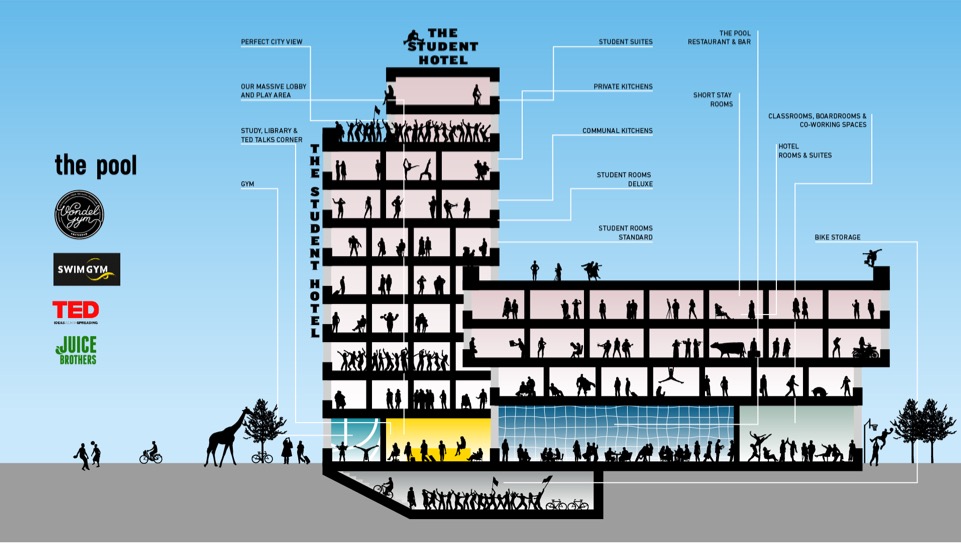
The Student Hotel claims it is the world’s largest “complete connected community”. It is comprised of individuals inspired by the student spirit who co-work, co-live and “co-a-lot-more.” Each hotel is a place where long-term student residents as well as hotel guests experience hybrid accommodation that blends living with leisure and work facilities. With a vision of bringing people together, The Student Hotel is intended to encourage individual goals to be achieved while guests collectively work to change the world for the better.

Description of the destination or original product

Collaboration and design are two cornerstones of The Student Hotel. The hotels’ vibrant atmospheres are designed as modern, open spaces in order to forge new connections between guests and to cultivate collaboration and idea sharing. Four demographics are served at The Student Hotel: student guests, hotel guests, short-stay guests (those staying from two weeks to one year), and those who use the premises to work and meet.

State-of-the-art facilities as well as high-speed Wi-Fi are only some of the ways in which guests’ experiences are maximized. At each of its thirteen current locations (including Amsterdam, Barcelona, Berlin, Florence, and Paris), The Student Hotel contains student rooms, hotel rooms, and co-living studios. The ground floors host open spaces to facilitate social and inviting environments. They are publicly accessible and include study areas and meeting rooms. Hotels are equipped with facilities such as a gym, swimming pool, game room, bar and fleet of bicycles that can be used by The Student Hotel community. In seven of the current locations, entrepreneurs and businessowners can become members of the TSH Collab, which is a co-working space that offers desks, office space, and meeting rooms and events on demand. Members have access to all TSH Collabs, meaning that they are able to take their work with them wherever they go.

The Student Hotel connects people of various backgrounds, whether students, entrepreneurs, or travelers. Each person contributes to the connected community, and the overall result is cross-cultural understanding. While students enjoy high-quality accommodations, parents are able to visit as hotel guests and enjoy the inclusive environment. With the inception of The Student Hotel concept, the socially-minded design of a hotel has successfully contributed to the spirit of discovery, openness, and adventure.

Process that facilitated change

CEO Charlie MacGregor was involved in the student accommodation industry before creating The Student Hotel. His plan was not originally to create a hotel akin to what The Student Hotel is, but rather to provide first-year students with good quality accommodations, ample shared common spaces, and extensive ground floors where individuals could come together.

Once the business plan evolved into a hotel model, it became evident that The Student Hotel environment was one in which people of all generations and backgrounds could be successfully integrated in order to bring the community together.

Implementation

The first branch of The Student Hotel was established in Amsterdam. Since then, the company has expanded in the Netherlands and abroad. With the help of public-private partnerships with local as well as international stakeholders, The Student Hotel has grown substantially. With the help of city governments and property companies, buildings that remain vacant have been successfully developed into hotels, sometimes in less than a year. All efforts in the planning and development process are done with the support of international experts.

On March 3, 2017, the first TSH Collab was opened in Amsterdam City, the company’s flagship hotel. Since then, TSH Collab (as well as hotel locations) have begun to spread throughout Europe.

To encourage meaningful change-making, The Student Hotel aims to utilize ten percent of its resources and space to creating a positive impact on the world. This process has been accomplished by the greening of buildings and supporting a diverse community, to name a few. Through its annual Impact Report, The Student Hotel discusses its current sustainability initiatives.

Success/failure story

Forty-one hotels are slated to open by 2021. In total, these hotels will house over 3,000 bikes, 1,755 hotel rooms, and 30,000 square meters of shared connecting spaces, and over 1,300 jobs will have been created. By 2020, there will be thirty TSH Collabs in Europe.

The Student Hotel has been able to achieve an accommodation environment that serves students better, integrates parents and guests into the experience, and cultivates a greater sense of community in everyday living quarters.

Company info

The Student Hotel

Jan van Galenstraat 335

Amsterdam, 1061 AZ, Netherlands

www.thestudenthotel.com

References

https://www.youtube.com/watch?time_continue=12&v=saBYrRk1QMw

https://tshcollab.com/en

Connected-community hotel Read More »

Robot-assisted low-cost hotel

Henn na Hotel Huis Ten Bosch: The Road to Low-Cost Hotels (LCHs)

Hisashi Masuda, Kyoto University [i]

Kotaro Nakamura, Japan Advanced Institute of Science and Technology

Introduction

Henn na Hotel Huis Ten Bosch is a hotel project by Huis Ten Bosch Co., Ltd., with the goal of creating a low-cost hotel (LCH). The hotel project began in late 2012. Since the company opened the hotel in July 2015, they have conducted many substantial experiments in the business. As of February 2018, the LCH business is expanding its market. According to Takeyoshi Oe, the General Manager of Henn na Hotel Huis Ten Bosch, the important insights gained through the development of an LCH are to cut labor costs by introducing technologies such as robots and automation, provide uniform quality of service to hotel guests by making robots the main staff, and attract the attention of media and hotel guests with technologies that can be seen as entertainment.

Background

In 2010, H.I.S. Co., Ltd., a major travel agency in Japan, committed to managing the reconstruction of Huis Ten Bosch Co., Ltd. The company, located in a rural area in Kyushu, operates a theme park that emulates a Dutch streetscape. Hideo Sawada, the head of H.I.S. Co., Ltd. became the head of Huis Ten Bosch Co., Ltd. in 2010 and reformed the business in diverse ways. A typical problem in Japanese rural areas is the labor shortage caused by the concentration of young people in urban areas. When Sawada stayed at Hotel Europe, which is Huis Ten Bosch’s official hotel in the park, he noticed many services in the hotel that are costly, such as the presence of a doorman. At this point, he came up with the idea to create low-cost hotels (LCHs) to complement the conventional hotels, similar to the role of low-cost carriers (LCCs) in the airline industry.

Prototyping and Construction

To successfully create LCHs, a project was launched to reduce the labor and utility costs of Huis Ten Bosch’s official park hotels as much as possible by using what were considered cutting-edge technologies at the time. However, building such a hotel facility immediately has high risk. For this reason, the company conducted an experiment in 2013 to build and test a house-type facility called a smart house. Sawada decided to actually live in the smart house for a month to judge whether a low-cost hotel service is worth providing to his customers on the basis of the smart house experiment. In November 2014, the construction of the East Arm, which is the primary building and has 72 guest rooms, began. After that, Henn na Hotel Huis Ten Bosch was opened in July 2015.

Details of Opening a Low-cost Hotel

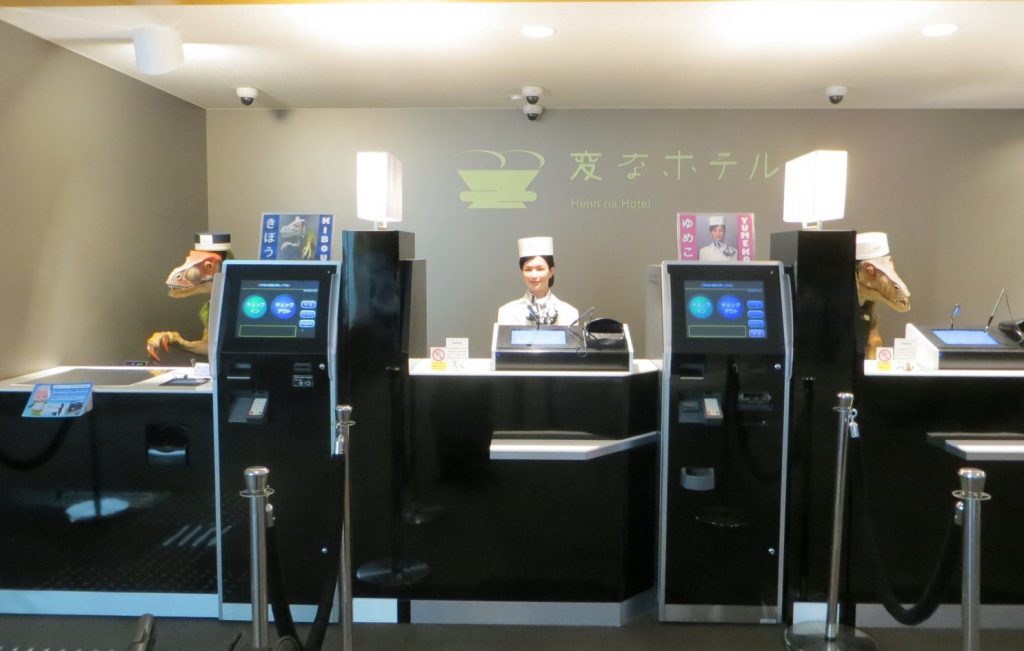
The notable processes to create the LCH in Huis Ten Bosch were: giving it a unique name, introducing cutting-edge technologies to the hotel business, and improving it through trial and error. Regarding the first point, the name “Henn na Hotel” was chosen through a top-down decision. The company chose this Japanese name with a meaning of “a commitment to evolution.” The Japanese adjective “henn na” also has the general meaning of “strange.” Regarding the second point, the company attempted to replace the receptionists, bellmen, cloakroom attendants, and cleaning staff in the hotel with robots. To do so, they first tried to make appointments with companies that seemed to have the capability to make the robots they wanted. However, in the start-up stage of the project, it was difficult to arrange this sort of appointment due to the unique name. The company narrowly succeeded in contracting with several suitable companies. Finally, they also tried introducing new and unique approaches in the actual hotel business in order to reduce the labor and utility costs. For example, the company put two robots in the reception area. One was an android robot with a woman appearance, the other was a zooid robot with a dinosaur appearance, particularly designed for amusement, giving the nod to the hotel’s theme park location. In the guest rooms, there were no TVs or refrigerators, but there was a voice-activated companion robot, which was the first step to replacing a hotel concierge with a robot. For the hotel booking, they implemented an auction system. However, in July of 2015, which was the opening month of the hotel, their guests strongly complained about the radical cost-cutting, the unique booking system, and the voice-activated robot. The staff of the hotel modified the business on the basis of the customers’ opinions. For example, they equipped the rooms with TVs and refrigerators, ended the booking auction system, and adjusted the voice-activated robot to serve children. In Henn na Hotel Huis Ten Bosch, the business model was improved on the basis of trial and error.

Characteristics of the “Henn na Hotel” Low-Cost Hotel

As of February 2018, the important insights gained through the diversified approaches to developing the Henn na Hotel Huis Ten Bosch LCH are as follows.

1) Cutting down on labor costs by introducing technologies such as robots.

In the beginning of the business, there were 72 guest rooms and 30 employees. Currently, there are 144 guest rooms and 7 employees thanks to the robots and the automation of the hotel services that they enabled. However, General Manager Oe noted that, taking potential circumstances such as the sudden illness of a customer into consideration, this number of employees is close to the feasible minimum.

2) Providing uniform quality of service to hotel guests by making robots the main staff.

In human-to-human services, the service quality varies depending on the employees’ physical conditions, customers’ attitudes toward the services they receive, differences in customers’ native languages, and so on. If a robot provides service, the service quality is the same for any kind of guest, given adjustments for different languages. Although the service quality itself is average, this sort of robot-provided service is relatively preferred by foreign guests. Additionally, some Japanese guests who do not want to be bothered by human interactions prefer this robot-provided service.

3) Attracting the attention of media and hotel guests with technologies that can be seen as entertainment.

After opening the hotel, many guests stood in line to check in with the dinosaur receptionist robot regardless of the availability of the lady-like  one. During the hotel project’s conception, the project members did not expect the robots to affect customer behavior in this way. Meanwhile, thanks to the aggressive trial and error in its practices and substantiating experiments, Henn na Hotel had many newsworthy events. A variety of media gave the hotel attention and reported on it extensively. The main purpose of Henn na Hotel was to create a LCH. However, the project members also succeeded in attracting a lot of media and guests who looked at the hotel from different perspectives, such as that of entertainment and newsworthiness. Naomi Tomita, the executive advisor and chief technology officer in Huis Ten Bosch Co., Ltd., calls this sort of business model that is based on substantiating experiments “agility-oriented management.”[ii]

Summary

As of February 2018, the LCH business is expanding into major cities in Japan and other nations in Asia. Looking back on the path to the creation of Henn na Hotel, General Manager Oe explains that the name of the hotel enabled it to overcome a number of failures. “Henn” has two meanings. One is “change,” including the nuance of “evolution.” The other meaning is “strange.” Japanese people who encountered something inconvenient or poorly-managed because of the robot-oriented nature of the facility tended to tolerate it, thinking, “I don’t blame the robots, and besides, the hotel has ‘strange’ in its name.” Agility-oriented management involved in this sort of substantiating experiment runs the risk of providing insufficient service to customers. In a way, Henn na Hotel can be thought to have overcome this risk with its name. The general manager also has plans to develop new hotel and robot services and to continue to explore the “henn na” LCH.

Company Information

Huis Ten Bosch Co., Ltd.

1-1 Huis Ten Bosch-cho, Sasebo, 859-3293

Japan

Tel +81-570-064-110  

Notes


[i] This article is based on an interview with the General Manager of Henn na Hotel Huis Ten Bosch, Takeyoshi Oe (Huis Ten Bosch Co., Ltd.), conducted at Henn na Hotel Huis Ten Bosch on February 23, 2018.

[ii] According to his keynote speech in “Jissen Solution Fair 2018,” held by Otsuka Corporation in Tokyo on February 8, 2018.

Robot-assisted low-cost hotel Read More »

Regional revitalization through contemporary art

“SUZU 2017: Oku-Noto Triennale”: The Road to Regional Revitalization through Contemporary Art

Kotaro NAKAMURA, Japan Advanced Institute of Science and Technology / Soka University

Hideyuki SAKAMOTO, Kanazawa College of Art

Momoka KANO, Oku-Noto Triennale Executive Committee

Introduction

“SUZU 2017: Oku-Noto Triennale” is an art festival aiming for regional revitalization and takes place in Suzu city on the Northern coast of Japan. Oku-Noto is the name of the Northern area of the Noto Peninsula. The organizers of the Triennale formulated an initial business plan (300 million Yen, 30,000 visitors) in 2015. Preparations for the festival have been in full swing since around 2016 and it was held for 50 days from September to October 2017. This is the same period of the conventional fall festival period. The Triennale was a success with 71,260 visitors, a total revenue (including donations) of about 80 million Yen, and an estimated economic effect of 520 million Yen. Additional success indicators are:1,610 volunteers from within and around the city, but also from abroad, participated. Even after the closing of the event, nine artworks were permanently installed and 171 group tours with a total of 5,500 tourists from urban areas visited as of February 2019. The impact on the region has been evaluated, and the festival was decided to be held a second time in Fall of 2020 aiming for 80,000 visitors. This case, as a representative example of tourism-type art events in a remote area, demonstrates that it is beneficial to attract art-mediated customers and to activate regional actors.

Description of the destination or original product

The region is geographically uniquely bounded by the outer harbor to the North and the inner bay to the South. It retains the original historic scenery along the coast and sources of old Japanese culture accumulated over generations. This can be seen in the region’s festivals and rituals, such as festival floats and big lanterns and inviting friends and neighbors to feasts as a social gathering. It also has other rich cultural resources like traditional cuisine, Suzu grilled work pottery and fried beach type of Yantian for salt production. The festival incorporates these resources through art and provides site-specific experience value.

Impetus of change

Suzu city has a rich history of several hundred years with maritime trade and active shipping. However, due to depopulation, it is regarded as one of the most isolated places in Japan. In the past 70 years, the population has halved and the city is faced with an aging society. Therefore, the common sense of wanting to stop the population decline and maintain the sustainability of the area became stronger. One potential avenue to do so is making the area attractive to young people and maintaining the resident. Attention was focused on an art festival to enhance the attractiveness of the area utilizing natural and cultural resources that are not found in sports events.

Process that facilitated change

By welcoming Fram KITAGAWA, who has more than 20 years of experience, as a general director for the festival, the organizers achieved a necessary first step for arts events in remote areas: That is, securing leadership of an artists that a rediscover the charm of the places, patterns of life and engages many area residents and supporters from elsewhere to participate in the art festival (from guidebook ‘writing article). With the aim of “an art festival where traditional culture resonates with contemporary art”, festival organizers aimed for the regional understanding of the art festival and the participation of regional actors.

Implementation

The participating artists were 39 groups from eleven countries and regions (ten groups from abroad, 29 groups from Japan). Initially, the city office led the way by budgeting, prepared the infrastructure maintenance, organized the volunteer, and held explanatory meetings with local district leaders and residents. Through this cooperation of the local community, a regional cooperation system was gradually established through the development of the venue and the creative process of the artworks. As a result, the art installation at the shoreline, the display reusing the inland public hall and old school facilities, the old station building of the “Noto Railway Line” (disused since 2005), the railway track, the ruins of historic commercial houses in the town, unused movie theater etc. It was taken as the work venue.

Typical story

People in the area could hardly conceptualize “the image of how they relate”, except the local district chief who has seen other art festivals after having decided to hold this one. From the time when permanent works and venues (a total of 37 locations) were created, the movement started in each district. There was a working display of deep relationships with life activities such as salt-making places and regional products and embroidery, etc.” “The greater the degree to which people in the area helped,” the more the place was active during the festival period. In addition, the senior generation was trained as guides in the style of talking about the area more than the work. In the last 12 to 18 months before the festival, it became clear that participants took ownership and made the projects they were responsible for ”their own thing”.

Even after the end of the festival, nine artworks remained in place and are now permanent, aiming at the ripple effect such as sightseeing tours to attract more than 5,500 tourists in the first year after the event. In addition, the common sense of “It is necessary to create a scheme including sightseeing and eating and drinking business” is intensifying. The city plans collaboration with key people in marketing, entrepreneurs in the city and with service businesses to create a new organization for the 2020 festival. Transportation and accommodation capacity has also begun to improve and expand. For this purpose, it is necessary to “clarify the economic effect and raise an understanding of the festival among citizens”.

The Triennale has succeeded in attracting contemporary art fans to the Suzu area and made local actors more receptive to events with the help of famous artists’ creative work. Participating local actors are beginning to share awareness and enjoyment of the existence of local resources through art production and appreciation. It is also widely recognized that the region’s diverse resources have the potential to be aware of history and tradition and to deep mutual bonds. If the businesses reflect this in their own tours and brands, it will increase citizens’ acceptability to the city’s’ financial investment as a trigger to create economic value.

Results

The following results can be summarized:

1) More visitors – contemporary art fans.

2) Local people have had an opportunity to rediscover local natural and cultural resources through art events.

3) Local actors were able to raise awareness of future possibilities and potentials of this region.

Organizer info

Oku-Noto Triennale Executive Committee

13-120-1 Iida-machi, Suzu-city, Ishikawa #927-1214

TEL: +81(0)768-82-7720, Mail: info@oku-noto.jp

EXECUTIVE CHAIRMAN: Masuhiro Izumiya (Mayor of Suzu)

DIRECTOR: Fram Kitagawa (Art Director)

CREATIVE DIRECTOR: Katsumi Asaba (Art Director)

References

Oku-Noto Triennale web (http://oku-noto.jp/en/about/ [Accessed: 01-March. 2019])

Kitagawa F. and Oku-Noto Triennale committee office (2017). Oku-Noto Triennale 2017 Formal report: SUZU2017 (http://www.jca.apc.org/gendai/onebook.php?ISBN=978-4-7738-1804-8 [Accessed: 01-March. 2019]).

Kitagawa, F., Breslin, L. & Fravell, A. (2015). Art place Japan: The Echigo-Tsumari Art Triennale and the vision to reconnect art and nature. New York: Princeton Architectural Press.

Notes

This description is based on participant observation during the event, interview with the ONT office people and local collaborators and supporters, and the related publications and newspaper.

Regional revitalization through contemporary art Read More »

Fair(er) home sharing

Introduction

Fairbnb, a startup that is based in Bologna, Italy, is the culmination of the efforts of autonomous groups in different cities that banded together to create a more ethical version toward home sharing. Through a desire to demonstrate that social responsibility can be cultivated in the sharing economy of the tourism market, Fairbnb hopes to inspire the rest of the market to follow suit.

The platform was set to launch in late June 2019 but has been pushed back until mid to late September due to an unforeseen delay in financial resources, which are self-funded by members with the assistance of crowdfunders worldwide.

Description of the destination or original product

Fairbnb allows travelers to legally obtain accommodations from a fair, collectively-owned, and transparent booking platform designed to create meaningful travel and achieve community participation. Through collaboration with municipalities, the platform guarantees that cities can analyze tourism trends and their effects, and it guarantees the legality of rented properties.

Fifty percent of all Fairbnb’s commission is donated to local community projects; locals decide which projects to offer as options, and vacationers opt to fund the project of their choosing, e.g. social housing for residents, community garden funds, etc. Donations to such projects can even be made on the platform without having to book accommodations on the website. Therefore, local communities are also empowered to use the platform as a crowdfunding tool if they so choose.

Local communities are further empowered because residents democratically determine the way in which Fairbnb will operate within their community. Additionally, to limit the negative effects of home-sharing on the housing market of a community, hosts are limited to having only one secondary house listed on Fairbnb.

The co-op is independent, thus ensuring that it is influenced by locals rather than investors. Through a framework of co-ownership and co-governance, decisions are made collaboratively.

Process that led recognition that change was necessary

With the rising popularity of home-sharing platforms such as Airbnb, destinations throughout the world (and especially in Europe) have faced issues relating to mass tourism, which has led to housing crises and other economic phenomena that have negatively impacted locals. Revenues have been redirected from the local economy and toward international organizations, leaving the local population with exceedingly fewer benefits from tourism. Cities such as Venice and Barcelona have suffered the loss of much of their cultural identities, as many locals who cannot compete with the revenues of short-term rental properties have had no choice but to move out of the city centres in the pursuit of affordable housing. Lack of local regulation, aggravated by short-term rentals from speculators who own multiple properties, has only made matters worse. The affordability of rent in touristic areas has been met with consternation, as seen in cities such as Bologna, where students have protested rising rental costs as a result of Airbnb’s presence.

Process that facilitated change

In 2016, the movement to create a home-sharing platform that could serve as an more sustainable alternative to already existing options began. Initially developed by groups from Venice and Amsterdam, where Airbnb and other accommodation options have created considerable issues for local populations, industry experts, activists, coders, researchers, and innovative minds worldwide became involved in what officially came to be known as Fairbnb as of late 2018.

Implementation

Fairbnb is owned and managed by a cooperative of those directly affected by the platform, i.e. users and neighbors, who collaborate with hosts and visitors to create a community-driven experience for all. The model consists of local nodes, which utilizes human interactions as the cornerstone of Fairbnb’s business model. These nodes agree upon sustainability rules that, in addition to local regulations, locals must conform to when listing their properties.

Fairbnb’s test cities were originally in the founders’ cities of residence, but anyone interested in becoming a host is encouraged to pre-register online in order for Fairbnb to become a worldwide phenomenon. To create new nodes, it is required for a small group of locals to initiate the process and for some hosts and social projects to be found.

Success/failure story

Overall, the initiative has been met with approval. In Amsterdam, Barcelona, Bologna, Venice and Valencia, the city administrations have been supportive of Fairbnb’s pilot programs. Local nodes have also been developed in Genova, Helsinki and London as of summer 2019. Still, it will be some time until results better reveal Fairbnb’s impact on the sharing economy.
 
Fairbnb remains a dynamic cooperative program that constantly adjust to changes in accommodation regulations within countries where it holds a presence. For example, as of 1 August 2019, Italy has implemented a new law requiring all tourist accommodations to obtain an identification number through a public register that shall be displayed wherever the accommodation is offered. With changes such as these, Fairbnb is obliged (and enthusiastic) to adapt its platform in order to comply with such regulations and move toward fairer home sharing.

Company info

Fairbnb.coop

Via Alfredo Calzoni, 1, Bologna, Emilia Romagna 40128, IT

T: +39 334 741 4159

E: info@fairbnb.coop

www.facebook.com/pg/Fairbnbcoop

fairbnb.coop

@FairBnB_coop

References

https://fairbnb.coop

https://www.forbes.com/sites/annalisagirardi/2019/03/21/fairbnb-the-ethical-home-sharing-alternative-that-wants-to-undermine-mass-tourism/#57deaf0c3878

Fair(er) home sharing Read More »

Albergo Diffuso, from disaster to innovation

Ivana Dimitrijević, AIRTH intern

Introduction

Emerging in 1980s Italy, Albergo Diffuso is an early example of a successful sustainable practice in tourism. Albergo Diffuso aims at utilizing the idle accommodation capacities, such as abandoned houses or old inns, usually in remote and touristically non-popular settlements. The aim is to diversify the touristic offer, help and involve local communities, disperse tourists more evenly throughout the country and provide less of an impact for the environment. Also, despite it being based on private business ownership, community participation is crucial for implementation of Albergo Diffuso.

Description of the destination or original product

Albergo Diffuso means “scattered hotel” in Italian, and refers to a single hotel unit whose rooms are located in different buildings across the town (old houses, farmhouses, abandoned factories etc.), usually in radius of several hundred meters from its central hub/reception. By re-utilizing the already existing infrastructure for tourism development, it prevents unnecessary building and helps incorporate tourism in the unchanged local landscape and society.

Process that led recognition that change was necessary

The Albergo Diffuso concept originates from the Italian countryside, which was rich in medieval architecture and wonderful landscapes, but was remote and out of touristic maps of the time. However, the particular event which triggered the innovation was the terrible earthquake that struck the northern Friuli Region, near Venice, in 1979. There was a need to rebuild tourism all over again, and as fast as possible. Therefore, it can be said that the unused touristic potential was what enabled the emerging of Albergo Diffuso, but the natural disaster was what provoked its definition.

The idea was to activate the touristic potential by engaging locals in entrepreneurial activities. Also, as the owners were most often locals themselves, with tight bonds among the other members of the community, this meant that the community was deeply involved in tourism planning. Using many buildings for a single hotel was possible only if the community was ready to welcome tourists, help provide them with basic services (such as food, guidance, cleaning…) and thought this would contribute and/or not affect their landscape in any negative way.

This is how not only tourists got an opportunity to access the Italian countryside, but the community got an opportunity to earn more, incorporating the new tourism economy in traditional economies, such as handicrafting and agriculture. Also, the presence of tourists incited the revival of traditional festivals, crafts and events, which now got a new audience.

Process that facilitated change

Perhaps the best proof that this innovation was bottom-up directed, is the fact that the first time local authorities regulated this way of business was in 1998 in Sardinia, almost two decades after the concept was originally invented. However, with time local authorities got involved and even helped develop some of the initiatives.

Another thing that helped Albergo Diffuso come into being was the participation of scholars and creation of associations of Alberghi Diffusi across the country. This helped the accumulation and sharing of knowledge about the successful and unsuccessful practices, thus shaping the Albergo Diffuso we know today. Professor Giancarlo Dall’Ara is one of the most important Italian scholars known for studying the Albergo diffuso phenomenon, and he is also the chairman of the National Association of Alberghi Diffusi. This is a good example of how important innovation synergies between academia, business, etc. can be.

Implementation

The first implementation of the Albergo Diffuso happened in San Leo (Montefeltro) in 1989, under a project called “Tourism”, under guidance of the aforementioned Giancarlo Dall’Ara. Since then, three common paths of Albergo Diffuso development were established. The first path, or one of the three ways Albergo Diffuso can be established is through a private initiative. The second path comprises an initiative comming from the DMO. The third path is creating Albergo Diffuso by combining several small businesses in one, large company.

Depending on the local context and time, these paths vary and change. However, it seems that this concept mostly stays related to Italy, and hasn’t really spread beyond its borders. This might be due to the fact that the way it was conceptualized is tightly connected to the Italian cultural and social context, its architecture and art.

Success/failure story

For Italian tourism, Albergo Diffuso is a success story, an early example of sustainable practices in tourism, dating in time when the concept of sustainability was only being created and was far from official agendas. Following a natural disaster, it brought about an innovation which insisted on many stakeholders involvement: local community, authorities, DMOs, private businesses, tourists, natural environment… This contributed to it being recongized as a community-based and sustainability oriented accommodation concept.  In a country as experienced in tourism as Italy, this was an optimal solution for preserving beautiful landscapes, medieval architecture and art, while at the same time developing new forms of sustainable tourism. Since 40 years ago, this has proven to be a quite efficient way of bringing people from cities back to the countryside, connecting demand and supply in tourism, new and traditional economies, reviving local tradition and culture.

Furthermore, National Association of Alberghi Diffusi is not the only association of this kind. Recognizing the importance of Albergo Diffuso for their development, several municipalities have founded the Associazione Borghi Autentici d’Italia. The aim is to guide development and help create optimal conditions for local private initiatives which seek to challenge the economic decline with development of tourism. This organization puts a strong emphasis on the joint participation of the community, local authorities and private sector.

There is also a sister phenomenon to Albergo Diffuso, named Borgo Albergo, which signifies an accommodation unit using a network of rooms and houses sometimes far away from each other, without hotel services but utilizing centralised booking platform.


References

https://ecobnb.com/blog/2013/11/alberghi-dffusi-hotels-italy/

Confalonieri, M. (2011). A typical Italian phenomenon: The “albergo diffuso.” Tourism Management, 32(3), 685–687. https://doi.org/10.1016/j.tourman.2010.05.022

https://www.alberghidiffusi.it/

https://www.borghiautenticiditalia.it/

Albergo Diffuso, from disaster to innovation Read More »

Youth health and summer resort

Slovenian Red Cross Youth and Health Resort Debeli rtič (Slovenia)

Introduction

Since 1956, Youth Health and Summer Resort of Red Cross Slovenia Debeli Rtič (MZL DR) has been a health center for children, adolescents, families and seniors. For many years, with a unique position, a mild Mediterranean microclimate and appropriate modern medical, therapeutic and sports facilities, we successfully contribute to the curative and prevention of the health status of children and adolescents. As part of the Slovenian Red Cross, we act in accordance with the fundamental principles and promote and promote the values of health and healthy life through practical programs of health protection and protection.

Description of the destination or original product

The health resort is situated on the most beautiful part of the Slovenian coast between Koper and Trieste, just off the coast between vineyards, in the midst of a carefully protected Mediterranean park, on seven hectares of land.

In the spa there are the Hotel Arija ***, the Bor apartments** and four youth hostels with a total capacity of 716 beds. Today, the health resort is a modern health, sports and educational and pedagogical center that develops its programs under the slogan “Where dreams grow.” Annually 15.000 children visit us. We estimate that at least half a million children visited the health resort during all years of operation. In the health resort, there are programs of spa treatment (respiratory diseases, skin diseases, injuries and operations on the locomotor system and a new program for over-fed and overweight children), health holidays, rehabilitations, schools and kindergartens in nature, sport teams’ professional trainings, kids’, adolescents’ and seniors’ holidays, educational programs and business meetings. Due to the seaside climate and the healing effects of seawater, MZL DR has the status of a natural climate spa.

Process that facilitated change and implementation

In 2013, we suffered the fall of overnight stays in traditional programs such as: spa treatment, health and social holidays. In response, we heavily focused on direct marketing in the field of educational institutions with superior and regular programs. Our main message was that MZL DR is a “classroom in nature” as it offers a unique environment for young explorers; for which the holidaying by the sea in the cultivated Mediterranean park is a real discovery. We emphasized we are distinguished by many advantages: health center, protection, natural environment and varied animation programs.

In 2014, the Football Federation of Slovenia decided to build us a football field of dimensions 20 x 40 m with the aim of encouraging children and adolescents to participate in football training. With a diverse sports infrastructure, which has developed over the years, we have become a sports center for football clubs and athletic associations. The outdoor sports infrastructure consists of a football field with artificial grass (20m x 40m), a gym track with 15 stations in the length of 1,600 m (through a beautiful park), Nordic walking trails, beach volleyball courts, a basketball court, and an outdoor 25m pool (open during the summer season). The internal sports infrastructure consists of: 25m pool with heated sea water, fitness and gym at the Arija Hotel.

In 2015, we started to expand the services of MZL DR to foreign markets. The key service we offer there is the training of Red Crosses volunteers. Every year we are visited by: the Red Cross of Germany (children’s holidays and organization of volunteer education), the Austrian Red Cross (children’s holiday), the humanitarian organization from Belgium (secondary school camp), numerous football clubs on winter preparations from Serbia. Our main goal is to present MZL DR to foreign customers/groups as a modern center for sports groups, education and other activities.

Success / failure story

The success stories of the spa can be divided into three key areas. The first area is represented by successful implementation of various rehabilitations of children from Belarus and Ukraine, which we have been carrying out for several years with the ITF Enhancing Human Security organization, and the Slovene Ministry of Foreign Affairs, as well as rehabilitation of children with diabetes, celiac disease and phenylketonuria, which are carried out by several Slovenian associations.

The second area, successful and targeted infrastructure projects, implemented through donors, include our new demonstration kitchen and renovations in youth homes. With the help of the donation of the Football Association Slovenia, we built a football field with artificial grass for all children. In 2017, we also received the UEFA Foundation for Children Fund aimed at organizing football holidays for children from Slovenia and abroad. We also develop sport programs with the help of the Kayak Association of Slovenia, which is also helping us with kayak donations. Consequently, donations and support of recognized organizations give us a constant impetus and recognition on the market.

The third area is successful organization of health and pedagogical programs. The main orientations in the pedagogical program are 24 hours care for children with the help of volunteering care takers, the program “Let’s Play Outside”, the program “Magic Forest” and swimming schools; all supported by cooperation in the field of professional programs with University of Primorska’s members (Faculty of Education, Faculty of Health Sciences and FAMNIT’s applied kinesiology) and cooperation with the UMMI Institute in the field of professional content provision for schools in nature and programs for gifted youth. In the autumn of 2017, we arranged an urban pond with abandoned non-native turtles&fish for gaining awareness of non-native and invasive species and for animation of our guests. The latter is a visionary project that we develop together with veterinarians providing project’s professional and ecological level.

Altogether, our success story is heavily based on different types of donors who have recognized our professional content and dedicated work in great numbers. With their support, the spa resort invested in the infrastructure and in the development and diversification of new programs. Due to investments in infrastructure (renovation of buildings and sports facilities) and professional new programs, in 2017 we achieved a 10% growth in the number of overnight stays, in particular sports clubs, clubs, foreign groups and other holidays of children and adolescents. Targeted marketing has brought us the visibility and increase in the number of overnight stays and the reduction of seasonality. The past results show that with the help of professional staff, MZL DR is a special institution with high added value, which actively takes care of the protection and preservation of the health of children, adolescents and other vulnerable groups. When we as an organization found ourselves in the moment of (survival) truth, it was crucial that – with a positive attitude, teamwork and integration with the environment – we developed a healthy core and demonstrated that we managed to redesign a rudimentary youth summer resort into a modern multi-purpose/customer center. In our story, it was important to intertwine the socially responsible and commercial activities, by which we proved to our donors that we are trustworthy and that each donation is targeted towards programs and infrastructure that raises the standard of service that is aimed at children, adolescents and all vulnerable groups.

Company info

Mladinsko zdravilišče in letovišče RKS Debeli rtič

Youth health and summer resort of Red Cross Slovenia Debeli rtič

Jadranska cesta 73, 6280 Ankaran

T: +386 (0)5 909 7000

E: debeli-rtic.mzl@mzl-rks.si

www.facebook.com/debelirtic

www.instagram.com/debelirtic

www.zdravilisce-debelirtic.org

Youth health and summer resort Read More »

Video-based trip planner

Introduction

SeeVoov is a video-based trip planning platform that is the first (and currently only one) of its kind; putting a twist on the traditional planning process, it enables users to employ a visual-based approach when making travel arrangements. Through its integration of social and interactive elements, SeeVoov is revolutionary for the travel planning sector.

Description of the destination or original product

Powered by machine learning and artificial intelligence, SeeVoov is helping tourism companies increase revenues via ancillary bookings and improved user engagement. The company’s white labeled platform enables tourism companies to provide their travelers with a unique experience of the vacation research stage. The machine-learning system presents location-specific videos through image analysis that allows destination information to be logically organized for the convenience of the user. The SeeVoov database, through tagging algorithms, stores and organizes videos that are automatically searched for online by identifying information of relevance such as location and online reviews of particular destinations. To enhance quality and accuracy, the videos are reviewed and approved by an expert in the travel industry, and the information is processed again to increase the accuracy of the system.
The platform coordinates business-to-customer interaction through a user facing end-to-end interface as well as various business-to-business partnerships with airlines, cruise-lines, hotel-chains, and TV broadcast networks, which integrate the platform into various touchpoints with their customers (from the website, through applications, and with booking/check-in, in-flight, in-destination and smart TVs). Customer engagement and loyalty is enhanced through the expansion of partners’ product and service offerings, and user data as well as diversified revenue streams are achieved.
The single travel planning application conveniently offers accommodation options and prices as well as location-specific information all in one place, and it creates a personalized itinerary that is accessible on users’ phones. It also enables bookings from flights and hotels to attraction tickets and car-rental travel insurance, and it will soon offer restaurant reservations also. 

Process that led recognition that change was necessary

Travel planning has long been a dreaded reality for those who do not take joy in the process. Tedious itinerary planning, coordination of transportation, consultation with travel companions, and confirmation of reservations are time-consuming events that can overwhelm trip planners. The creators of SeeVoov recognized that for travel planning to become a more enjoyable process, the medium by which people plan their trips must be adjusted to facilitate a more engaging and socially inviting experience. Hence, the concept of making the necessary aspects of travel planning readily accessible on a single platform while facilitating a better overall experience emerged. Addressing the B2B ancillary revenue market was lead by the understanding that ancillary revenue should be generated from the cross-selling of complementary products and services that add value (and not only “extra charges”) to the passenger. Travel companies must embrace the concept of travel retailers rather than transportation/accommodation providers, and if they provide real value to the customer, the opportunity to cross-sell to a loyal customer offers potentially more profit than the core product itself. 
SeeVoov’s platform was designed to help travel companies provide their passengers with an added-value experience from the minute they book their flight, through their airport wait, during their flight and in-destination, thus giving passengers not only good value for money, but also great value for their time.

Process that facilitated change and implementation

SeeVoov was founded in 2016. It is based in Tel Aviv, the Israeli capital known for its high concentration of start-up businesses. Its patent pending technology that conducts in-video image analysis is based on a Deep Learning system. The algorithms developed by SeeVoov have enabled the company to successfully process relevant information and scale it quickly.

Success/failure story

SeeVoov won the Future Travel Experience Ancillary Startup Competition award at the FTE Ancillary conference in Istanbul, Turkey on June 19, 2019. It is celebrated for its integration with airlines, allowing the app to be used not only during trip planning and at the destination, but also while travelers are en route to their location of choice. It also placed in the top ten for the United Nations World Tourism Organization’s international competition for tourism startups in January 2019 at the FITUR tourism conference in Madrid. The company took home the Startup Innovation Award at ITB China 2019 and was named by Skift as one of the top 25 startups to watch 2019. In January, SeeVoov was selected by Samsung to be integrated into its Smart-TV app offering; this is one of many examples of the company’s successful integration into the mainstream technology industry.

Company info

SeeVoov

Sapir 8, Ness Tziona, Israel

Website:  www.seevoov.com

+972.50.405.7353

contact@seevoov.com

References

https://www.seevoov.com/

https://nocamels.com/2018/12/israeli-startups-upgrade-travel-tech-2019/

https://www.prnewswire.com/news-releases/samsung-to-integrate-the-israeli-video-based-travel-platform-seevoov-into-its-smart-tv-offering-300781895.html

https://www.futuretravelexperience.com/2019/06/airasia-finnair-easyjet-win-2019-fte-ancillary-awards/

https://www.timesofisrael.com/four-israeli-startups-reach-final-stage-of-un-travel-tech-competition/

https://www.crunchbase.com/organization/gobeenthere#section-overview

https://www.themarker.com/blogs/itai-green/BLOG-1.7361769


Video-based trip planner Read More »

World’s largest karst exhibition

The EXPO Cave Karst Exhibition

Introduction

Postojna Cave is Slovenia’s most famous and most-visited tourist attraction, as well as one of the largest karst monuments in the world. EXPO Cave Karst is the largest permanent exhibition on Postojna Cave and the karst features around the world, where visitors can learn everything there is to know about the origin and tourism-related development of Postojna Cave. 

Description of the destination or original product

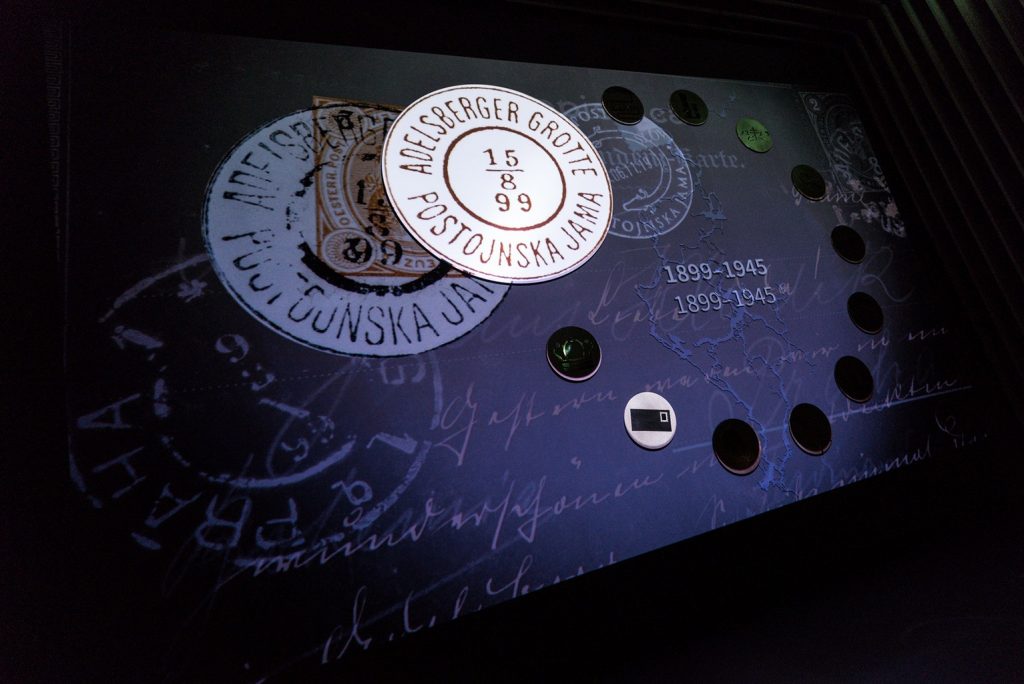
The exhibition features interactive presentations of contents that speak volumes about the formation and extraordinary history of the tourism development of the most famous show cave in the world (more than 38 million visitors). Visitors get to learn about the karst and karst features through projections of various contents onto a three-dimensional model, discover the peculiarities of the karst environment and learn about all superlatives and milestones attributed to Postojna Cave on the Wall of Fame.

The exhibition is of interest to visitors who are not familiar with the karst or caves and to experts alike. Special attention is devoted to children, who are guided through the exhibition interactively by an olm and a slenderneck beetle, and can even try their hand at driving a one-of-a-kind cave train. Fun and interactive.

Process that led recognition that change was necessary

The company Postojnska jama d.d., which manages Postojna Cave, Slovenia’s most-visited tourist attraction, had the option of continuing to provide visitors with nothing but conventional guided cave tours for a number of years. However, the company’s management, which constantly strives for improvement and expansion of the range of products and services offered to visitors, decided to realise a century-long ambition to set up of a one-of-a-kind tribute to the karst world. In 2015, the world’s largest interactive exhibition on the karst was thus added to a wide range of available themed tours of the cave system.

The exhibition perfectly complements the Postojna Cave tours. The exhibition allows visitors to understand the complex geological history of the karst and its formation. Visiting the exhibition before they tour the subterranean passages makes it easier for them to follow the tour guides’ commentary and understand how individual cave formations in the cave are formed. However, if they see the exhibition after touring the cave, this provides them with answers to the questions that they might have thought of during the tour. Since the exhibition has been set up in a way that caters to different types of visitors, each visitor can find suitable content depending on their curiosity on the one hand and their previous knowledge on the other hand.

A tour of the exhibition and the cave, combined with other services, is part of various visitor package deals, by means of which we succeed in increasing visitors’ length of stay at the destination, and consequently also consumption per individual visitor.

The principles of sustainable development were one of the key guidelines in planning the exhibition. One of the exhibition’s subthemes is in its entirety dedicated to the interpretation of what Karst aquifers mean in terms of water supply and the degree of vulnerability of the subterranean karst world and the groundwater. This helps visitors become aware of the vulnerability of karst formations that are formed over thousands of years in closed, isolated areas.

The exhibition also includes a story aimed at uncovering the mystery of olms’ reproduction in the form of so-called “video morphing”.

Process that facilitated change

In 2018, Postojna Cave will celebrate an important anniversary, i.e. the 200th anniversary of the discovery of the most beautiful parts of Postojna’s subterranean world. The exhibition collection was thus in a way a one-of-a-kind introduction to the celebration of this anniversary, as it was opened after 111 years of ambitions and ideas of setting up a Postojna Cave museum. Since Postojna is also home to the Karst Research Institute (Research Centre of the Slovenian Academy of Sciences and Arts), which is one the world’s most important such institutes, the institute’s knowledge was combined with our experience, and the company Postojnska jama d.d. thus more than successfully accomplished its mission.

Implementation

Expo Cave Karst is an exhibition that presents the karst and Postojna Cave in terms of space and time in a modern and interactive way. It consists of three parts, i.e. the karst, the fauna and humans.

The first part of the exhibition is dedicated to the karst’s geological history and its formation, its surface and subterranean features and formations. Of course, most of the attention is devoted to the subterranean karst world – to its formation, its various forms, age, remarkableness, and its vulnerability. The key characteristics of the subterranean karst world were brought together in one place, with the most attention, as expected, devoted to Postojna Cave, the queen of all caves. Karst aquifers supply drinking water to no less than half of Slovenia. Therefore, one of the important topics addressed by the exhibition are the forms of potential pollution risks that may endanger the vulnerable subterranean world.

In addition to caves and the karst, the exhibition is also devoted to the cave fauna, to the animals that inhabit the subterranean world. It presents the extinct cave-dwelling animals, occasional cave inhabitants, as well as the real cave animals that are no longer able to survive outside caves. Not only is Postojna Cave the cradle of speleobiology – owing to the fact that the first cave-dwelling animals were discovered here, as well as the largest number of such animals, but Postojna Cave still holds the world record in terms of cave-dwelling animals’ biodiversity, and our aim was to make sure visitor learn about it. We highlighted the cave’s important place in the birth of new sciences – speleology and speleobiology.

The third and last part of the exhibition present humans in relation to caves; at first, as ice-age inhabitants, who entered caves looking for shelter, and later as explorers. Over the last 200 years, Postojna Cave has experienced tourism-related development to a more intense extent that any other cave in the world and the exhibition features the most interesting milestones and achievements of individual historical periods. In a way, Postojna Cave constitutes the history of Slovenia over the last two centuries.

Success Story

EXPO Postojna Cave Karst is an important addition to the existing range of products and services available to visitors. It has enhanced the cave interpretations with new contents previously not available to visitors. The world’s largest permanent exhibition on caves and the karst features has thus fulfilled the dreams of many cave managers and generations that had worked towards realising this idea, which took quite a long time to put into action, because museum exhibitions are not the most lucrative ventures. Postojna Cave has proven to be quite the opposite and the exhibition attracts large numbers of visitors from all over the world.

Although it is referred to as an exhibition, the EXPO Cave Karst project is setting new (Slovenian and wider) museum standards, both in terms of technology and the topics it covers. It makes visitors familiar with the subterranean karst world and the life inside caves in a one-of-a-kind way, i.e. by means of analogue and digital tools that are the fruit of Slovenian knowledge and R&D, as well as collaboration with Slovenian professional institutions.

For this achievement, Postojna Cave has received the 2017 Sejalec award for its one-of-a-kind and outstanding interpretation of natural and cultural heritage, through which it has enriched and complemented Slovenia’s best known tourist attraction.

Considering the high number of visitors and the level of their satisfaction, we believe the exhibition is a most welcome addition to visitors’ experience of the subterranean world around Postojna and in Slovenia in general. No other Slovenian museum is visited by a larger number of visitors than EXPO Cave Karst.

Company info

Postojnska jama d.d. is a company that manages the natural monuments Postojna and Predjama cave systems and the Predjama Castle. Postojna Cave, which includes all the caves of the Postojna Cave System and the Cave under Predjama Castle, is state property for which the company, as a concessionaire, pays a concession fee. A part of the concession fee is returned to the cave infrastructure in the form of investments, whereas a larger portion belongs to the municipalities of Pivka and Postojna, as well as the state. As a successful enterprise, the company contributes a large share of the concession fee to the local environment, thus improving the welfare of the local population. The company also has a contract with the Republic of Slovenia for the management of the Predjama Castle.

The company Postojnska jama d.d. continues its long-established, almost 200-year tradition of managing cave tours and events, a tradition that dates back to the early 19th century, when the cave was set up as a show cave. Since then, the cave has been toured by more than 38 million visitors. In 2016, all the sights that are managed by the company were visited by a total of over one million visitors, which equals one third of all visitors to Slovenia. The company is just as successful when it comes to the development in terms of the hospitality and hotel industry. In 2016, the company funded the renovations of the four-star Hotel Jama.

The company’s mission is to create one-of-a-kind experiences focused on natural and cultural heritage in a way that preserves the heritage for future generations. The company offers a variety of cave tours, i.e. regular cave tours, caving adventures that take small groups to non-tourist corners of the caves, educational (natural science-oriented) programmes for schoolchildren (they include seeing the cave-dwelling animals), tailor-made incentive programmes for individual groups etc. The programmes include various culinary experiences, which perfectly complement the range of services and adventures offered to visitors. 

In 2015, the company opened an exhibition on Postojna Cave and the karst – Expo Cave Karst, the largest exhibition of its kind in the world.


Postojnska jama d. d.

Jamska cesta 30

SI-6230 Postojna

Slovenia

Info:

Tel. +386 5 7000 100

info@postojnska-jama.eu

www.postojnska-jama.eu

World’s largest karst exhibition Read More »

Observation tower

Vinarium Tower Lendava (Slovenia)

Introduction

The Vinarium Lendava is a steel construction observation tower located in the wine-growing area of Lendava city in northeastern part of Slovenia neighbouring to Hungary and Croatia.  The Vinarium Lendava opened on 2nd September in 2015 and has rapidly become a favourite destination for visitors who are looking for new, authentic places where they can enjoy local experience trough view, taste and kindness of local people. The 53.5 m high tower stands at 302 m above sea level among the vineyards on the Wine-tourist road and offers scenic panoramic 360° view over the Lendava hills (Lendavske gorice vineyards) and further to the Mura river with it`s beautiful peaceful forest and all the way to flatlands and hills of Austria, Croatia and Hungary. You can reach the highest platform of the tower by a comfortable ride with the elevator or by climbing 240 steps. The Vinarium Lendava was designed by architect Oskar Virag. 

Description of the destination or original product

The Lendava hills or the Lendavske gorice vineyards spread from the village Dolga vas to the village Pince in length of approximately 9 kilometres and cover an area of 500 hectares. Almost the whole area is planted with vine. The star attraction, the Vinarium Lendava, stands in the heart of the smallest and one of the most typical Slovenian wine-producing sub-region of Slovenia – in Lendava hills close to Hungary and Croatia not far away from Austria. The tower architecture symbolises waved branches of basket and by that, it symbolizes the idea of intertwining cultures, coexistence and friendship of nations. The tower, whose construction lasted for seven months, can take up to 50 visitors who can climb the 240 prefabricated stairs or simply use the elevator. In the ground floor, one can visit a restaurant, buy souvenirs or get information at the information point. Around the tower, the local culinary and wine offer is available at the little houses or at the family run wineries, farms and restaurants. 

Process that led recognition that change was necessary

In the recent past years, the most dominant industries in Lendava were oil industry, chemical and pharmaceutical industry, metal-processing industry, light industry services and building construction. Due to the economic and negative demographic changes in the last couple of years, there was a need to boost more sustainable concept of economy. With the respect to the local economy development concept, special attention was given to the Viticulture in Lendava. Long and rich history in wine-growing and noticed interest in leisure activates like biking and hiking, preserved typical wine wine-growing landscape, cultural-ethnographic heritage and typical local culinary specialities lead to idea of re-designing the tourist offer in Lendavske gorice vineyards.  To connect all these individual touristic products there was a need to establish a connecting platform that will connect and promote these individual touristic products nationally and internationally. In our case, this connection platform has become the Vinarium Lendava. 

Process that facilitated change

Process that facilitated the change already started in 2010 with the construction of basic municipal infrastructure and placing the area of Lendava hills on the Wine-tourist road map. Despite the effort, the outcome was still resulting in fragmented concept with the lack of harmonized offer that would be available also during the weekdays (and not only on weekends). In 2013, Mayer of Municipality of Lendava mag. Anton Balažek and its team prepared project proposal with the title “The observation tower on the tourist road Lendava hills” for the project call “Regional Development Programme 2007-2013”. The construction of the observation tower started in January and finished in July 2015. The observation tower Vinarium Lendava opened on 2nd September 2015. 

Implementation Success story 

The implementation started together with the project proposal within which the business development was foreseen. Planned yearly number of visitors was 40.000 what is in average around 3.333 visitors per month. Average monthly visits, according to planned, increased in 2015 for 120 % in 2016 for 136 % and in 2017 for 148 %. Special recognition to Vinarium Lendava in terms of successful implementation is also “Sejalec”, award for most creative and innovative achievements in tourism received in 2016. Implementation in case of the Vinarium Lendava is continuous process that highlights timely planning, continuous education, cooperation and integration. Another important issue is the awareness that the implementation is a continuous rather than a closed process. Based on this, the Vinarium Lendava is becoming a unique tourist attraction that brings together cultural-ethnographic heritage (Castle, Pyramid, Typical houses, Mummy of Captain Michael Hadik, Jewish cemetery, etc.), typical local culinary specialities (bograč, perec, vine, etc.), leisure activates (hiking & biking) and festival events (Festival Vinarium). 

Company info

Vinarium Tower Lendava 
Dolgovaške gorice 229
9220 Lendava, Slovenia
Phone no.: 00386(0)1 200 98 83


Observation tower Read More »

Lodging with local touch

Lodging with local touch

Holiday houses of Slovenian Istria

Introduction

Holiday houses of Slovenian Istria is a product that arose from our enthusiasm, young-spirited character, inexperience and our desire for innovation. The basic idea we stemmed from was to offer the tourists, who come to visit the Slovenian Istria, different or alternative lodging opportunities.  Our premise was, that all hotel rooms, globally speaking, look really similar. You can be travelling to New York or Rome, and when you wake up in your hotel room it does not really give away your location at first. This is exactly what we wanted to surpass. We wanted to portray the image of Slovenian Istria to our guests in their rooms. In addition to the regular rooms and suites we decided to offer an alternative accommodation, which would be in line with sustainability principles and would become an experience in itself.

Process that facilitated change

The idea for the holiday homes was created as a result of an increased demand to enlarge the tourist capacities and as a new opportunity for adventure in Slovenian Istria, that would attract new tourists and buyers and place our small town on the tourist map of Slovenia.  They were built after four years of intensive action in expanding the existing accommodations. We were aware of the need to expand or change, which would deviate from the average and provide new experience for all. All tourist trends were pointing to the development of alternative forms of accommodation and the returning back to nature.

Implementation

The important element that we added to the houses is their story ̶ the story of Šavrinke women. Without this story, our holiday houses would only be houses with a wonderful view of the Gulf of Trieste. The story about the Šavrinke women makes these houses the central stage for the old and the new to meet, where the life stories of our grandmothers can live on and make us think about the commodities and freedoms we enjoy today and how they are not just an automatic right.

Slovenian Istria has always been considered as the crossroads of cultures, ethnicities and languages.  As a result of harsh and bad conditions for agriculture and famine, the area experienced a large exodus, particularly in the past century. Consequently, a very specific identity profile developed here, reflecting itself in the character of the Istrian people. Specifically, stubbornness, resourcefulness and the desire for a better future are the main characteristics of our grandmothers, known as the Šavrinke women. Those were brave, fearless women, who often had to take the reins, feed many and provide for the whole family. Several times per week they would make rounds to bigger cities and try to sell their produce at the best price to the city folk. They would sell anything they could gather from the neighbouring villages, and frequently, due to the strictly guarded border between Slovenia and Italy, they had to smuggle these products. In memory and honour of the brave acts these women did, we decided to name our houses after them, namely Jajčarica (Egg lady), Krušarica (Bread lady), and Mlekarica (Milk lady).

The houses imitate the old Istrian houses by design but also the colours of the façades are replicas from the times of the Second World War in Istria. They are furnished with the original antique furniture ranging from the end of the 19th century and the Second World War. Each house is also equipped with a brief historical description of Istria, the Šavrinke woman and their story.

From the very beginning, protecting the environment is one of the key tasks we set in our work.  We have implemented many regulations and practices in the working operation of the houses, such as reusing the old furniture, strict waste recycling and reducing the consumption of electrical energy and water.

Sustainability built in

The social and cultural aspects of the project are prominent primarily in its efforts for the preservation of the cultural heritage of our ancestors and the historical presentation of Slovenian Istria, readily available to all the tourists who visit the houses. It is also important to note that the project not only strengthens and facilitates the respect of traditions, it also maintains the quality of life within the local community.

Economically speaking, the project contributed in making the destination more desirable, and at the same time had a direct effect on other surrounding subjects, such as wine and olive growers, farmers, restaurateurs, tourist guides, etc. These effects are multiplicative and difficult to measure; however, they are definitely positive.

In June 2017, the Holiday houses of Slovenian Istria were, as the first accommodation of its kind in the Slovenian Istria, awarded the international Gold Travelife certificate, which covers environmental protection incentives, respecting the employees, local community and its inhabitants, and respectful attitude towards natural and cultural heritage and promoting the local population. The certificate signifies additional commitment to our work towards a sustainable development of tourism.

Success/failure story

There were numerous elements that contributed to the success of our project. First and foremost, it was the contest of the Municipality of Koper for the development of ideas, which encouraged new ideas and provided tutoring or assistance in preparing a business plan for the winner. A prerequisite for participation in this contest was applying to a tender called Snovalec, under the auspices of the Slovenian Tourist Board.

Clearly, the news of our project being the winner became public very quickly through the media and the responses of the public varied, most of them were positive, some were negative. It was uncommon to expect that a young and inexperienced businesswoman could be able to implement major projects. However, and according to the words of John Donne, no man is an island, so we managed to realize the project with the help of our families and our “Istrian stubbornness”. The award from the Snovalec tender was an important recognition for us, that also alerted the media to us and gave us the opportunity to present ourselves to the general public. This marked an important event, and the marketing effect ended up being much larger than anticipated. The story spread, gaining a big media impact.

Apart from the newly built Holiday houses of Slovenian Istria, even our previously owned standard accommodations, fit for people who are not willing to give up on the basic comfort (rooms with no electricity or bathroom), were filled thanks to the houses and their media story. We now reach full occupancy for the houses during the summer months, and during the spring and autumn they reach full occupancy during the weekends.

With the desire to achieve a higher occupancy outside of the main season and to round-up the tourist destination of Slovenian Istria, several accommodation providers joined in a tourism cooperative called Zakladi Istre d. o. o. (The Treasures of Istria Ltd.), where we are now preparing a common marketing strategy.

Future

In addition to our new accommodation offer, we now serve also the so-called Istrian breakfast. It consists of exclusively home-grown produce and products and is delivered to our houses on the agreed hours. The ingredients are bought from the local farmers and various manufacturers located across Istria. We would now like to expand this idea and deliver those breakfasts to other accommodation providers. In addition to its authentic food ingredients, the breakfast package would also include information about the cultural and gastronomic identity of Istria and suggestions for visiting local farms and attractions.

Holiday houses of Slovenian Istria is a project that will continue to live on as it does today. Surely, there is always room for improvement. The most important thing is that we take every situation as a learning experience and use that acquired knowledge in the future. In the near future, we plan to upgrade the existing houses and extend our offer, which will further enrich our destination, the Slovenian Istria.

Company info

Hiške slovenske Istre/Holiday houses of Slovenian Istria

Mateja Hrvatin Kozlovič, directress

Address: Truške 1b, Marezige, Slovenia

www.hiske.si/en

info@hiske.si


Lodging with local touch Read More »

We use cookies to give you the best online experience. By agreeing you accept the use of cookies in accordance with our cookie policy.

Privacy Settings saved!
Privacy Settings

When you visit any web site, it may store or retrieve information on your browser, mostly in the form of cookies. Control your personal Cookie Services here.

These cookies are necessary for the website to function and cannot be switched off in our systems.

In order to use this website we use the following technically required cookies
  • wordpress_test_cookie
  • wordpress_logged_in_
  • wordpress_sec

Decline all services
Accept all Services