Italy

Fair(er) home sharing

Introduction

Fairbnb, a startup that is based in Bologna, Italy, is the culmination of the efforts of autonomous groups in different cities that banded together to create a more ethical version toward home sharing. Through a desire to demonstrate that social responsibility can be cultivated in the sharing economy of the tourism market, Fairbnb hopes to inspire the rest of the market to follow suit.

The platform was set to launch in late June 2019 but has been pushed back until mid to late September due to an unforeseen delay in financial resources, which are self-funded by members with the assistance of crowdfunders worldwide.

Description of the destination or original product

Fairbnb allows travelers to legally obtain accommodations from a fair, collectively-owned, and transparent booking platform designed to create meaningful travel and achieve community participation. Through collaboration with municipalities, the platform guarantees that cities can analyze tourism trends and their effects, and it guarantees the legality of rented properties.

Fifty percent of all Fairbnb’s commission is donated to local community projects; locals decide which projects to offer as options, and vacationers opt to fund the project of their choosing, e.g. social housing for residents, community garden funds, etc. Donations to such projects can even be made on the platform without having to book accommodations on the website. Therefore, local communities are also empowered to use the platform as a crowdfunding tool if they so choose.

Local communities are further empowered because residents democratically determine the way in which Fairbnb will operate within their community. Additionally, to limit the negative effects of home-sharing on the housing market of a community, hosts are limited to having only one secondary house listed on Fairbnb.

The co-op is independent, thus ensuring that it is influenced by locals rather than investors. Through a framework of co-ownership and co-governance, decisions are made collaboratively.

Process that led recognition that change was necessary

With the rising popularity of home-sharing platforms such as Airbnb, destinations throughout the world (and especially in Europe) have faced issues relating to mass tourism, which has led to housing crises and other economic phenomena that have negatively impacted locals. Revenues have been redirected from the local economy and toward international organizations, leaving the local population with exceedingly fewer benefits from tourism. Cities such as Venice and Barcelona have suffered the loss of much of their cultural identities, as many locals who cannot compete with the revenues of short-term rental properties have had no choice but to move out of the city centres in the pursuit of affordable housing. Lack of local regulation, aggravated by short-term rentals from speculators who own multiple properties, has only made matters worse. The affordability of rent in touristic areas has been met with consternation, as seen in cities such as Bologna, where students have protested rising rental costs as a result of Airbnb’s presence.

Process that facilitated change

In 2016, the movement to create a home-sharing platform that could serve as an more sustainable alternative to already existing options began. Initially developed by groups from Venice and Amsterdam, where Airbnb and other accommodation options have created considerable issues for local populations, industry experts, activists, coders, researchers, and innovative minds worldwide became involved in what officially came to be known as Fairbnb as of late 2018.

Implementation

Fairbnb is owned and managed by a cooperative of those directly affected by the platform, i.e. users and neighbors, who collaborate with hosts and visitors to create a community-driven experience for all. The model consists of local nodes, which utilizes human interactions as the cornerstone of Fairbnb’s business model. These nodes agree upon sustainability rules that, in addition to local regulations, locals must conform to when listing their properties.

Fairbnb’s test cities were originally in the founders’ cities of residence, but anyone interested in becoming a host is encouraged to pre-register online in order for Fairbnb to become a worldwide phenomenon. To create new nodes, it is required for a small group of locals to initiate the process and for some hosts and social projects to be found.

Success/failure story

Overall, the initiative has been met with approval. In Amsterdam, Barcelona, Bologna, Venice and Valencia, the city administrations have been supportive of Fairbnb’s pilot programs. Local nodes have also been developed in Genova, Helsinki and London as of summer 2019. Still, it will be some time until results better reveal Fairbnb’s impact on the sharing economy.
 
Fairbnb remains a dynamic cooperative program that constantly adjust to changes in accommodation regulations within countries where it holds a presence. For example, as of 1 August 2019, Italy has implemented a new law requiring all tourist accommodations to obtain an identification number through a public register that shall be displayed wherever the accommodation is offered. With changes such as these, Fairbnb is obliged (and enthusiastic) to adapt its platform in order to comply with such regulations and move toward fairer home sharing.

Company info

Fairbnb.coop

Via Alfredo Calzoni, 1, Bologna, Emilia Romagna 40128, IT

T: +39 334 741 4159

E: info@fairbnb.coop

www.facebook.com/pg/Fairbnbcoop

fairbnb.coop

@FairBnB_coop

References

https://fairbnb.coop

https://www.forbes.com/sites/annalisagirardi/2019/03/21/fairbnb-the-ethical-home-sharing-alternative-that-wants-to-undermine-mass-tourism/#57deaf0c3878

Fair(er) home sharing Read More »

Albergo Diffuso, from disaster to innovation

Ivana Dimitrijević, AIRTH intern

Introduction

Emerging in 1980s Italy, Albergo Diffuso is an early example of a successful sustainable practice in tourism. Albergo Diffuso aims at utilizing the idle accommodation capacities, such as abandoned houses or old inns, usually in remote and touristically non-popular settlements. The aim is to diversify the touristic offer, help and involve local communities, disperse tourists more evenly throughout the country and provide less of an impact for the environment. Also, despite it being based on private business ownership, community participation is crucial for implementation of Albergo Diffuso.

Description of the destination or original product

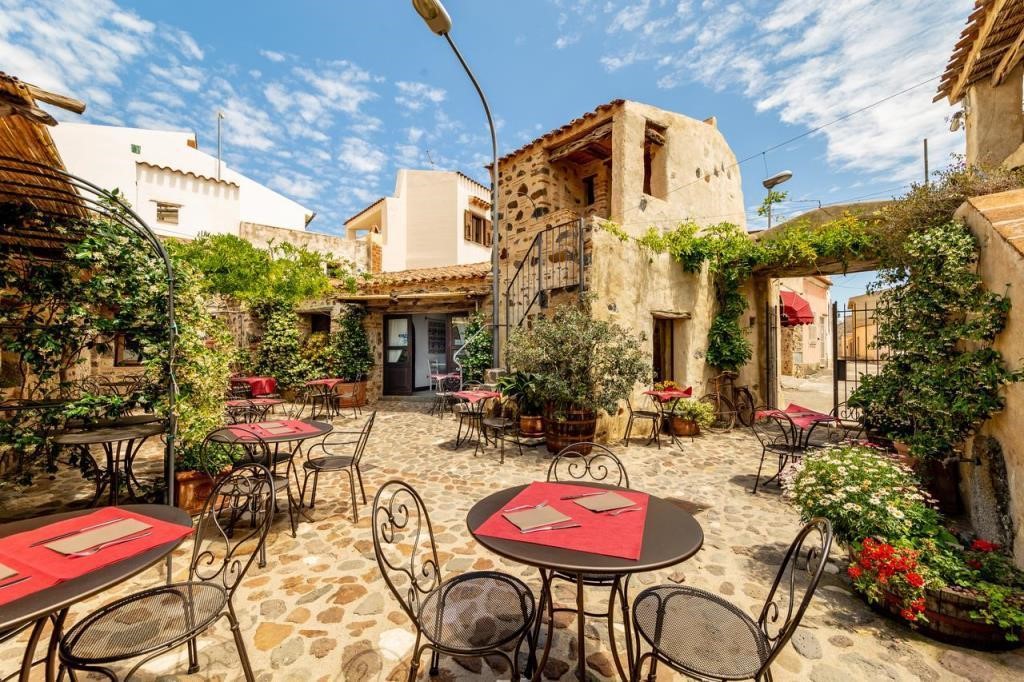
Albergo Diffuso means “scattered hotel” in Italian, and refers to a single hotel unit whose rooms are located in different buildings across the town (old houses, farmhouses, abandoned factories etc.), usually in radius of several hundred meters from its central hub/reception. By re-utilizing the already existing infrastructure for tourism development, it prevents unnecessary building and helps incorporate tourism in the unchanged local landscape and society.

Process that led recognition that change was necessary

The Albergo Diffuso concept originates from the Italian countryside, which was rich in medieval architecture and wonderful landscapes, but was remote and out of touristic maps of the time. However, the particular event which triggered the innovation was the terrible earthquake that struck the northern Friuli Region, near Venice, in 1979. There was a need to rebuild tourism all over again, and as fast as possible. Therefore, it can be said that the unused touristic potential was what enabled the emerging of Albergo Diffuso, but the natural disaster was what provoked its definition.

The idea was to activate the touristic potential by engaging locals in entrepreneurial activities. Also, as the owners were most often locals themselves, with tight bonds among the other members of the community, this meant that the community was deeply involved in tourism planning. Using many buildings for a single hotel was possible only if the community was ready to welcome tourists, help provide them with basic services (such as food, guidance, cleaning…) and thought this would contribute and/or not affect their landscape in any negative way.

This is how not only tourists got an opportunity to access the Italian countryside, but the community got an opportunity to earn more, incorporating the new tourism economy in traditional economies, such as handicrafting and agriculture. Also, the presence of tourists incited the revival of traditional festivals, crafts and events, which now got a new audience.

Process that facilitated change

Perhaps the best proof that this innovation was bottom-up directed, is the fact that the first time local authorities regulated this way of business was in 1998 in Sardinia, almost two decades after the concept was originally invented. However, with time local authorities got involved and even helped develop some of the initiatives.

Another thing that helped Albergo Diffuso come into being was the participation of scholars and creation of associations of Alberghi Diffusi across the country. This helped the accumulation and sharing of knowledge about the successful and unsuccessful practices, thus shaping the Albergo Diffuso we know today. Professor Giancarlo Dall’Ara is one of the most important Italian scholars known for studying the Albergo diffuso phenomenon, and he is also the chairman of the National Association of Alberghi Diffusi. This is a good example of how important innovation synergies between academia, business, etc. can be.

Implementation

The first implementation of the Albergo Diffuso happened in San Leo (Montefeltro) in 1989, under a project called “Tourism”, under guidance of the aforementioned Giancarlo Dall’Ara. Since then, three common paths of Albergo Diffuso development were established. The first path, or one of the three ways Albergo Diffuso can be established is through a private initiative. The second path comprises an initiative comming from the DMO. The third path is creating Albergo Diffuso by combining several small businesses in one, large company.

Depending on the local context and time, these paths vary and change. However, it seems that this concept mostly stays related to Italy, and hasn’t really spread beyond its borders. This might be due to the fact that the way it was conceptualized is tightly connected to the Italian cultural and social context, its architecture and art.

Success/failure story

For Italian tourism, Albergo Diffuso is a success story, an early example of sustainable practices in tourism, dating in time when the concept of sustainability was only being created and was far from official agendas. Following a natural disaster, it brought about an innovation which insisted on many stakeholders involvement: local community, authorities, DMOs, private businesses, tourists, natural environment… This contributed to it being recongized as a community-based and sustainability oriented accommodation concept.  In a country as experienced in tourism as Italy, this was an optimal solution for preserving beautiful landscapes, medieval architecture and art, while at the same time developing new forms of sustainable tourism. Since 40 years ago, this has proven to be a quite efficient way of bringing people from cities back to the countryside, connecting demand and supply in tourism, new and traditional economies, reviving local tradition and culture.

Furthermore, National Association of Alberghi Diffusi is not the only association of this kind. Recognizing the importance of Albergo Diffuso for their development, several municipalities have founded the Associazione Borghi Autentici d’Italia. The aim is to guide development and help create optimal conditions for local private initiatives which seek to challenge the economic decline with development of tourism. This organization puts a strong emphasis on the joint participation of the community, local authorities and private sector.

There is also a sister phenomenon to Albergo Diffuso, named Borgo Albergo, which signifies an accommodation unit using a network of rooms and houses sometimes far away from each other, without hotel services but utilizing centralised booking platform.


References

https://ecobnb.com/blog/2013/11/alberghi-dffusi-hotels-italy/

Confalonieri, M. (2011). A typical Italian phenomenon: The “albergo diffuso.” Tourism Management, 32(3), 685–687. https://doi.org/10.1016/j.tourman.2010.05.022

https://www.alberghidiffusi.it/

https://www.borghiautenticiditalia.it/

Albergo Diffuso, from disaster to innovation Read More »

We use cookies to give you the best online experience. By agreeing you accept the use of cookies in accordance with our cookie policy.

Privacy Settings saved!
Privacy Settings

When you visit any web site, it may store or retrieve information on your browser, mostly in the form of cookies. Control your personal Cookie Services here.

These cookies are necessary for the website to function and cannot be switched off in our systems.

In order to use this website we use the following technically required cookies
  • wordpress_test_cookie
  • wordpress_logged_in_
  • wordpress_sec

Decline all services
Accept all Services