hotels

The Covid-19 pandemic and path to recovery and innovation

Mladen Mitrović, PhD student at Faculty of Tourism Studies – Turistica, University of Primorska
 
 
HOW TO CITE:
 
Mitrović, M. (2021). The Covid-19 pandemic and path to recovery and innovation. In AIRTH Encyclopedia of Innovation in Tourism and Hospitality. Retrieved: <insert-date>, from http://www.airth.global
 
 
In addition to endangering basic human rights, to live, the Covid-19 virus has dramatically affected many aspects of modern civilization. With numerous measures which have entered into force, such as travel bans, social distancing and isolation, tourism as an industry has suffered and continues to suffer enormous losses. The outbreak of this pandemic is a major shock to the industry. An increasing number of people are losing their jobs, and small and medium-sized enterprises, which make up the majority of the tourism industry, are most affected. States were in a hurry to prepare packages of measures that would enable the functioning of these companies. It is difficult to estimate when the situation will return to the previous one or at least some optimal in which tourism will function without obstacles. There is a growing opinion this is the end of mass tourism and that in the future there will be a focus on sustainable, specialized types of travel where all health and safety measures will be respected. Although the pandemic affected both international and domestic tourism, it is believed that the latter one will have a much faster recovery. The encouragement of domestic tourism is exactly what a large number of countries base the survival of their tourism sector on. The return of trust among tourists to embark on the adventure that the trip brings with it, as well as whether the attitudes of the local population about their arrival to be affirmative, appear as great challenges in the coming period. Urban locations, that until recently were under a real siege by tourists, will have to find a way to make future visits in optimal numbers and with respect to the aforementioned (health and safety) measures, in order to protect lives of tourists, workers and locals. 
 
A lot of experts from the tourism were trying to clarify the situation with providing some predictions about the sector recovery and getting back to the before pandemic level. For example, UNWTO (World Tourism Organization) conduct a global survey among the tourism experts about the period when they are expecting the international tourism recovery. Most of them expect to recovery begin in third quarter of 2021, while returning to the pre-pandemic should not be before 2023. The STR (Smith Travel Research), a worldwide recognized company for the benchmarking in hospitality industry and tourism sector analysis, have organized the research during the February 2021 through their official web page among the travelers around the world about their opinions on future of the hospitality industry and recovery of both international and domestic travels in the post-pandemic time. Based on the results, their desire to travel in a post-pandemic, both domestically and internationally, was at the same level or even higher than before the pandemic started. But, they are very careful to actually start to travel before the pandemic is over. Those two researches are in line speaking about possible recovery scenarios.  
 
As a main drivers of booking accommodation, participants in STR survey highlighted location and pricing/value for money which can be considered encouraging, given that they were important to tourists even before the pandemic. The cancellation policy came in third place, which is not surprising if we look at the current situation, when it is important for potential tourists to have flexibility in making decisions. Speaking specifically about hotel services, the question arose as to how important it is for tourists to reduce contact in consuming meals or minimal room cleaning, which has definitely undergone changes since the onset of the pandemic. However, the respondents did not show much enthusiasm for these changes and it can be said that the percentages of those who consider it important, who do not, and with no preference, are similar.
 
All this reveals that tourists are definitely eager to travel, that domestic tourism is what keeps the industry alive at the moment, but that it will take time for international tourist movements and business travel to recover, as well as returning of hotel occupancy to pre-pandemic level. Flexibility for tourists is important, and there is no uniform attitude on changing basic hotel services in order to reduce risk.
 
Also, the widespread use of technological innovations is very important in order to increase the confidence of tourists that their travel and stay in the accommodation facility is completely safe from the health aspect. They should be considered as important drivers in gaining tourist trust in these hard times. Some of them that have found application in the tourism industry are touchless check-in, robots, ultraviolet (UV) technology, antimicrobial fabric, air ionizer, sanitizing drones, …
 
References
 
https://www.oecd.org/coronavirus/policy-responses/rebuilding-tourism-for-the-future-covid-19-policy-responses-and-recovery-bced9859/
 
https://www.unwto.org/impact-assessment-of-the-covid-19-outbreak-on-international-tourism
 
https://str.com/data-insights-blog/tourism-after-lockdown-recovery-scenarios
 
https://www.travelweekly.com/Articles/futuristic-technologies-for-safer-travel?utm_source=Nevistas 
 
https://str.com/data-insights-blog/tourism-after-lockdown-guest-expectations-today-and-tomorrow 
 

The Covid-19 pandemic and path to recovery and innovation Read More »

Revenue management in hotel industry and innovation

Mladen Mitrović, PhD student at Faculty of Tourism Studies – Turistica, University of Primorska


HOW TO CITE:
 
Mitrović, M. (2021). Revenue management in hotel industry and innovation. In AIRTH Encyclopedia of Innovation in Tourism and Hospitality. Retrieved: <insert-date>, from http://www.airth.global


Revenue management is an area experiencing progressive popularity in the world of the hotel industry. Large hotels and hotel chains around the world have been practicing demand forecasting, market segmentation, performance measurement, dynamic pricing, benchmarking, as well as other processes that together constitute revenue management, with great success for many years. A commonly accepted definition of revenue management is to sell the right product to the right customer, at the right time, for the right price, through the right channel (HOSPA, p. 4).
 
From the historical point of view, back in 1970s, airline industry encountered a problem of filling all empty seats and improving the profitability of their business which led airline companies to introduce revenue management (RM) concept for the first time. After being developed by the airline industry, the RM began its extension in the form of a very successful common business practice within a wide range of industries, for example, in restaurants, telephone operators, hotels, conference centers, golf courses, car rental companies, cruise lines, etc.. A few years later, in 1980s, thanks to Marriot International, this concept was implemented in the hotel industry which resulted in generating around $150 million more than before, only by applying RM techniques.
 
Three essential conditions for RM to be applied:  fixed amount of available resources, the resources sold are perishable and different customers are willing to pay various prices for the same product.
 
In the last few years, concept of RM expanded to total revenue management (TRM). The concept of Total RM could be observed from the point of view that hotels should take into consideration all revenue streams (rooms, food and beverage, parking, spa, golf, retail, meeting space) instead only a room revenue, as a factors of the total profit contribution.
 
Today, a hotel RM is based on dynamic pricing, and traditional approaches in setting prices are no longer enough. Revenue managers need help in order for their work to be efficient on one hand, and on the other to enable them personal satisfaction. Software that relies on artificial intelligence (AI) and machine learning is playing an increasingly important role in this. Hoteliers are able to analyze a large number of data and implement them in such a way as to apply an optimal strategy in their business.
 
Although for a long time hoteliers have been considered slow acceptors of new technologies, it seems that AI-based RM solutions have completely “fascinated” them. By using it, large hotel chains and smaller hoteliers have significantly increased their profitability. Here, in addition to the inevitable historical, other data are used, such as market trends, booking trends, competition prices, inventory control, etc. With all the data, the so-called big data, only the RM jurisdiction is exceeded, and the information obtained is important for other departments in the hotel as well.
 
Certainly, when there is a possibility to obtain a large amount of data, one should be careful. First of all, there is a need to complete the processing of a smaller amount of data first in order to move to a larger number. Also, it is very important not to get lost in all this information that comes from different sides, which means that it should be learned to separate important information from those that are irrelevant. Mastering the so-called big data is definitely not an easy task.  
 
Of course, with the emergence of new quality and functional technological solutions in business practice, there is almost inevitably a debate whether it will completely replace the human factor. When it comes to RM software based on AI, the situation seems pretty clear at this point. They are advanced and helping in making the right tactical decisions, but definitely cannot replace a revenue manager or RM team. They cannot predict everything even when the circumstances are favorable, not to mention extreme situations such as terrorist attacks, natural disasters, or epidemics (one of which we are witnessing – the Covid 19 pandemic). Because of all this, it can be concluded that man is still in charge, and that AI RM software is a significant tool that makes it easier for those responsible to make final decisions.
 
 
References:
 
Ivanov, S. and Zhechev, V. (2012). Hotel revenue management – a critical literature review, TOURISM Review , Vol. 60, No. 2, 2012, 175 -197.
 
Marriott, J. Willard, Jr. and Cross, R. G. (2000). Room at the Revenue Inn. The book of management wisdom: Classic writings by legendary managers, ed. Peter Krass, 199-208. New York: Wiley.
 
Noone, B., Enz, C. and Glassmire, J. (2017). Total Hotel Revenue Management: A Strategic Profit Perspective, Cornell Hospitality Report, Vol. 17, No. 8, 1-15.
 
HOSPA e-book Revenue management, PRACTITIONER SERIES
 
https://www.hotelnewsresource.com/article104903.html
 
https://www.hospitalitynet.org/opinion/4095276.html
 
https://lodgingmagazine.com/data-and-ai-are-simplifying-hotel-revenue-management/
 
https://triometric.net/caught-in-the-big-data-deluge-what-about-mastering-little-data-first/
 

Revenue management in hotel industry and innovation Read More »

Ice hotel

Introduction

Founded in 1989, Icehotel is a hotel and art exhibit that is (re)made of ice and snow each year. Located in Jukkasjärvi, a Swedish village 200 kilometers north of the Arctic Circle, the hotel utilizes natural ice from the Torne River to create a high-quality experience for visitors.

Description of the destination or original product

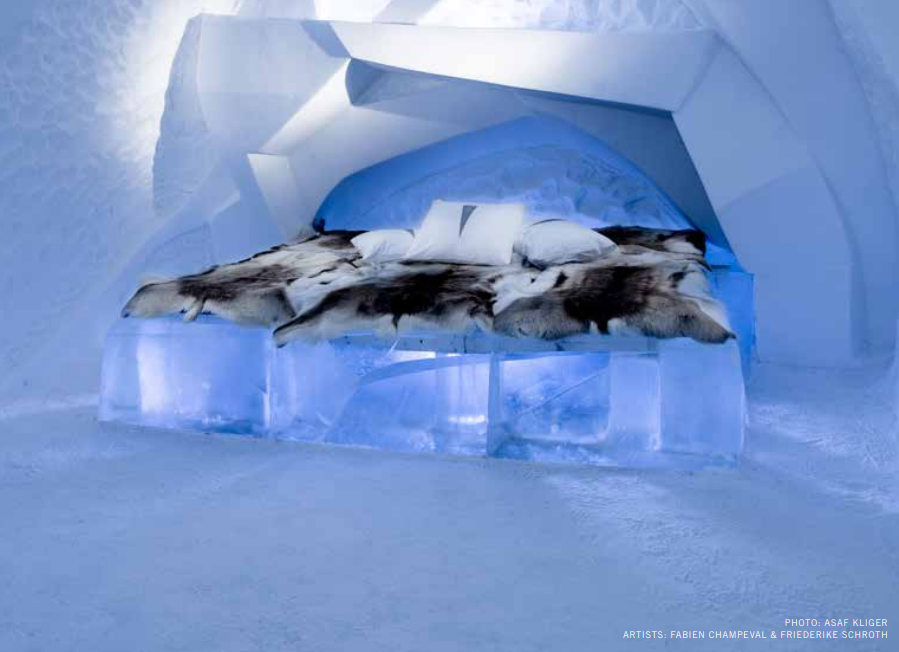
Icehotel contains approximately 300 beds each year (150 warm and 150 cold). For cold rooms (rooms made of ice), visitors are provided with expedition-style sleeping bags that withstand extreme conditions. From 10 am to 6 pm, Icehotel is open to the public, and day visitors as well as guests are able to access all rooms (aside from Deluxe Suites). Guests can access their cold room starting at 6 pm, but the Riverside Lobby (the heated service building where bathrooms, showers, and a sauna are located and visitors’ belongings are stored) is open on a 24-hour basis. Cold room beds are comprised of bedframes made of ice, a slatted bed base with a mattress, reindeer skins, and pillows.

Each room has its own design, giving visitor a unique experience. Also located on the premises are an ice church, ice bar, ice sculpting studio and pillar hall as well as two heated restaurants, a lounge, four meeting rooms and two wilderness camps. The Main Hall includes chandelier installations made from 1,000 hand-cut ice crystals.

Approximately 40 artists are selected each year to participate in the creation of Icehotel. Throughout the years, Icehotel has worked with a total of 546 artists.

Due to the insulating abilities of snow, the average interior temperature of Icehotel is -5 C (21 F), whereas outside temperatures can get as cold as -40 C (-40 F) in January. Icehotel is constructed in sections, meaning that parts of the hotel are opened before the entire structure has been completed.

Process that led recognition that change was necessary

Jukkasjärvi had been a popular destination for summer tourists who wanted to experience the midnight sun or participate in outdoor activities such as river rafting, but the long, cold winters made it undesirable for year-round tourism. This led Yngve Bergqvist to consider innovative options that might attract visitors during the area’s off-season.

Process that facilitated change

Bergqvist, who founded Icehotel, was inspired by the art of Japanese ice sculpting, and in 1989 he invited artists to attend a workshop that resulted in the creation of the first ice structure the following year. The first structure was a 60-meter-square igloo that was named ARTic Hall, and it served as an art gallery. Subsequently, the vision for ARTic Hall expanded; it became larger and housed a bar, and other events such as church services and film showcases began taking place there. It was not until a group of visitors spontaneously asked to spend the night in ARTic Hall that reindeer skins and sleeping bags were provided and the concept of Icehotel was born.

Implementation

Icehotel is constructed from two-ton blocks of ice that are harvested from the Torne River during the winter prior to their use. Plans are drawn up in May, and at the end of November, artists arrive in Jukkasjärvi to implement their vision. The process involves creation of a cast of a building through the use of 35,000 cubic meters of “snice,” a mixture of snow and ice from river water that is sprayed into molds and removed when the structure is ready. All rooms in Icehotel are made of ice and self-supporting, and once the building is completed, artists create their works inside the hotel.

Success/failure story

Following the success of Icehotel in Jukkasjärvi, the ice hotel idea has been replicated elsewhere, including in Canada, Romania, Norway and Finland. Icehotel’s great success over the year has also led to product diversification and expansion that has been experienced throughout the world. Since, 2017, Icehotel has offered a cold sleeping option year-round. ICEHOTEL 365 houses an ice bar, ice gallery, and luxury suites with private bathrooms, and the facility is kept cool by energy from solar panels during the summer.

Since the first permanent ice bar was created by Icehotel in 1994, the concept has become popular. In addition to the original ICEBAR in Jukkasjärv, a location has opened in Stockholm.

The ice bar concept has also been replicated worldwide in places such as Boston, Hong Kong, and Las Vegas.

ICEHOTEL Creative Experience is a business venture that offers ice products for events throughout the world. Orders, whether large instillations such as sculptures and catwalks or small items such as ice glasses and dishes, are tailored to the needs of the clients. These products are made with the same Arctic ice used for the hotel.

Company info

Icehotel, Marknadsvägen 63, 981 91 Jukkasjärvi, Sweden

Phone: +46 980 66800

E-mail: info@icehotel.com

References

https://www.icehotel.com/about-icehotel/

https://www.icehotel.com/hotel/food-drink/icebar/

https://www.cntraveler.com/galleries/2014-12-09/coolest-ice-hotels-in-the-world

Ice hotel Read More »

Albergo Diffuso, from disaster to innovation

Ivana Dimitrijević, AIRTH intern

Introduction

Emerging in 1980s Italy, Albergo Diffuso is an early example of a successful sustainable practice in tourism. Albergo Diffuso aims at utilizing the idle accommodation capacities, such as abandoned houses or old inns, usually in remote and touristically non-popular settlements. The aim is to diversify the touristic offer, help and involve local communities, disperse tourists more evenly throughout the country and provide less of an impact for the environment. Also, despite it being based on private business ownership, community participation is crucial for implementation of Albergo Diffuso.

Description of the destination or original product

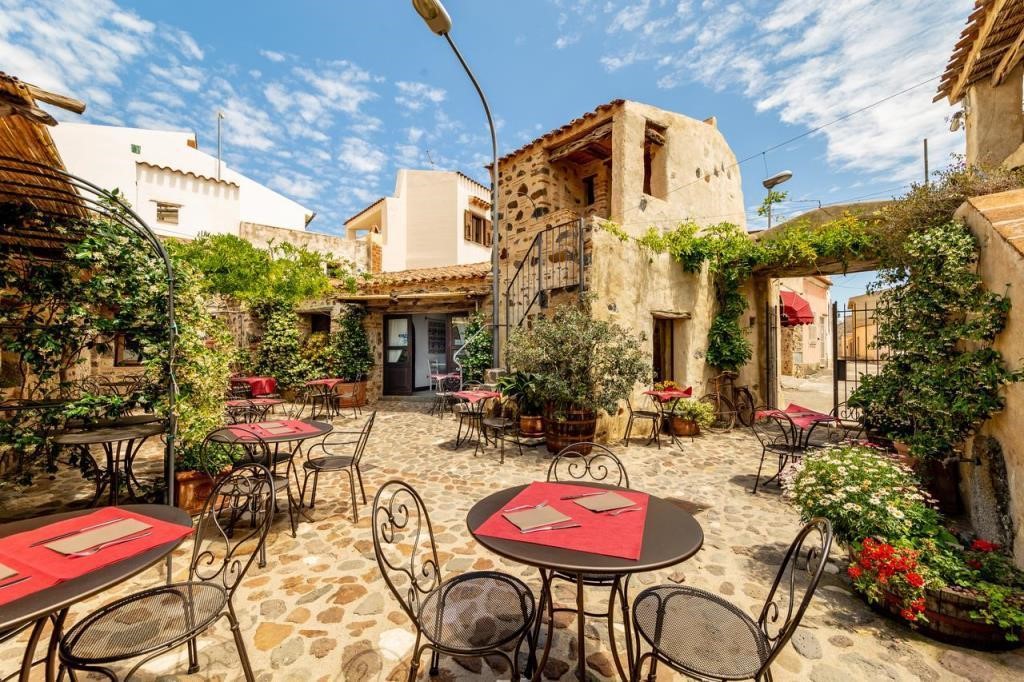
Albergo Diffuso means “scattered hotel” in Italian, and refers to a single hotel unit whose rooms are located in different buildings across the town (old houses, farmhouses, abandoned factories etc.), usually in radius of several hundred meters from its central hub/reception. By re-utilizing the already existing infrastructure for tourism development, it prevents unnecessary building and helps incorporate tourism in the unchanged local landscape and society.

Process that led recognition that change was necessary

The Albergo Diffuso concept originates from the Italian countryside, which was rich in medieval architecture and wonderful landscapes, but was remote and out of touristic maps of the time. However, the particular event which triggered the innovation was the terrible earthquake that struck the northern Friuli Region, near Venice, in 1979. There was a need to rebuild tourism all over again, and as fast as possible. Therefore, it can be said that the unused touristic potential was what enabled the emerging of Albergo Diffuso, but the natural disaster was what provoked its definition.

The idea was to activate the touristic potential by engaging locals in entrepreneurial activities. Also, as the owners were most often locals themselves, with tight bonds among the other members of the community, this meant that the community was deeply involved in tourism planning. Using many buildings for a single hotel was possible only if the community was ready to welcome tourists, help provide them with basic services (such as food, guidance, cleaning…) and thought this would contribute and/or not affect their landscape in any negative way.

This is how not only tourists got an opportunity to access the Italian countryside, but the community got an opportunity to earn more, incorporating the new tourism economy in traditional economies, such as handicrafting and agriculture. Also, the presence of tourists incited the revival of traditional festivals, crafts and events, which now got a new audience.

Process that facilitated change

Perhaps the best proof that this innovation was bottom-up directed, is the fact that the first time local authorities regulated this way of business was in 1998 in Sardinia, almost two decades after the concept was originally invented. However, with time local authorities got involved and even helped develop some of the initiatives.

Another thing that helped Albergo Diffuso come into being was the participation of scholars and creation of associations of Alberghi Diffusi across the country. This helped the accumulation and sharing of knowledge about the successful and unsuccessful practices, thus shaping the Albergo Diffuso we know today. Professor Giancarlo Dall’Ara is one of the most important Italian scholars known for studying the Albergo diffuso phenomenon, and he is also the chairman of the National Association of Alberghi Diffusi. This is a good example of how important innovation synergies between academia, business, etc. can be.

Implementation

The first implementation of the Albergo Diffuso happened in San Leo (Montefeltro) in 1989, under a project called “Tourism”, under guidance of the aforementioned Giancarlo Dall’Ara. Since then, three common paths of Albergo Diffuso development were established. The first path, or one of the three ways Albergo Diffuso can be established is through a private initiative. The second path comprises an initiative comming from the DMO. The third path is creating Albergo Diffuso by combining several small businesses in one, large company.

Depending on the local context and time, these paths vary and change. However, it seems that this concept mostly stays related to Italy, and hasn’t really spread beyond its borders. This might be due to the fact that the way it was conceptualized is tightly connected to the Italian cultural and social context, its architecture and art.

Success/failure story

For Italian tourism, Albergo Diffuso is a success story, an early example of sustainable practices in tourism, dating in time when the concept of sustainability was only being created and was far from official agendas. Following a natural disaster, it brought about an innovation which insisted on many stakeholders involvement: local community, authorities, DMOs, private businesses, tourists, natural environment… This contributed to it being recongized as a community-based and sustainability oriented accommodation concept.  In a country as experienced in tourism as Italy, this was an optimal solution for preserving beautiful landscapes, medieval architecture and art, while at the same time developing new forms of sustainable tourism. Since 40 years ago, this has proven to be a quite efficient way of bringing people from cities back to the countryside, connecting demand and supply in tourism, new and traditional economies, reviving local tradition and culture.

Furthermore, National Association of Alberghi Diffusi is not the only association of this kind. Recognizing the importance of Albergo Diffuso for their development, several municipalities have founded the Associazione Borghi Autentici d’Italia. The aim is to guide development and help create optimal conditions for local private initiatives which seek to challenge the economic decline with development of tourism. This organization puts a strong emphasis on the joint participation of the community, local authorities and private sector.

There is also a sister phenomenon to Albergo Diffuso, named Borgo Albergo, which signifies an accommodation unit using a network of rooms and houses sometimes far away from each other, without hotel services but utilizing centralised booking platform.


References

https://ecobnb.com/blog/2013/11/alberghi-dffusi-hotels-italy/

Confalonieri, M. (2011). A typical Italian phenomenon: The “albergo diffuso.” Tourism Management, 32(3), 685–687. https://doi.org/10.1016/j.tourman.2010.05.022

https://www.alberghidiffusi.it/

https://www.borghiautenticiditalia.it/

Albergo Diffuso, from disaster to innovation Read More »

We use cookies to give you the best online experience. By agreeing you accept the use of cookies in accordance with our cookie policy.

Privacy Settings saved!
Privacy Settings

When you visit any web site, it may store or retrieve information on your browser, mostly in the form of cookies. Control your personal Cookie Services here.

These cookies are necessary for the website to function and cannot be switched off in our systems.

In order to use this website we use the following technically required cookies
  • wordpress_test_cookie
  • wordpress_logged_in_
  • wordpress_sec

Decline all services
Accept all Services