AIRTH Encyclopedia contributing members

Servant leadership

Darija Cvikl, University of Primorska / Higher Vocational College for Hospitality and Tourism Bled
 
HOW TO CITE:
 
Cvikl, D. (2018). Servant leadership. In AIRTH Encyclopedia of Innovation in Tourism and Hospitality. Retrieved: , from http://www.airth.global

Introduction

According to Greenleaf, who introduced the term servant-leadership in 1970[1], the person who really wants to serve, simply wants to serve first – and this is very different from the person who is the leader first. Servant-leader is a servant first, i.e.: “primus inter pares”. Theory of servant leadership could be related to some point with McClelland’s theory of needs as the need for power and influence on the behavior of others is beneficial for all participants. In addition, we can connect servant leadership with authentic and transformational leadership theory to some extent. 

Servant leadership is rather a new field of research. It is identified by following characteristics, which form conceptual model: high-quality interpersonal relationship, trust, the need to serve[2], listening and understanding, focusing on values, acceptance and empathy, to foresee the one’s needs with awareness and right perception, dedication to personal and community growth and finally by ability of conceptualizing  the solutions (Ling et al, 2016; Dierendonck, 2011[3]; Greenleaf, 1977).  

 “Servant leadership is experimental. You really can’t learn how to serve others just with listening, you have to try it on as well”, Robin Swift, president of Servant Leadership Institute[4].

Figure 1: “A Conceptual Model of Servant Leadership” (Dierendonck, 2011, 1233).

Relevance for tourism innovation

Studies of servant leadership especially in the tourism industry are rare. According to the massive contribution of the tourist industry to the gross domestic product – GDP, it is necessary to remodel leadership behavior of managers. However, it is proven that servant leadership brings better team task performance and service excellence in hotel industry[5], which challenge innovative perspective to human resources,  competencies and leadership style in the tourism industry. The positive psychological capital of employees is a key influential factor in their behavior. Servant leadership facilitates customer value co-creation through positive psychological capital and service-oriented organizational citizenship behavior of employees. When employees possess in the high positive psychological capital, they deliver high-quality services and improve customer communication. This means that positive psychological capital of employees is a leading influential factor, which enlarges customers’ satisfaction and stimulates them to behave in a favorable way towards tourism organizations.

Servant leadership could be a prevalent innovative concept in the tourism service industry, providing an important leadership theory in which intangible resources, co-creation of value and relationships are the key to determining and satisfying guests needs. Servant leadership is the crucial factor to establish new tourism service customer development.

Figure 2: “Structural equation model of servant leadership group-level mediation model on team performance, with standardized coefficients. The effect of the control variables team size and task interdependence are not represented here. N = 67 teams, **= p < 0.01, *= p < 0.05” (Chiniaraa, and Bentein, 2018, 9). Note: Service OCB means service-oriented organizational citizenship behaviors; Perceived LMX differentiation means perceived differentiation in leader-member relationship quality.

Relevance for tourism

Traditional management principles do not provide long-term progress in the hospitality industry. Staff members, especially front-office staff, should not be treated as instruments serving others[6]. However, the classic pyramid hierarchy does not allow the effective transmission of information. That is why hotel management requires a different approach and can adopt servant leadership style. It is not enough to accept the servant leadership principles, it is necessary to incorporate service-oriented climate into the organization by a servant leadership measurement model for the top and middle-level managers in order to define the influence of servant leadership style on employees and quality of service. The best way to execute servant leadership into the hospitality and tourism industry is through taking the lead, following the principle: guiding by personal example, especially because of the trickle-down effect from general manager behavior to front-line employees. According to study of managers behavior in the four and five star hotels, there is a strong correlation between servant leadership and service excellence when leadership behavior include “positive mindset, walking the talk, 24/7 high energy, moving together with others, being unconcerned with rank and positions, joy and happiness by providing service to others”[7].

Example case study in hospitality service was carried out in Ritz Carlton hotel, Berlin. The Ritz-Carlton motto exemplifies the anticipatory service provided by all staff members. It says: “We are Ladies and Gentlemen serving Ladies and Gentlemen”. According to their practice, principles aligned with servant leadership style are giving the following message: “By applying the principles of trust, honesty, respect, integrity, and commitment, we nurture and maximize talent to the benefit of each individual and the company”[8].

Picture 1: Vocational College Bled visiting the Ritz-Carlton in Berlin and learning about servant leadership values, 2015. Source: author.

Another example of servant leadership practice is Marriot International, one of the most innovative companies in the world[9], according to Forbes, where pharmaceutical companies, technologically advanced companies, and Internet sales predominate. Marriot International is aware of the importance and potential of servant leadership[10]. Together with Starwood Preferred Guest – SPG® and The Ritz-Carlton Rewards, they work in sync to build the best loyalty program, based on the principles of the servant leadership.


[1] Greenleaf, K. Robert. (1977). Servant Leadership – — A Journey into the Nature of Legitimate Power and

Greatness. Published by Paulist Press. ISBN 0-8091-2527-7.

[2] Author: do not mix the term to serve with servility.

[3] Dierendonck, van Dirk. (2011). Servant Leadership: A Review and Synthesis. Journal of Management. Vol. 37 No. 4. DOI: 10.1177/0149206310380462.

[4] Art Barter is Founder and CEO of Servant Leadership Institute.

[5] Chiniaraa, Myriam and Bentein, Kathleen. (article in press). The servant leadership advantage: When perceiving low differentiation in leader-member relationship quality influences team cohesion, team task performance and service OCB. The Leadership Quarterly.

Hsiao, Chan; Lee, Yi-Hsuan and Chen, Jun-Wan. (2015). The effect of servant leadership on customer value co-creation: A cross-level analysis of key mediating roles. Tourism Management, 49, pp. 45-57.

[6] Ling, Qian; Lin, Meizhen and Wu, Xiaoyi. (2016). The trickle-down effect of servant leadership on frontline employee service behaviors and performance: A multilevel study of Chinese hotels. Tourism Management 52, pp. 341-368.

[7] Ghosh, Koustab and Khatri, Naresh. (2017). Does servant leadership work in hospitality sector: A representative

study in the hotel organizations. Journal of Hospitality and Tourism Management, pp. 1-11.

[9] Marriot International was No.23 on Forbes Top 25 Most Innovative Companies in 2016. Source: https://www.forbes.com/pictures/57b48e16a7ea4331ac3530e4/no-23-marriott-internatio/#4a88710c6ded.

[10] Marriot International is hosting a 18th Servant Leadership Conference in San Diego, from 19th to 20th February 2018.


Servant leadership Read More »

Innovation newness

Dejan Križaj, University of Primorska

HOW TO CITE:

Križaj, D. (2017). Innovation newness. In AIRTH Encyclopedia of Innovation in Tourism and Hospitality. Retrieved: <insert-date>, from http://www.airth.global

Introduction

Following Daft’s dual-core general innovation model[1] and Hall&Williams’ tourism innovation approach[2], basic distinguishing innovation characteristics can be formed in two groups: content and appearance.

“Content” characteristics include: product, process, organizational, marketing and form types.  Characteristics like incremental or radical degree of novelty and innovation’s impact range define its “appearance”[3] [4] [5] [6] [7].  While innovation “content” can be described through different means of innovation categorization [8] [9] [10] [11] [12], innovation “appearance” has at least two perspectives. The first includes questions regarding how innovation appeared inside the firm’s system boundaries; i.e., how the innovation was perceived internally in the firm and what improved because of the adoption of the innovation[13]. The second perspective looks outside the firm’s system boundaries: how was the innovation perceived by customers, suppliers, markets and competitors and what was improved because of that [14] [15].

One promising fragmental way of dealing with the innovation appearance factors is focusing on innovations’ newness characteristics.

Relevance for innovation

Newness factors alone are not enough to make the innovation a successful one but when taken into account together with other “content” and “appearance” innovation categories inside the firm’s strategic plan they can contribute to greater competitiveness[16]. Appropriate knowledge about actual technological change and existent competition ecosystems can improve managers’ strategic decisions and engagements for which state-of-the-art insights into the newest trends are crucial.

Throughout innovation research history novelty and newness have been in the focus of innovation definitions. While theorizing about innovation’s newness characteristics Johannessen et al.[17] introduce three important questions: 1.) what is new, 2.) how new it is and 3.) to whom it is new. They claim that only after these questions are thoroughly answered and these answers declared at the beginning of each study can one compare different results and talk about a systematic approach to the plethora of possible innovation adopters and answers to what is new for them and how new it is in broader terms.

When focusing on its newness characteristics, innovation can be described as the intermediate stage on the continuum between invention and adoption[18]. Invention represents major developments in science or technology without already known implications. Adoption characterizes a firm’s first introduction of existing, already known solutions.

Relevance for tourism

Tourism firms operate in a highly interdependent business environment and their offer in most cases depends on several non-tourism firms and industries, including those in food, beverage, agriculture, architecture, culture, entertainment, health care, finance, information technology, education, safety, etc. Several authors assert that a supplier-driven process is one of the basic tourism phenomenon characteristic whereby firms mostly innovate with purchased products and services from their suppliers[19] [20] [21] [22]. Logically, there is not much “new to the world” products found in tourism where adoptions on the invention-adoption continuum are the more preferred type of innovation activity[23] and as such are generally not science-based[24].

Measurement approach

OECD Oslo Manual approach

Each invention starts its “first in the world” appearance somewhere on the globe. After that it is gradually diffused through different social systems at different diffusion rates[25] and adapted to local needs and environments in different ways. Although such diffused tourism adoptions are not generally perceived as innovations any more they can play a substantial role in the further development of the destinations where faster or slower diffusion of “already world known” innovations can still help to differentiate between otherwise not so different tourism destinations[26]. This “diffusion logic” of the invention-innovation-adoption continuum is manifested in the European Community innovation surveys (CIS). The data are collected every two years and its regularly updated methodology originates from the Oslo Manual[27], which in general does not cover tourism as a standard industry classification but still offers applicable research guidelines. The Oslo Manual’s defined minimum requirement for an innovation is that it must be new or significantly improved in regards to the firm. Aside from new products, processes, etc., that firms are the first to develop, innovations can also be adopted from other firms/organizations and are still treated as innovations for the firm. Firms are identified as innovative if they have introduced an innovation during the period of observation. So, adoption in Volo’s invention-adoption continuum is already classified as innovation in the OECD’s terms.

Krizaj et al.[28] and Zach et al. [29] approach

The authors of the Oslo Manual state that such broad definition of an innovative company may not be appropriate for all policy/research needs and permit more narrow research definitions. If we focus on the minimum requirement of the Oslo Handbook, innovation must be new or significant improvement at least at the company level. In addition to novelties at least at the company level, of course, certain innovation can be perceived as new even broader – at the level of: regions, countries, the union (EU, USA, etc.), the continent … At the opposite level, we can speak of a global level of innovation. Innovation occurs for the first time anywhere in the whole world (for example, the first appearance of a low-cost carrier business model). Thus, a multitude of all innovations introduced in a particular company at a given time can be new at different geographical levels, as shown in Table 1. Ci companies introduce diversified innovations Ii, j, which are new with different levels of innovation: among all the innovations it represents C4, there is also one – I4,5 – which is new on a global scale. By contrast, C3 only introduced innovation, a new one at the company level (I3.1 and I3.2).


Legend: Ci : company (i = 1 … N), Ii,j : innovations introduced in Ci (j = 1 … M)

Companies can be observed only in certain segments of tourism, such as the accommodation sector or only the cycling city tour operators and, if necessary, continue to be divided according to the chosen criteria: size, age, type … The company can introduce a novelty that is not new in comparison to all the industries in the region (e.g. internet telephony for consumers). However, this innovation can be the first (and thus more competitive) in the home region among small travel agencies (the first such agency that has introduced such a communication channel between businesses and consumers). Different sets of novelties give different innovation “appearances” (see introduction and [30] [31]).


[1] Daft RL. 1978. A dual core model of organizational innovation. Academy of Management Journal. 21 (2):193-210.

[2] Hall CM. Williams A. 2008. Tourism and Innovation. Routledge.

[3] Chang YY, Hughes M. 2012. Drivers of innovation ambidexterity in small- to medium-sized firms. European Management Journal. 30 (1):1–17.

[4] Jantunen A, Ellonen HK, Johansson A. 2012. Beyond appearances – Do dynamic capabilities of innovative firms actually differ? European Management Journal. 30 (2):141–155.

[5] Mitsufuji T. 2003. How an innovation is formed: A case study of Japanese word processors. Technological Forecasting and Social Change, 70 (7):671–685.

[6] Johannessen JA, Olsen B. 2010. The future of value creation and innovations: Aspects of a theory of value creation and innovation in a global knowledge economy. International Journal of Information Management. 30 (6):502–511.

[7] Yücel G, van Daalen CE. 2011. Exploratory analysis of the impact of information dynamics on innovation diffusion. Technological Forecasting and Social Change. 78 (2):358–372.

[8] Pikkemaat B, Peters M. 2005. Towards the Measurement of Innovation—A Pilot Study in the Small and Medium Sized Hotel Industry. Journal of Quality Assurance in Hospitality & Tourism 6 (3/4):89-112.

[9] Bieger T, Weinert R. 2006. On the nature of the innovative organizations in tourism: Structure process and results. Innovation and product development in Tourism. Erich Schimidt Verlag

[10] Sipe L, Testa M. (2009). What is Innovation in the Hospitality and Tourism Marketplace? A Suggested Research Framework and Outputs Typology. International CHRIE Conference-Refereed Track. Accessed 20.5.2012 from http://scholarworks.umass.edu/refereed/Sessions/Friday/22

[11] Hjalager AM. 2010. A review of innovation research in tourism. Tourism Management 31 (1):1-12.

[12] Monica Hu ML, Horng JS, Christine Sun YH. 2009. Hospitality teams: Knowledge sharing and service innovation performance. Tourism Management. 30 (1):41–50.

[13] Perez AS, Borras BC, Belda PR. 2006. Technology externalities in the tourism industry. In Innovation and product development in Tourism. Erich Schimidt Verlag: 39-55

[14] Martínez-Ros E, Orfila-Sintes F. 2009. Innovation activity in the hotel industry. Technovation 29 (9):632-641.

[15] Hoegl M, Wagner SM. 2005. Buyer-Supplier Collaboration in Product Development Projects. Journal of Management. 31 (4):530–548.

[16] Cozzarin BP. 2006. Are world-first innovations conditional on economic performance? Technovation, 26 (9):1017–1028.

[17] Johannessen JA, Olsen B. 2010. The future of value creation and innovations: Aspects of a theory of value creation and innovation in a global knowledge economy. International Journal of Information Management. 30 (6):502–511

[18] Volo S. 2006. A Consumer-Based Measurement of Tourism Innovation. Journal of Quality Assurance in Hospitality & Tourism 6 (3):73.

[19] Sundbo J, Gallouj F. 2000. Innovation as a loosely coupled system in services. International Journal of Services Technology and Management 1 (1):15-36.

[20] Hjalager AM. 2002. Repairing innovation defectiveness in tourism. Tourism Management 23 (5):465-474.

[21] De Jong JPJ, Vermeulen PAM. 2003. Organizing successful new service development: a literature review. Management Decision 41 (9):844-858.

[22] Orfila-Sintes F, Crespí-Cladera R, Martínez-Ros E. 2005. Innovation activity in the hotel industry: Evidence from Balearic Islands. Tourism Management 26 (6):851-865.

[23] Pikkemaat B, Peters M. 2005. Towards the Measurement of Innovation—A Pilot Study in the Small and Medium Sized Hotel Industry. Journal of Quality Assurance in Hospitality & Tourism 6 (3/4):89-112.

[24] Sundbo J. 1997. Management of Innovation in Services. The Service Industries Journal 17 (3):432-455.

[25] Rogers EM. 2003. Diffusion of Innovations. 5th edn. Free Press.

[26] Keller P. 2006. Towards an innovation-oriented tourism policy: A new agenda? In Innovation and product development in Tourism. Erich Schimidt Verlag: 55-71.

[27] OECD. 2005. The measurement of scientific and technological activities. Proposed guidelines for collecting and interpreting technological innovation data. Oslo manual. (2nd ed.) OECD/European Commission EUROSTAT.

[28] Krizaj, D., Brodnik, A., & Bukovec, B. (2014). A Tool For Measurement of Innovation Newness and Adoption in Tourism Firms. International Journal of Tourism Research, 16(2), 113–125. https://doi.org/10.1002/jtr.1905

[29] Zach, F. J., Krizaj, D., & McTier, B. (2018 Accepted). Learning from press releases: Implications for hospitality innovation. International Journal of Contemporary Hospitality Management, 30(1).

[30] Krizaj, D., Brodnik, A., & Bukovec, B. (2014). A Tool For Measurement of Innovation Newness and Adoption in Tourism Firms. International Journal of Tourism Research, 16(2), 113–125. https://doi.org/10.1002/jtr.1905

[31] Zach, F. J., Krizaj, D., & McTier, B. (2018 Accepted). Learning from press releases: Implications for hospitality innovation. International Journal of Contemporary Hospitality Management, 30(1).

Innovation newness Read More »

Forest tourism’s need for innovation-friendly legislation

Darija Cvikl, University of Primorska / Higher Vocational College for Hospitality and Tourism Bled
 
HOW TO CITE:
 
Cvikl, D. (2018). Forest tourism’s need for innovation-friendly legislation. In AIRTH Encyclopedia of Innovation in Tourism and Hospitality. Retrieved: , from http://www.airth.global

Introduction

Except for in rare cases (e.g. in China) Forest Tourism has not been legally accepted yet, nor in legislation nor as a term in tourist dictionary. Although many tourist activities are taking place in a forest for a long time and are included in the current law, many of them haven’t been statistically monitored because there is none legal basis for it. Non-wood forest products (NWFP) and socio-cultural values (SCV) – including income of tourism and recreational forest use as a natural source of capital – are currently not recorded in forest management plans in most countries and their national statistical databases. Despite the fact most forestry and EU development documents[1] foster the tourist function of the forest, forestry legislation is adapting very slowly to the real needs on the demand side of the tourist sector. In existing legal acts, the admissibility of interference with the property right due to the use of forests for tourism and recreational purposes is regulated, but ineffectively. The main issue is how to coordinate free access to the forest and the implementation of tourist activities in the forest with responsible user behavior and nature protection. Free access to forests is not only an asset but also a responsibility. It is threatened by the lack of users’ responsibility and their interests which are not being coordinated with forest management and owners[2].

Relevance for innovation

To establish forest multifunctional management and planning as well as integrate interdisciplinary decision-making between tourist and forest participators it is needed to make a different and innovative approach in understanding the legal acknowledgment of various forest services and their multilateral importance. It is not just the matter of protection of forest as a natural source due to the multifunctional exploitation of the forest, but as well as the correct approach to the definition and recognition of individual products which arise from the forest as a natural capital source. That is why tourist sector (as well as other branches besides forestry and nature preservation sector) should recognize forest ecosystem services and their applicability in various economic activities as a starting point to develop national and regional development strategies and legal basis for multifunctional forest management. The International Bank for Reconstruction and Development has defined forest as the complete ecosystem type almost 15 years ago as the only one among the existing ones (land, cities, seas, islands, mountains, polar areas, coastal areas, land waters, cultivated land) that ensures the use of all ecosystem services and represents one of the natural sources of capital in tourism and wider. Multipurpose and sustainable forest management with the exploitation of all its ecosystem services is still a hot issue today, although it appeared in WCED strategic document in the 1980s already. Awareness of the usefulness of various economic activities will enable interdisciplinary linkage between disciplines, such as tourism and forestry. Forestry profession itself is unable to cope with the tourist demand for forest tourism activities already going on. Together they can achieve positive synergy effects in transferring of knowledge and establishment of an appropriate legal basis for Forest Tourism activities.

The legislation covers dealing with restrictions on property rights as well as with determining the appropriate management approach. The problem is that with the implementation of such legislation numerous dilemmas and concerns appear about restrictions of property rights and the related topics (the use and maintenance of forest roads, garbage disposal, traffic noise, emissions, equipping and arranging forests for tourism and recreational purposes). Good legislation is the one that in practice does not cause any additional tensions and conflicts, but it lowers the chances of conflicts and provides an appropriate balance between the interests of the public and individuals. In most cases, the situation is the opposite, and one of the concerns is, therefore, the efficiency of the addressed legislation – whether it hinders the possibilities and the development of tourism and recreational functions of the forest use. Sustainable use of biodiversity is the base for forest tourism, but with the limitation of negative impacts and sustainability principles, it needs to be integrated into national tourism policy. Therefore, the evaluation of all the forest tourist activities in the country is one of desired action and sub-objectives for the future as well as the implementation of national standards for responsible business practices in the tourism sector.

The correct approach to establishing appropriate legal bases and maintaining the balance between public and private forest use is to understand the sustainable use of all ecosystem services of the forest primarily by the tourist profession (among others).  At the same time, the forestry profession has to become aware of the need for the integration of the tourism and other professionals in the creation of legal bases for forest tourist activities. For preserving, advancing and implementing management processes of the forest ecosystem services for tourist purposes, it is necessary to provide a legal basis for establishing additional forest protected areas first[3].

Relevance for tourism

Some countries around the world have already engaged in the more or less elaborate redefinition of legal bases for the tourist use of the forest in previous years. Europe is 40% covered with forest and wooded land which provides many social benefits, including recreation and tourism[4]. Irrespective of the recognition and the growing significance of SCV services and NWFP, which affect tourism industry, directly and indirectly, the assessment of their effects has been gradually and slowly included in sustainable forest management.  However, as shown in the 2015 MCPFE report, the EU states have started to promote and plan the use of NWFP. Most initiatives and legislation changes refer to setting up conditions for improving the commercial use of ecosystems (Bulgaria, Austria, Croatia, Montenegro, the United Kingdom) and encouraging recreational use of forests (Bulgaria, the United Kingdom, Romania, Ukraine and Slovenia). The efforts, addressing the integration of sustainable management with game animals in sustainable forest management and tourist development of forest habitat is also interesting (Hungary, Croatia, Germany). However, the key implementation measures concerning the use of non-wood goods and services are currently being addressed in only a few EU states. These states have initiated action plans, development of national or regional programs (only Finland, Austria and Spain), research projects (Romania) or subsidies in the field of supporting forest tourist activities (Sweden), (MCPFE, 2015, 130). However, the awareness of local municipalities is raising in last twenty years. For example, regular surveys of the current forest situation are performed by local foresters in Celje region in Slovenia from 2013 in order to implement social functions of the forest on the legal basis and to (main reason) protect urban forest by law[5].

The country’s forest coverage also represents a tourist potential that needs to be legalized so that existing tourism activities can be properly managed and statistically monitored. The leading forest countries are presented in table 1. Some of them have had a substantial increase of forest area since 1990 till 2015 (for example Bhutan and Montenegro, Samoa), while others recorded a decline of forest area (for example Belize, Brazil). The average forest cover of 217 world countries is 33%, while the average forest cover of the 30 most forest-rich countries is 73%.

Table 1: Forest area in % of the land area from 1990 to 2015 for the 30 most forested countries in the world (source: The World Bank IBRD, IDA, 12.07.2016: http://databank.worldbank.org/data/reports.aspx?source=2&type=metadata&series=AG.LND.FRST). 

According to the International Bank for Reconstruction and Development (IBRD) data, in 2016 the countries with the highest forest coverage in the world are Suriname (98% forest area), Micronesia Fd. Sts (92% forest area) and Seychelles (89% forest area). According to Seychelles National Biodiversity Strategy and Action Plan 2015 — 2020[6], mangrove habitat management has received considerable attention over the last 20 years with the development of pilot management projects and ecotourism (boardwalks and canoeing) activities. Suriname strategic biodiversity plan 2012-2016 stated that it is the challenge to convert the concept of sustainability tourist approach into practice[7].

However, it is not only the countries, rich in forests, that practice the most recent forest management practices directed to the investing specific efforts to change legislation in the exploitation of ecosystem forest services. In the early 1980s, Ireland started to implement the policy of increasing forest areas by 17%. In 1990 it recorded only 7-percent coverage in forests (The World Bank IBRD, IDA, 12.07.2016). Since the 1990s mainly private reforestation increased. However, an extended period of time, required for the return of the invested capital, triggered questions about other non-wood forest product – NWFP possible ways of using the forest.  It showed that there is a wide range of NWFP – from leaves, essential oils, tannin, produced by trees to mushrooms, plants, bushes, as well as tourist services and recreation. The study examined a potential market for the main categories of NWFP and revealed the potential and opportunities offered by NWFP (non-wood forest products) as well as development opportunities in the tourist industry[8].

Conclusion

For the legal implementation of forest tourism activities, it is necessary to provide a proper and effective formulation of legal bases. For a (general as well as tourism) innovation-friendly approach to the legal basis for development and renovation of existing forest legislation, following activities should be taken into account:

  1. To use a Forest Ecosystem Services paradigm as a starting point.
  2. To implement interdisciplinary collaboration between tourism and forestry sector.
  3. To establish a national statistical monitoring system for forest tourist activities.
  4. To define rights and duties of all stakeholders (owners and managers, tourist organizations, local community, tourists and other users).
  5. To introduce multifunctional forest management.
  6. To renew the forestry legislation.

Implementation of the above key steps is shown in Table 2. Awareness and constant education of tourism professionals and users about the importance of ecosystem forest services are needed to avoid unnecessary legal conflicts in the further forest tourism development.

Table 2: Tourism innovation-friendly approach to the legal basis for development and renovation of existing forest legislation


[1] Slovenia’s Smart Specialisation Strategy, Akcijski načrt za povečanje konkurenčnosti gozdno-lesne verige v Sloveniji do leta 2020 – Les je lep; EU Sustainable Development Strategy, European Commission 2009; the EU Roadmap 2050 European Commission 2011; Resource Efficient Europe, EUROPE 2020 – A European strategy for smart, sustainable and inclusive growth; The Strategic Research and Innovation Agenda for 2020 of the Forest-based Sector and the Horizons – Vision 2030 for the European Forest-based Sector.

[2] Breznikar, Andrej, Oražem, Damijan (2014). Realization of National Forest Programme in the Fields of Rural Area Development, Support to Forest Owners and Awareness-Raising of the Public (Uresničevanje Nacionalnega gozdnega programa na področju razvoja podeželja, podpore lastnikom gozdov in ozaveščanje javnosti). GozdV, vol 72 (2), 95 – 99.

http://www.dlib.si/stream/URN:NBN:SI:DOC-RPWM7CAX/d67bc499-bb10-41a6-ab76-b903aac5cc19/PDF

[3] Cvikl, Darija. (2018). Forest innovation potential. AIRTH, ISSN 2591-2380, 2018, ilustr. http://www.airth.global/depositview.aspx?dpid=8627&lng=en.

[4] European Commission. (2012). Innovating for Sustainable Growth: A Bioeconomy for Europe, 2012. http://ec.europa.eu/research/bioeconomy/pdf/official-strategy_en.pdf

[5] Slovenia Forest Service … [et al.] (2013). Green Book on payments for environmental services from Mediterranean forests.; edited by Simončič Tina, Matijašić Dragan.  Ljubljana : Zavod za gozdove Slovenije, 93.

[6] GOS (2014). Seychelles Biodiversity Strategy and Action Plan 2015-2020.

[7] Republic of Suriname, Ministry of Labour, Technological Development and Environment. (2013). National Biodiversity Action Plan (NBAP) 2012-2016.

[8] Collier, Pat; Short Ian and Dorgan Jim. (2004): Markets for Non-Wood Forest Products. COFORD, National Council for Forest Research and Development, Dublin, Ireland.

Forest tourism’s need for innovation-friendly legislation Read More »

Forest tourism’s need for innovation-friendly legislation

Darija Cvikl, University of Primorska / Higher Vocational College for Hospitality and Tourism Bled
 
HOW TO CITE:
 
Cvikl, D. (2018). Forest tourism’s need for innovation-friendly legislation. In AIRTH Encyclopedia of Innovation in Tourism and Hospitality. Retrieved: , from http://www.airth.global

Introduction

Except for in rare cases (e.g. in China) Forest Tourism has not been legally accepted yet, nor in legislation nor as a term in tourist dictionary. Although many tourist activities are taking place in a forest for a long time and are included in the current law, many of them haven’t been statistically monitored because there is none legal basis for it. Non-wood forest products (NWFP) and socio-cultural values (SCV) – including income of tourism and recreational forest use as a natural source of capital – are currently not recorded in forest management plans in most countries and their national statistical databases. Despite the fact most forestry and EU development documents[1] foster the tourist function of the forest, forestry legislation is adapting very slowly to the real needs on the demand side of the tourist sector. In existing legal acts, the admissibility of interference with the property right due to the use of forests for tourism and recreational purposes is regulated, but ineffectively. The main issue is how to coordinate free access to the forest and the implementation of tourist activities in the forest with responsible user behavior and nature protection. Free access to forests is not only an asset but also a responsibility. It is threatened by the lack of users’ responsibility and their interests which are not being coordinated with forest management and owners[2].

Relevance for innovation

To establish forest multifunctional management and planning as well as integrate interdisciplinary decision-making between tourist and forest participators it is needed to make a different and innovative approach in understanding the legal acknowledgment of various forest services and their multilateral importance. It is not just the matter of protection of forest as a natural source due to the multifunctional exploitation of the forest, but as well as the correct approach to the definition and recognition of individual products which arise from the forest as a natural capital source. That is why tourist sector (as well as other branches besides forestry and nature preservation sector) should recognize forest ecosystem services and their applicability in various economic activities as a starting point to develop national and regional development strategies and legal basis for multifunctional forest management. The International Bank for Reconstruction and Development has defined forest as the complete ecosystem type almost 15 years ago as the only one among the existing ones (land, cities, seas, islands, mountains, polar areas, coastal areas, land waters, cultivated land) that ensures the use of all ecosystem services and represents one of the natural sources of capital in tourism and wider. Multipurpose and sustainable forest management with the exploitation of all its ecosystem services is still a hot issue today, although it appeared in WCED strategic document in the 1980s already. Awareness of the usefulness of various economic activities will enable interdisciplinary linkage between disciplines, such as tourism and forestry. Forestry profession itself is unable to cope with the tourist demand for forest tourism activities already going on. Together they can achieve positive synergy effects in transferring of knowledge and establishment of an appropriate legal basis for Forest Tourism activities.

The legislation covers dealing with restrictions on property rights as well as with determining the appropriate management approach. The problem is that with the implementation of such legislation numerous dilemmas and concerns appear about restrictions of property rights and the related topics (the use and maintenance of forest roads, garbage disposal, traffic noise, emissions, equipping and arranging forests for tourism and recreational purposes). Good legislation is the one that in practice does not cause any additional tensions and conflicts, but it lowers the chances of conflicts and provides an appropriate balance between the interests of the public and individuals. In most cases, the situation is the opposite, and one of the concerns is, therefore, the efficiency of the addressed legislation – whether it hinders the possibilities and the development of tourism and recreational functions of the forest use. Sustainable use of biodiversity is the base for forest tourism, but with the limitation of negative impacts and sustainability principles, it needs to be integrated into national tourism policy. Therefore, the evaluation of all the forest tourist activities in the country is one of desired action and sub-objectives for the future as well as the implementation of national standards for responsible business practices in the tourism sector.

The correct approach to establishing appropriate legal bases and maintaining the balance between public and private forest use is to understand the sustainable use of all ecosystem services of the forest primarily by the tourist profession (among others).  At the same time, the forestry profession has to become aware of the need for the integration of the tourism and other professionals in the creation of legal bases for forest tourist activities. For preserving, advancing and implementing management processes of the forest ecosystem services for tourist purposes, it is necessary to provide a legal basis for establishing additional forest protected areas first[3].

Relevance for tourism

Some countries around the world have already engaged in the more or less elaborate redefinition of legal bases for the tourist use of the forest in previous years. Europe is 40% covered with forest and wooded land which provides many social benefits, including recreation and tourism[4]. Irrespective of the recognition and the growing significance of SCV services and NWFP, which affect tourism industry, directly and indirectly, the assessment of their effects has been gradually and slowly included in sustainable forest management.  However, as shown in the 2015 MCPFE report, the EU states have started to promote and plan the use of NWFP. Most initiatives and legislation changes refer to setting up conditions for improving the commercial use of ecosystems (Bulgaria, Austria, Croatia, Montenegro, the United Kingdom) and encouraging recreational use of forests (Bulgaria, the United Kingdom, Romania, Ukraine and Slovenia). The efforts, addressing the integration of sustainable management with game animals in sustainable forest management and tourist development of forest habitat is also interesting (Hungary, Croatia, Germany). However, the key implementation measures concerning the use of non-wood goods and services are currently being addressed in only a few EU states. These states have initiated action plans, development of national or regional programs (only Finland, Austria and Spain), research projects (Romania) or subsidies in the field of supporting forest tourist activities (Sweden), (MCPFE, 2015, 130). However, the awareness of local municipalities is raising in last twenty years. For example, regular surveys of the current forest situation are performed by local foresters in Celje region in Slovenia from 2013 in order to implement social functions of the forest on the legal basis and to (main reason) protect urban forest by law[5].

The country’s forest coverage also represents a tourist potential that needs to be legalized so that existing tourism activities can be properly managed and statistically monitored. The leading forest countries are presented in table 1. Some of them have had a substantial increase of forest area since 1990 till 2015 (for example Bhutan and Montenegro, Samoa), while others recorded a decline of forest area (for example Belize, Brazil). The average forest cover of 217 world countries is 33%, while the average forest cover of the 30 most forest-rich countries is 73%.

Table 1: Forest area in % of the land area from 1990 to 2015 for the 30 most forested countries in the world (source: The World Bank IBRD, IDA, 12.07.2016: http://databank.worldbank.org/data/reports.aspx?source=2&type=metadata&series=AG.LND.FRST).

According to the International Bank for Reconstruction and Development (IBRD) data, in 2016 the countries with the highest forest coverage in the world are Suriname (98% forest area), Micronesia Fd. Sts (92% forest area) and Seychelles (89% forest area). According to Seychelles National Biodiversity Strategy and Action Plan 2015 — 2020[6], mangrove habitat management has received considerable attention over the last 20 years with the development of pilot management projects and ecotourism (boardwalks and canoeing) activities. Suriname strategic biodiversity plan 2012-2016 stated that it is the challenge to convert the concept of sustainability tourist approach into practice[7].

However, it is not only the countries, rich in forests, that practice the most recent forest management practices directed to the investing specific efforts to change legislation in the exploitation of ecosystem forest services. In the early 1980s, Ireland started to implement the policy of increasing forest areas by 17%. In 1990 it recorded only 7-percent coverage in forests (The World Bank IBRD, IDA, 12.07.2016). Since the 1990s mainly private reforestation increased. However, an extended period of time, required for the return of the invested capital, triggered questions about other non-wood forest product – NWFP possible ways of using the forest.  It showed that there is a wide range of NWFP – from leaves, essential oils, tannin, produced by trees to mushrooms, plants, bushes, as well as tourist services and recreation. The study examined a potential market for the main categories of NWFP and revealed the potential and opportunities offered by NWFP (non-wood forest products) as well as development opportunities in the tourist industry[8].

Conclusion

For the legal implementation of forest tourism activities, it is necessary to provide a proper and effective formulation of legal bases. For a (general as well as tourism) innovation-friendly approach to the legal basis for development and renovation of existing forest legislation, following activities should be taken into account:

  1. To use a Forest Ecosystem Services paradigm as a starting point.
  2. To implement interdisciplinary collaboration between tourism and forestry sector.
  3. To establish a national statistical monitoring system for forest tourist activities.
  4. To define rights and duties of all stakeholders (owners and managers, tourist organizations, local community, tourists and other users).
  5. To introduce multifunctional forest management.
  6. To renew the forestry legislation.

Implementation of the above key steps is shown in Table 2. Awareness and constant education of tourism professionals and users about the importance of ecosystem forest services are needed to avoid unnecessary legal conflicts in the further forest tourism development.

Table 2: Tourism innovation-friendly approach to the legal basis for development and renovation of existing forest legislation


[1] Slovenia’s Smart Specialisation Strategy, Akcijski načrt za povečanje konkurenčnosti gozdno-lesne verige v Sloveniji do leta 2020 – Les je lep; EU Sustainable Development Strategy, European Commission 2009; the EU Roadmap 2050 European Commission 2011; Resource Efficient Europe, EUROPE 2020 – A European strategy for smart, sustainable and inclusive growth; The Strategic Research and Innovation Agenda for 2020 of the Forest-based Sector and the Horizons – Vision 2030 for the European Forest-based Sector.

[2] Breznikar, Andrej, Oražem, Damijan (2014). Realization of National Forest Programme in the Fields of Rural Area Development, Support to Forest Owners and Awareness-Raising of the Public (Uresničevanje Nacionalnega gozdnega programa na področju razvoja podeželja, podpore lastnikom gozdov in ozaveščanje javnosti). GozdV, vol 72 (2), 95 – 99.

http://www.dlib.si/stream/URN:NBN:SI:DOC-RPWM7CAX/d67bc499-bb10-41a6-ab76-b903aac5cc19/PDF

[3] Cvikl, Darija. (2018). Forest innovation potential. AIRTH, ISSN 2591-2380, 2018, ilustr. http://www.airth.global/depositview.aspx?dpid=8627&lng=en.

[4] European Commission. (2012). Innovating for Sustainable Growth: A Bioeconomy for Europe, 2012. http://ec.europa.eu/research/bioeconomy/pdf/official-strategy_en.pdf

[5] Slovenia Forest Service … [et al.] (2013). Green Book on payments for environmental services from Mediterranean forests.; edited by Simončič Tina, Matijašić Dragan.  Ljubljana : Zavod za gozdove Slovenije, 93.

[6] GOS (2014). Seychelles Biodiversity Strategy and Action Plan 2015-2020.

[7] Republic of Suriname, Ministry of Labour, Technological Development and Environment. (2013). National Biodiversity Action Plan (NBAP) 2012-2016.

[8] Collier, Pat; Short Ian and Dorgan Jim. (2004): Markets for Non-Wood Forest Products. COFORD, National Council for Forest Research and Development, Dublin, Ireland.

Forest tourism’s need for innovation-friendly legislation Read More »

Forest innovation potential

Darija Cvikl, University of Primorska / Higher Vocational College for Hospitality and Tourism Bled
 
HOW TO CITE:
 
Cvikl, D. (2018). Forest innovation potential. In AIRTH Encyclopedia of Innovation in Tourism and Hospitality. Retrieved: <insert-date>, from http://www.airth.global

Introduction

In 2004, the International Bank for Reconstruction and Development defined forest as the complete ecosystem type as the only one among the existing ones (land, cities, seas, islands, mountains, polar areas, coastal areas, land waters, cultivated land) ensures the use of all ecosystem services[1]  and represents one of the natural sources of capital in tourism[2]. Multipurpose and sustainable forest management with an exploitation of all its ecosystem services is a hot issue today, which appeared in WCED strategic document in the eighties of the twentieth century already. Forest provides economic and non-economic benefits of each ecosystem service. On the other hand, tourism is one of the most important sectors of the global economy and it is considered one of the rare propulsive industries in the modern world. In 2015 tourism generated the income in the total amount of USD 1400 billion[3], employing more than 235 million people and covering 10% of the global gross domestic product (GDP). However, according to the literature, forests are not exploited enough for tourist purposes in the sense of taking advantage of the potential of its social and cultural values (SCV) and non-wood forest products (NWFP) in general. Traditional forest management practices are focused mainly on wood products. On the other hand, the promotion of sustainable principles and NSD (New Service Development), IRT (Integrated Rural Tourism), and endogenous regional policy are opening up new development opportunities and models of forest economy management, particularly in the field of taking advantage of the potential of SCV parameters and NWFP products in order to develop Forest Tourist System

Relevance for innovation

Innovation is an important factor in the success of the company[4] which enables the creation of new added value[5]. An important finding that links professional knowledge in innovation and the tourism profession with forest tourism is that the development of innovation in forest tourism enables product and service, process, management and marketing innovations. Forest tourism is not yet recognized as a tourist category; the term forest tourism has hardly begun to be used in professional literature (with the exception of Chinese and Japanese literature)[6]. Innovative tourist products within the use of the forest tourist function and designing of forest tourism can result in higher recognisability and competitive advantage of a tourist destination. The defined guidelines of the new development investment based on creative destruction[7] and inventive thinking will allow the tourism sector to open new development opportunities and innovative markets. An important argument in favor of the development of the forest tourist function is its natural beauty of scenery and applicative existing tourist practices (of recreation, harvesting, education, well-being..). Forest offers tourism forest activities with related motives and examples of a tourist service or product[8] (Cvikl, 2018). Innovative development and use of the tourist function of the forest totally comply with all important world development documents[9]. Utilisation of forest for tourist purposes is important mainly due to the following reasons ([6], 513):

  1. It encourages sustainable development, integrated rural development – IRT Integrated Rural Tourism) and NSD (New Service Development), multipurpose and nature-friendly management, green growth and endogenous regional policy, rural development, and cross-border cooperation potential.
  2. It strengthens the recognition of a tourist destination and opens new markets.
  3. It does not impede wood-oriented production – on the contrary, they are compatible.
  4. Forest is an ecosystem type where products are available all the time.
  5. It allows for strengthening SCVs of forest parameters and within those also recreational and tourist function of the forest, important for the public good of citizens, visitors, tourists, and travelers.
  6. It allows for the creation of new green jobs.
  7. It encourages environmental sector.
  8. It encourages the demographic structure of the local environment and prevents negative demographic effects.
  9. It increases gross domestic product – GDP based on income, generated by new tourist products and services.
  10. It encourages numerous opportunities also for other industries and fields – in the area of the development of infrastructure, agriculture and rural areas, higher quality of life, a connection at the local, regional and national levels.
  11. It represents a high potential for the promotion of green tourism.

Relevance for tourism

Forest tourism has not been defined scientifically nor valorized sufficiently in spite of the fact that forests and forest land have been used for recreational purposes for a long time and that tourist function of the forest is complementary with other uses of forest areas, the awareness and wishes of forest users to spend free time in green environments are increasing. Closest terms to forest tourism in meaning are woodland tourism[10], forest well-being tourism[11] nature tourism[12], nature-based tourism – NBT / forest tourism (FT)[13], tourism and recreation of land use (TR activities)[14] were reviewed. Moreover, the term tourist forest products have not been established either, although they can be recognized in term non-wood products, which is used mainly in literature dealing with forest management.

The main shortcomings, preventing the innovative up-to-date forest management for tourist purposes are [6]:

  1. Lack of knowledge about the potentials offered by forest habitat for tourist purposes.
  2. Too few or nearly no scientific research concerning the potential of forest use for tourist purposes. Most research has been conducted in the field of recreational and aesthetic use of forest and landscape, but such research shows only two of numerous ecosystem services offered by forest habitat within the tourist function.
  3. Too few or nearly no research concerning the understanding or response of the modern tourist to the tourist use of the forest.
  4. Ecosystem services, NWFP, SCV or tourist forest productions in individual countries are neither valorized nor statistically covered or managed on the basis of integrated monitoring of tourists and other users (day visitors, recreationists, hikers, local people, harvesters of edible fruit).
  5. Traditional and single-purpose and centralized forest management.

On the basis of economic, environmental and social benefits that it can provide, tourism should not be regarded as a marginal but as a central activity of sustainable forest management (Martin, 2004, 1). The definition and assessment of the impact of factors on the tourist attraction of the forest represent a new starting point for the definition of a new tourist destination, new tourism forest products, and forest tourism. According to the United Nation World Tourism Organization – UNWTO protection and existing management practices, renovation and promotion of sustainable management of land ecosystems are the prime objectives. It is necessary to create the basis for designing multi-purpose managing of forests for tourist purposes. Implementation of key steps is shown in Table 1.

Table 1: Preserving, advancing and implementing management processes of the forest ecosystem services for tourist purposes key steps [6].

Given the fact that forest management practices in most countries are based only on wood oriented production, it is clear that the inclusion of non-wood production will require a lot coordinated action. The goal of such management and use of forests for tourist purposes, which includes, in particular, the utilization of the NWFP, is reflected in the increase of fees and contributions in use and utilization forest NWFP and SCV, as well as in improving human health and general well-being. Realizing this goal will only be possible after the redefinition of legal bases, innovative and sustainable approach and increase the specific use of forests for tourism purposes, as China has done in 2001, which had twice the number of forest parks by 2009 than in 2001. In order to establish sustainable multipurpose forest management, it is important to know and take into account the impact factors on multi-purpose forest management shown in Figure 1.

Figure 1: Factors influencing multifunctional forest management for tourist purposes ([6], 515).

The relevance of defining forest as attractive tourist destinations as well as potential tourist source for the tourism industry is significant. In order to establish the foundation for implementing multipurpose forest management, it is necessary to [8]:

  1. Define tourist forest attributes as a first scientific definition of the tourist characteristics of the forest as a natural tourist capital source.
  2. The definition and assessment of the impact of factors on the tourist attraction of the forest will be a new starting point for the definition of a new tourist destination, tourism forest products, and forest tourism.

The novelty in the approach to defining the concept of the forest as a destination is also reflected in the innovative integration of the development concepts of non-wood forest products (NWFP) and the socio-cultural values of the forest (SCV) from the forestry sector in the field of the attractiveness of the tourist destination. Such approach could be useful for tourist providers operating in the woods or near forest areas around the world, as well as organizations managing forest areas, planners and strategists of tourist destinations and decision makers who decide to invest in the development of destination management, and furthermore in marketing of forest tourism as a new tourist category.


[1] Steiner, Achim; McCormick, J. Steven; Johnson, Ian (2004, 5). How much is an ecosystem worth? Assessing the economic value of conservation, USA: The World Conservation Union – IUCN. The International Bank for Reconstruction and Development/THE WORLD BANK 1818 H Street, NW Washington, DC 20433.

[2] Kušen Eduard (2002). Tourism and the Destination Region Classification of Tourist Attractions. Institut za turizam. Zagreb. // Ruzzier, Mitja, Žujo, Jasmina, Marinšek, Miha, Sosič, Samo. (2010). Guidelines for the economic evaluation of ecosystem services in protected areas of nature. Development of guidelines under the NATREG project. Managing Natural Assets and Protected Areas as Sustainable Regional Development Opportunities in the pilot area Pohorje. Source: http://www.natreg.eu/pohorje/zakljucna-predstavitev-rezultatov-projekta-natreg-na-pilotnem-obmocju-pohorje. // Zorondo-Rodriguez Francisco, Grau-Satorras Mar, Kalla Jenu, Demps Katie, Go´mez-Baggethun Erik, Garcia Claude and Reyes-Garcia Victoria. (2015, 3). Contribution of Natural and Economic Capital to Subjective Well-Being: Empirical Evidence from a Small-Scale Society in Kodagu (Karnataka), India. Springer Science+Business Media Dordrecht 2015.

[4] Omerzel, Gomezelj Doris. (2015, 517): A systematic review of research on innovation in hospitality and tourism”, International Journal of Contemporary Hospitality Management, Vol. 28 Iss 3 pp. 516 – 558. Emerald Insight at www.emeraldinsight.com/0959-6119.htm.

[5] Hassan in Malachovský, Andrej, and Királová, Alžbeta. (2015, 395). International Conference on Strategic Innovative Marketing, IC-SIM 2014, September 1-4, 2014, Madrid, Spain. Invigorating the Destination´s Marketing Strategy? (The Case of Slovakia). Procedia – Social and Behavioral Sciences 175, pp. 393 – 400.

[6] Cvikl, Darija (2017). Multipurpose forest management for tourist purposes – focus on non-wood products (NWFP). Modern management tools and economy of the tourism sector in the present era. International Thematic Monograph – Thematic Proceedings, Belgrade.

[7] Zach, Florian, and Krizaj, Dejan. (2017, 2). Experiences through design and innovations along touch points (EDIT). Design Science in Tourism,  pp 215-232.

[8] Cvikl, Darija (2018, in press). Perception of a Forest as a Tourist destination. International Thematic Monograph.

[9] For example in Slovenia with the current Slovenian Tourism Development Strategy, the Forest Act, Environmental Protection Act,  NAMVS,  MCPFE 2015 guidelines, Promotion of Balanced Regional Development Act (ZSRR-2), and other regulations.

MCPFE – Ministerial Conference on the Protection of Forests in Europe. (2015). Forest Europe, 2015: State of Europe’s Forests 2015. Source: http://www.foresteurope.org/docs/fullsoef2015.pdf.

MCPFE – Ministerial Conference on the Protection of Forests in Europe. (2003). Vienna resolution 3: preserving and enhancing the social and cultural dimensions of sustainable forest management in Europe. Fourth Ministerial Conference on the Protection of Foresta in Europe. Vienna, Austria. MCPFE, 28-30 April. Source: http://www.iisd.ca/crs/sdpfe/sdvol84num1.html.

UNWTO – United Nation World Tourism Organization. (2015). Tourism and the Sustainable Development Goals.

UN – United Nations, (2005). Natural Assets and Human Well-being. Statement of the Board of Millennium Ecosystem Assessment – MA.

MA – Millennium Ecosystem Assessment. (2005). Living Beyond Our Means. Natural Assets and Human Well-being. Statement from the Board.

The International Bank for Reconstruction and Development (2004). How much is an ecosystem worth? Assessing the economic value of conservation, USA: The World Conservation Union – IUCN. THE WORLD BANK 1818 H Street, NW Washington, DC 20433.

[10] Martin Suzanne. (2004). Leisure landscapes: understanding the role of forests and woodlands in the tourism sector. Forest Research Annual Report and Accounts 2003–2004. Report to Forestry Commission, Edinburgh.

[11] Konu, Henna. (2015). Developing a forest-based wellbeing tourism product together with customers – An ethnographic approach. Tourism Management, No.49, pp. 1-16. Esevier Science Ltd.

[12] Bell, Simon; Simpson, Murray; Tyrväinen, Lisa; Sievänen,Tuija; Pröbstl, Ulrike. (2007).Outdoor Recreation and Nature Tourism: a European Perspective. Living Reviews in Landscape Research, p.p. 1 – 46.

[13] Bayliss, Julian; Schaafsma, Marije; Balmford, Andrew; Burgess, D. Neil; Green, M. H. Jonathan; Madoffe, S. Seif; Okayasu, Sana; Peh, S.-H. Kelvin; Platts, J. Philip; Yu, W. Douglas. (2014). The current and future value of nature-based tourism in the Eastern Arc Mountains of Tanzania. Ecosystem Services, 8, p.p. 75 – 83.

[14] Williams, M. Allan, Shaw, Gareth. (2009). Future play: tourism, recreation, and land use. Land Use Policy 26S, S326–S335.


Forest innovation potential Read More »

Why do we need prototypes in tourism?

Simple said – we need prototypes as they represent the preliminary step before the minimum viable product (MVP), which is part of every Lean Startup approach.

For more detail, you can check the following two sources. First, what is a MVP?

“A minimum viable product (MVP) is a concept from Lean Startup that stresses the impact of learning in new product development. Eric Ries, defined an MVP as that version of a new product which allows a team to collect the maximum amount of validated learning about customers with the least effort. This validated learning comes in the form of whether your customers will actually purchase your product.

 
A key premise behind the idea of MVP is that you produce an actual product (which may be no more than a landing page, or a service with an appearance of automation, but which is fully manual behind the scenes) that you can offer to customers and observe their actual behavior with the product or service. Seeing what people actually do with respect to a product is much more reliable than asking people what they would do.” – https://www.agilealliance.org/glossary/mvp/
 
And second, what is the difference between a prototype and a minimum viable product (MVP)? According to Peter Baskerville:
 
“While both product development approaches are designed to validate hypothesises (guesses), as a rule, prototypes will be developed before a minimum viable product (MVP). This is because a business should first establish its proof of concept via a business case/model before releasing a product solution into the market. A prototype is usually a better way to test the proof of concept and market need because it is quick to produce, flexible to adjust and is cheap to produce.
 
Building on the findings from the prototype and now armed with a sound business case/model, sufficient funding and with much reduced risks, a MVP will then be developed and sold to a sizeable group of early-adopting customers as the minimal first version of the ultimate product solution. Here is my view of the difference between a prototype and a Minimal Viable Product (MVP).”  See the table below. – https://www.quora.com/What-is-the-difference-between-a-prototype-and-a-minimum-viable-product-MVP?share=39dde2d8&srid=TdiG


Why do we need prototypes in tourism? Read More »

Management of common risks in tourism innovation

Isabel Rodriguez and Allan Williams, University of Surrey

HOW TO CITE:

Rodriguez, I. & Williams, A. (2018). Management of common risks in tourism innovation. In AIRTH Encyclopedia of Innovation in Tourism and Hospitality. Retrieved: <insert-date>, from http://www.airth.global 

Failing to succeed with an innovative entrepreneurial venture is a painful but valuable learning opportunity, as shown in AIRTH encyclopedia chapter “Learning from innovation failure in tourism“. The aim of yet another video of the INNOVATE EU research project is to review some of the key lessons reported by real-life entrepreneurs participating in the research who failed to succeed. Some might seem obvious but they are real-life examples which illustrate how easy it is to overlook them in practice. With the video, the researchers aim to translate the research findings into a language and format that can reach potential entrepreneurs to remind them about the importance of a proactive and active management of common potential risks. The video also brings teaching opportunities to academics lecturing entrepreneurship and innovation in tourism in order to attract their students’ interest and shape their future careers as potential entrepreneurs.

https://doi.org/10.5281/zenodo.1308607

Management of common risks in tourism innovation Read More »

Learning from innovation failure in tourism

Isabel Rodriguez and Allan Williams, University of Surrey

HOW TO CITE:

Rodriguez, I. & Williams, A. (2018). Learning from innovation failure in tourism. In AIRTH Encyclopedia of Innovation in Tourism and Hospitality. Retrieved: <insert-date>, from http://www.airth.global 


Innovation is a highly complex and uncertain process which explains the high failure rates. In fact, when facing innovation all actors (both private and public) operate under conditions of uncertainty during the whole process. Success or failure will largely depend on the entrepreneurs’ capacity to manage risks but also will depend on external factors in the product market or the financial market where policymakers can play a key role. While uncertainty pervades the whole journey of all actors, entrepreneurs specifically face different types of risks: operational, financial, personal, market-related, etc. Governments can influence the balance to help minimize the risks. Critical factors are: financial (persistent financial underperformance and impossibility to secure private investment), customer-related factors (lack of market credibility and trust, lack of understanding of the value proposal, insufficient funding for innovation diffusion, etc.) and insufficient knowledge (of the tourism sector or innovation/managerial key skills).

Some of the mentioned issues have been summarized in a video format to reach a wider audience of practitioners and policymakers. The aim of the video: “Learning from innovation failure in tourism – five most common pitfalls”, is to highlight in an accessible and humorous way the most common critical mistakes and factors reported by real-life entrepreneurs, mistakes either leading to failure or making the process more difficult.

https://doi.org/10.5281/zenodo.1306251

The video has been produced during the 2-year project INNOVATE (funded by EU Horizon 2020 Marie Skłodowska-Curie actions) which aims to deepen understanding of the different stages of the innovation journey followed by entrepreneurs in tourism to the design of more effective innovation policies. The project was conducted by Dr. Isabel Rodriguez and Prof. Allan Williams, which included an analysis of the innovation pathways of 70 entrepreneurs (some of them unsuccessful). Through in-depth interviews, the research has highlighted multiple types of risks that entrepreneurs could not overcome, and critical events and factors at different stages. 


Learning from innovation failure in tourism Read More »

The process of innovation

Isabel Rodriguez, University of Surrey

HOW TO CITE:

Rodriguez, I. (2018). The process of innovation. In AIRTH Encyclopedia of Innovation in Tourism and Hospitality. Retrieved: , from http://www.airth.global 

Introduction

Innovation is often thought as an outcome; however, the innovation process, or how innovations are developed and implemented over time[i], has tended to be and still largely is a ‘black box’, whose complex internal workings are poorly understood[ii].  This knowledge gap is especially acute in tourism.

Theories and models, especially from the 80s based on manufacturing and studying successful intrapreneurs within major corporations have traditionally given an oversimplified image of the innovation process as linear and formed by a predictable sequence of stages[iii] [iv]. According to Schroeder et al. (1986)1, stage models were too simplistic to explain complex innovation processes and subsequent literature would characterize the innovation process as inherently dynamic[v], uncertain[vi], random and slightly chaotic[vii] [viii] with unpredictable delays and setbacks.

During the innovation journey, entrepreneurs engage in a sequence of events that transform a new idea into an implemented reality4. According to Kanter[ix], these broadly correspond to the unfolding innovation process: idea generation, coalition building, idea realization and transfer or diffusion. The time-order of the tasks described below, however, is non-linear.

Idea generation

Innovation begins with entrepreneurs who sense a new opportunity which is then repeatedly evaluated engaging with informed individuals, doing a preliminary market testing or financial viability analysis, etc.   

Coalition building

This task involves power acquisition by bringing potential allies into the process. The sources of power can consist of knowledge, finance, time and space resources, or support in the form of backing or approval.

Idea realization

This task involves turning the idea into something tangible, such as a prototype. There are also critical organizational challenges. In start-ups, this task not only gives rise to the innovation but also the entire business.

Transfer or diffusion

The innovation process culminates with the commercialization or the adoption of the innovation by users. Customer adoption will determine the success or failure of the innovations.

Relevance for tourism innovation research

Rodriguez et al. (2017) have studied the innovation process of a sample of tourism entrepreneurs and the finding both confirm and challenge existing ideas about the innovation process in the field of tourism. The innovation process in tourism is especially dynamic and agile with customer interaction being integral[x].  The study empirically provides confirmation that the process does not follow the linear stages of existing traditional models which describe innovation in already established manufacturing firms (e.g. Stage Model of Cooper or Kanter’s model). The start-up process analyzed has more agile dynamics in which a product or service – even if not necessarily fully developed – is quickly and constantly evaluated and adapted to the market (see Figure 1 below). Knowledge is not incorporated through deep formal initial research but progressively through experimentation. This Doing, Using and Interacting experienced-based mode of learning[xi] has also been noted by Nordin and Hjalager[xii] in their Icehotel innovation case study and seems to be appropriate to the tourism sector. User-driven and agile innovation approaches or methods which have gained progressive importance (e.g. Lean Startup) are inspiring new practices which require rethinking existing frameworks especially when dealing with more innovative projects[xiii]. To accelerate the process, many activities overlap rather than forming a neat, orderly sequence. This is especially evident in the constant evaluation and coalition building over time with different key stakeholders. Evaluation is critical to guiding this process, with learning and flexible modification of the existing path. This work also challenges some assumptions. For example, Kanter (1983, 1988) considered that coalition building was the second task of the process however in the tourism sample analyzed this was a transversal and continuous task throughout the journey.

The heterogeneity and the contingent nature of the innovation process mean that caution is required with respect to generalization and extrapolation of this study’s findings: the results are context-dependent, and the sample selection involves specific types of entrepreneurs and innovations, and is tied to the development of a start-up. The innovation process is also affected by the context (cultural, political and institutional) and might differ in other tourism innovation journeys (e.g. less technological forms of innovation, more complex, R&D intensive and higher risk projects), and this need to be analyzed.

Figure 1. A model of the innovation process based on the study of a sample of innovative tourism entrepreneurs


[i] Schroeder, R., Van de Ven, A., Scudder, G., & Polley, D. (1986). Managing innovation and change processes: findings from the Minnesota Innovation Research Programme. Agribusiness, 2(4), 501-523.

[ii] Garud, R., Tuertscher, P., & Van de Ven, A. H. (2013). Perspectives on innovation processes. The Academy of Management Annals, 7(1), 775-819. http://doi.org/10.1080/19416520.2013.791066

[iii] Cooper, R. (1994). Third generation new product processes. Journal of Product Innovation Management11(1), 3-14. http://doi.org/10.1016/0737-6782(94)90115-5

[iv] Van de Ven, A., Polley, D., Garud, R., & Venkataraman, S. (1999). The innovation journey. New York: Oxford University Press.

[v] Kline, S. J., & Rosenberg, H. (1986). An overview of innovation. In R. Landau & R. Rosenberg (Eds.), The positive Sum Game (pp. 275-305). Washington DC: National Academy Press.

[vi] Kanter, R. M. (1983). The Change Masters. London: Unwin.

[vii] Quinn, J. (1985). Managing innovation: Controlled chaos. Harvard Business Review63(3), 73-84. http://doi.org/10.2139/ssrn.1504499

[viii] Tushman, M., & Anderson, A. (1986). Technological discontinuities and organizational environment. Administrative Science Quarterly31(3), 436-465. http://doi.org/10.2307/2392832

[ix] Kanter, R. M. (1988). When a thousand flowers bloom: structural, collective, and social conditions for innovation in organisations. In L. L. Cumming (Ed.), Research in organizational behavior (pp. 169–211). Greenwich, CT: JAI Press

[x] Hjalager, A. M. (2010). A review of innovation research on tourism. Tourism Management31, 1-12. http://doi.org/10.1016/j.tourman.2009.08.012

[xi] Jensen, M. B., Johnson, B., Lorenz, E., & Lundvall, B. Å. (2007). Forms of knowledge and modes of innovation. Research policy, 36(5), 680-693. http://doi.org/10.1016/j.respol.2007.01.006

[xii] Nordin, S., & Hjalager, A. (2017). Doing, Using, Interacting: Towards a New Understanding of Tourism Innovation Processes. In A. Kiráľová (Ed.), Driving Tourism through Creative Destinations and Activities (pp. 165-180). Hershey, PA: IGI Global.

[xiii] Cooper, R. G. (2016). Agile–Stage-Gate Hybrids. Research-Technology Management, 59(1), 21-29. http://dx.doi.org/10.1080/08956308.2016.1117317

The process of innovation Read More »

Robot-assisted low-cost hotel

Henn na Hotel Huis Ten Bosch: The Road to Low-Cost Hotels (LCHs)

Hisashi Masuda, Kyoto University [i]

Kotaro Nakamura, Japan Advanced Institute of Science and Technology

Introduction

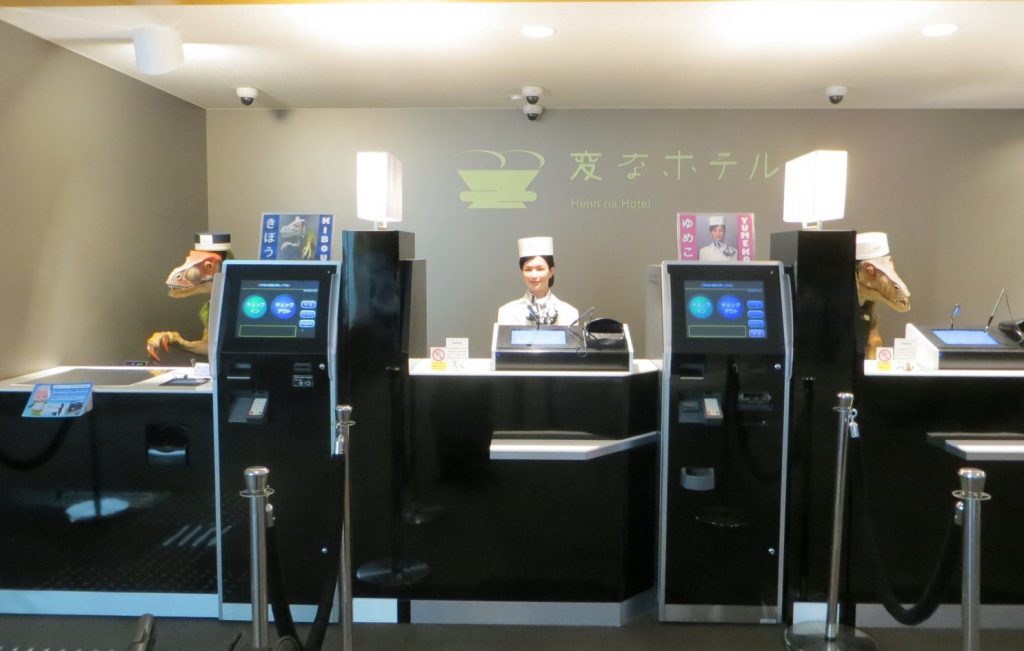
Henn na Hotel Huis Ten Bosch is a hotel project by Huis Ten Bosch Co., Ltd., with the goal of creating a low-cost hotel (LCH). The hotel project began in late 2012. Since the company opened the hotel in July 2015, they have conducted many substantial experiments in the business. As of February 2018, the LCH business is expanding its market. According to Takeyoshi Oe, the General Manager of Henn na Hotel Huis Ten Bosch, the important insights gained through the development of an LCH are to cut labor costs by introducing technologies such as robots and automation, provide uniform quality of service to hotel guests by making robots the main staff, and attract the attention of media and hotel guests with technologies that can be seen as entertainment.

Background

In 2010, H.I.S. Co., Ltd., a major travel agency in Japan, committed to managing the reconstruction of Huis Ten Bosch Co., Ltd. The company, located in a rural area in Kyushu, operates a theme park that emulates a Dutch streetscape. Hideo Sawada, the head of H.I.S. Co., Ltd. became the head of Huis Ten Bosch Co., Ltd. in 2010 and reformed the business in diverse ways. A typical problem in Japanese rural areas is the labor shortage caused by the concentration of young people in urban areas. When Sawada stayed at Hotel Europe, which is Huis Ten Bosch’s official hotel in the park, he noticed many services in the hotel that are costly, such as the presence of a doorman. At this point, he came up with the idea to create low-cost hotels (LCHs) to complement the conventional hotels, similar to the role of low-cost carriers (LCCs) in the airline industry.

Prototyping and Construction

To successfully create LCHs, a project was launched to reduce the labor and utility costs of Huis Ten Bosch’s official park hotels as much as possible by using what were considered cutting-edge technologies at the time. However, building such a hotel facility immediately has high risk. For this reason, the company conducted an experiment in 2013 to build and test a house-type facility called a smart house. Sawada decided to actually live in the smart house for a month to judge whether a low-cost hotel service is worth providing to his customers on the basis of the smart house experiment. In November 2014, the construction of the East Arm, which is the primary building and has 72 guest rooms, began. After that, Henn na Hotel Huis Ten Bosch was opened in July 2015.

Details of Opening a Low-cost Hotel

The notable processes to create the LCH in Huis Ten Bosch were: giving it a unique name, introducing cutting-edge technologies to the hotel business, and improving it through trial and error. Regarding the first point, the name “Henn na Hotel” was chosen through a top-down decision. The company chose this Japanese name with a meaning of “a commitment to evolution.” The Japanese adjective “henn na” also has the general meaning of “strange.” Regarding the second point, the company attempted to replace the receptionists, bellmen, cloakroom attendants, and cleaning staff in the hotel with robots. To do so, they first tried to make appointments with companies that seemed to have the capability to make the robots they wanted. However, in the start-up stage of the project, it was difficult to arrange this sort of appointment due to the unique name. The company narrowly succeeded in contracting with several suitable companies. Finally, they also tried introducing new and unique approaches in the actual hotel business in order to reduce the labor and utility costs. For example, the company put two robots in the reception area. One was an android robot with a woman appearance, the other was a zooid robot with a dinosaur appearance, particularly designed for amusement, giving the nod to the hotel’s theme park location. In the guest rooms, there were no TVs or refrigerators, but there was a voice-activated companion robot, which was the first step to replacing a hotel concierge with a robot. For the hotel booking, they implemented an auction system. However, in July of 2015, which was the opening month of the hotel, their guests strongly complained about the radical cost-cutting, the unique booking system, and the voice-activated robot. The staff of the hotel modified the business on the basis of the customers’ opinions. For example, they equipped the rooms with TVs and refrigerators, ended the booking auction system, and adjusted the voice-activated robot to serve children. In Henn na Hotel Huis Ten Bosch, the business model was improved on the basis of trial and error.

Characteristics of the “Henn na Hotel” Low-Cost Hotel

As of February 2018, the important insights gained through the diversified approaches to developing the Henn na Hotel Huis Ten Bosch LCH are as follows.

1) Cutting down on labor costs by introducing technologies such as robots.

In the beginning of the business, there were 72 guest rooms and 30 employees. Currently, there are 144 guest rooms and 7 employees thanks to the robots and the automation of the hotel services that they enabled. However, General Manager Oe noted that, taking potential circumstances such as the sudden illness of a customer into consideration, this number of employees is close to the feasible minimum.

2) Providing uniform quality of service to hotel guests by making robots the main staff.

In human-to-human services, the service quality varies depending on the employees’ physical conditions, customers’ attitudes toward the services they receive, differences in customers’ native languages, and so on. If a robot provides service, the service quality is the same for any kind of guest, given adjustments for different languages. Although the service quality itself is average, this sort of robot-provided service is relatively preferred by foreign guests. Additionally, some Japanese guests who do not want to be bothered by human interactions prefer this robot-provided service.

3) Attracting the attention of media and hotel guests with technologies that can be seen as entertainment.

After opening the hotel, many guests stood in line to check in with the dinosaur receptionist robot regardless of the availability of the lady-like  one. During the hotel project’s conception, the project members did not expect the robots to affect customer behavior in this way. Meanwhile, thanks to the aggressive trial and error in its practices and substantiating experiments, Henn na Hotel had many newsworthy events. A variety of media gave the hotel attention and reported on it extensively. The main purpose of Henn na Hotel was to create a LCH. However, the project members also succeeded in attracting a lot of media and guests who looked at the hotel from different perspectives, such as that of entertainment and newsworthiness. Naomi Tomita, the executive advisor and chief technology officer in Huis Ten Bosch Co., Ltd., calls this sort of business model that is based on substantiating experiments “agility-oriented management.”[ii]

Summary

As of February 2018, the LCH business is expanding into major cities in Japan and other nations in Asia. Looking back on the path to the creation of Henn na Hotel, General Manager Oe explains that the name of the hotel enabled it to overcome a number of failures. “Henn” has two meanings. One is “change,” including the nuance of “evolution.” The other meaning is “strange.” Japanese people who encountered something inconvenient or poorly-managed because of the robot-oriented nature of the facility tended to tolerate it, thinking, “I don’t blame the robots, and besides, the hotel has ‘strange’ in its name.” Agility-oriented management involved in this sort of substantiating experiment runs the risk of providing insufficient service to customers. In a way, Henn na Hotel can be thought to have overcome this risk with its name. The general manager also has plans to develop new hotel and robot services and to continue to explore the “henn na” LCH.

Company Information

Huis Ten Bosch Co., Ltd.

1-1 Huis Ten Bosch-cho, Sasebo, 859-3293

Japan

Tel +81-570-064-110  

Notes


[i] This article is based on an interview with the General Manager of Henn na Hotel Huis Ten Bosch, Takeyoshi Oe (Huis Ten Bosch Co., Ltd.), conducted at Henn na Hotel Huis Ten Bosch on February 23, 2018.

[ii] According to his keynote speech in “Jissen Solution Fair 2018,” held by Otsuka Corporation in Tokyo on February 8, 2018.

Robot-assisted low-cost hotel Read More »

We use cookies to give you the best online experience. By agreeing you accept the use of cookies in accordance with our cookie policy.

Privacy Settings saved!
Privacy Settings

When you visit any web site, it may store or retrieve information on your browser, mostly in the form of cookies. Control your personal Cookie Services here.

These cookies are necessary for the website to function and cannot be switched off in our systems.

In order to use this website we use the following technically required cookies
  • wordpress_test_cookie
  • wordpress_logged_in_
  • wordpress_sec

Decline all services
Accept all Services